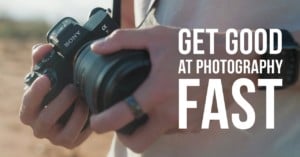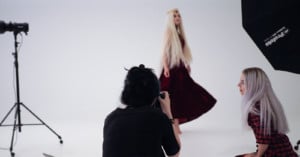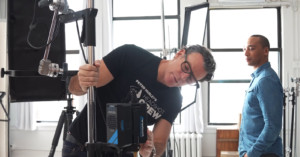
Legendary American portrait photographer Gregory Heisler was recently invited to give a talk to the American Society of Media Photographers in Oregon. Prior to the lecture, Stumptown Visuals caught up with him to ask him for some words of wisdom. What resulted was this 8-minute gem that contains a good deal of advice you can apply to your own portraiture.
Read more…

Preparing for a trip to a foreign country where you don’t know the language? If you don’t have an Internet-connected phone handy, a camera can help you out. Redditor Jhojgaard regularly travels to various countries around the world, and suggests that storing some key photos on your camera can come in handy when you’re in a communication crunch.
Things that are useful to store on your memory card include the names of places you need to get to and common things you might need (e.g. a certain subway station, the restroom, a taxi). If you have a smartphone with you, you can toss all of the “translation photos” into a separate album.
Read more…

Recognize the warning message above? It’s what Windows XP would show whenever you tried to rotate a JPEG image 90° using the Windows Picture and Fax Viewer. If you’re like me, you probably didn’t think twice about it (and checked the checkbox), since you had done it many times already and hadn’t noticed any difference in quality. After all, how hard can it be to turn a digital photo sideways? You just move the pixels around right?
Well, not really. The fact of the matter is, JPEG is a “lossy” compression algorithm that’s geared towards storing and sharing photos without taking up too much disk space. Rotating these compressed images is usually done by decompressing, rotating, and then re-compressing. Since the re-compression is lossy (i.e. data is thrown away), this process results in slightly degraded photos (hence that warning).
Read more…

In this guide, you will find out how you can save money on film photography. I will go over five basic ways on how any film photographer can pursue their artistic dreams and develop their creative outlets without having to spend a fortune.
Read more…

There’s a reason that most of the foods you buy never look like the photos used to advertise them. Food photographers and stylists have all kinds of random tricks up their sleeve for making food items look picture perfect. Here’s a list of various household products that are commonly used to make dishes look more appealing. A warning, though: you might lose your appetite.
Read more…

UV lens filters are a popular way to protect the front element of lenses from damage, but you should make sure you invest in a high-quality one unless you want to make a huge sacrifice in image quality. Reddit user EvilDoesIt shot the photos above comparing a cheap filter with a pricier one:
The top one is a $20 Quantaray UV filter. Bottom is a ~$70 B+W MRC UV filter. This is a more extreme example, but it shows the difference between a nice filter and a crappy cheap one. Both these shots are unedited JPEGs from my Nikon D7k with a Nikkor 17-55 ƒ/2.8 @ 1.3s ISO100.
I do realize that the top pic can be easily fixed by adjusting levels, but in my opinion, it’s always better to get the best picture you can get out of your camera before editing. [#]
His last sentence is a gem: to achieve the best images, you want to make sure you’re squeezing out the best image quality you can from each step along the way.
Image credit: Photographs by EvilDoesIt and used with permission

There are many things a photographer has to take into consideration when composing a phenomenal picture, but one that you don’t often think about is perspective. In an educational article over on National Geographic, photographers Cary Wolinsky and Bob Caputo — who have a combined 64 years of experience shooting for NatGeo — talk about how important it can be to “Get Some Perspective,” sharing some helpful tips and tricks they’ve come up with along the way.
It’s good to have a little perspective–to know where you stand and just how big (or small) your world and the things in it are. Most pictures we see include something we recognize–a person, a house, a car, or something else that we already know the size of. Like leaves. We think we know what size leaves are. And usually we’re right [...] But photographs can be deceptive, especially in this age of easy photo manipulation.
Check out the entire article, complete with examples, over on National Geographic. And when you’re done there, head over to Wolinsky and Caputo’s website PixBoomBa for more helpful (and oftentimes funny) photography tips.
Get Some Perspective (via Reddit)
Image credit: Mr Toad by -RobW-
-
Maria Luci · Jul 09, 2012
-

While there are ample resources available on portfolios, websites, leave behinds and promotional materials, there’s one important subject that I’ve found little helpful information on: the photographer’s bio.
Almost always found on a professional photographer’s site, the bio can make or break you. In a world where creatives often only have a couple of minutes to view your site, the bio can play a significant role. A biography is a glimpse into your personality and gives the reader a sense of what you might be like to work with. Creatives will often seek out the bio to help them make quick judgements. Therefore, just having great pictures isn’t enough. Many people will quickly abandon a website to jump to the next, so you have to make sure your entire site is not only engaging, but successfully portrays your personality. With bios being one way to express who YOU are, I’m always surprised at just how many dreadful ones I find. So, after reading one too many boring, exaggerated, absurd, grammatically incorrect and simply over the top biographies, I decided to come up with a few Dos and Don’ts.
Read more…
-
Scott Mains · Jun 26, 2012
-

At some point or another, as a creative professional, you will have the option to exhibit work to the public. Exhibitions are a great tool to market yourself, and your work to potential clients and art buyers.
Read more…
-
Steve Giralt · Jun 26, 2012
-

In a world where everybody wants more for less, it’s hard to justify spending money on things which may or may not make your clients happier. I have always been a believer in the idea that you need to spend money to make money, yet I find other photographers are very split on this subject. I know photographers who are proud that they use the same camera and laptop they bought 5 years ago citing that their clients aren’t complaining so it must be working just fine.
Read more…