Over 100 million people around the world snap photos with Instagram on their phones now. If you like the look of Instagram filters but would rather not broadcast the photographs to the world every time you snap a picture, there’s actually a (semi-old) trick you can use to save the pics without sharing them (for iPhone users, at least): all you have to do is turn on “Airplane Mode.” Read more…

Have you ever wanted to get pics of cute sea lion or seal pups up close? Well, your best bet may be to grab your kayak or surf board and paddle out — camera in hand. Scuba diver Rick Coleman discovered this on a recent dive trip off the coast of Southern California. Read more…
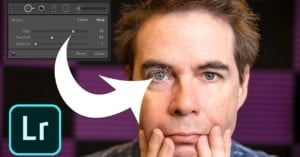
Photographer Nick Fancher tells us that he recently came up with an interesting way of customizing the catch light in subjects’ eyes. If, in your portraiture, you place white or black foam boards to control the amount and direction of bounce light, you can also use white and black gaffers tape to control what goes on in your subjects’ eyeballs! Read more…
Did you know that YouTube isn’t just for uploading videos? Google’s popular video hosting service also has a special feature designed just for photo slideshows. If you’ve never considered using YouTube for photos, you may have never noticed the option, but it’s right there on the Upload page. Read more…
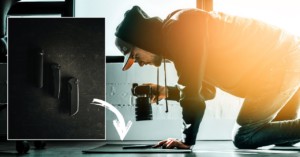
David Hobby over at Strobist shares a fantastic idea for photographers who would like to always have some gaffers tape handy at all times:
So we are gonna make a gaffer’s tape keychain fob [...] That right there is 40″ of gaff, effortlessly carried by default, at all times [...]
No, no, no. While duct tape may in fact be more manly, gaff is what duct tape wishes it could be. And it is what photographers use because of its holding power and ease of clean removal. Don’t ever mistake the two.
All you’ll need is a paperclip, a wooden pencil, and a larger roll of gaffer’s tape. Head on over to Strobist to read Hobby’s step-by-step tutorial.
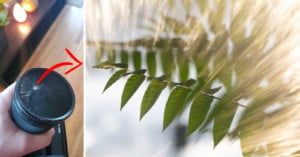
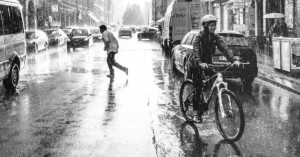
Here’s an interesting idea to try: if you ever find yourself shooting fireworks and it starts to lightly drizzle, keep on shooting instead of putting your camera away. The tiny drops of rain that fall on your lens can add some bokeh to your shot! Read more…
The megapixel war is heating up again in the high-end DSLR market, with the 36MP Nikon D800 leading the charge and rumored high-MP Canon and Sony competitors on the way. If you’ve been drooling over massive megapixels, be warned: with great megapixels comes great responsibility storage costs. Photoshop guru Scott Kelby writes:
I was reminded this week how large the file sizes are for images I shoot with my Nikon D800. I grabbed a hard drive to copy around 1,000 images I took in Cuba, and I was shocked to see that it wouldn’t fit on the drive because it was a whopping 43 Gigbytes!!! I looked at what the Raw files were from my Nikon D3s, and for around 1,000 Raw files it was 1/3 the size (around 15GB) and for the same number of JPEGs from a similar camera it around 6GB. I’ll shoot more than 1,000 photos at any given football game in just three hours (glad I’m shooting JPEG).
If you’re planning to buy a high-MP DSLR this holiday season, you should also be thinking about stocking up on external hard drives as well.
Do you ever clean the front element of your lens by fogging it up with your breath and then wiping it off with a cloth? If so, you might want to stop — Nikon says the practice could be damaging to your glass. Apparently human breath contains stuff that isn’t too friendly toward camera lenses. Read more…
Here’s a clever trick for if you ever need to print out a photo but find your inkjet cartridges low (or dried out): bust out your hair dryer. Paul Boutin of The New York Times writes,
If your printer’s ink cartridge runs dry near the end of an important print job, remove the cartridge and run a hair dryer on it for two to three minutes. Then place the cartridge back into the printer and try again while it is still warm.
“The heat from the hair dryer heats the thick ink, and helps it to flow through the tiny nozzles in the cartridge,” says Alex Cox, a software engineer in Seattle. “When the cartridge is almost dead, those nozzles are often nearly clogged with dried ink, so helping the ink to flow will let more ink out of the nozzles.” The hair dryer trick can squeeze a few more pages out of a cartridge after the printer declares it is empty.