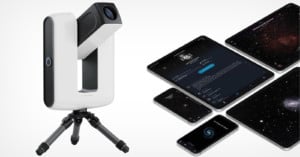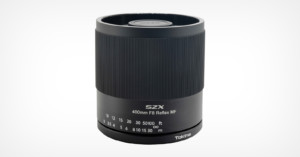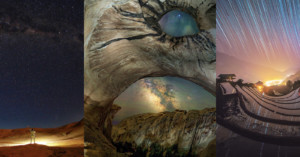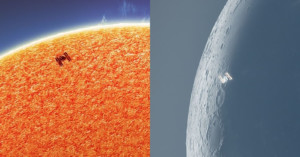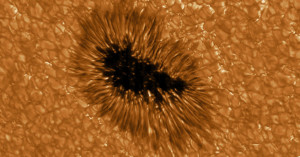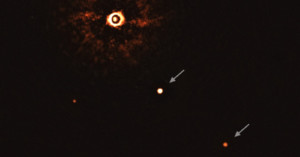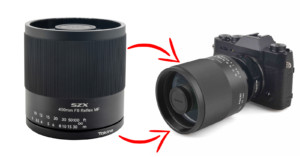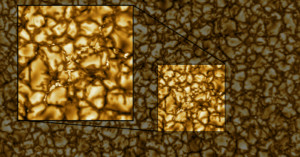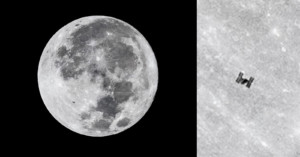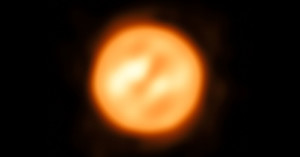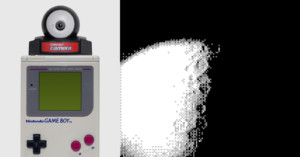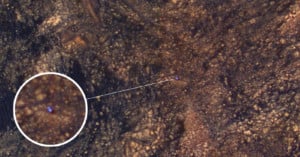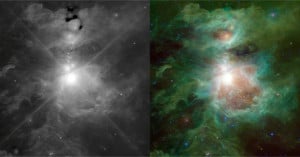
If you’ve ever found yourself wishing you could take an iPhone picture of the night sky — or a cool slide under the microscope for that matter — than your wish could soon become a reality. The startup Arcturus Labs are in the process of funding a new product called Magnifi, an iPhone case/adapter that allows you to attach your phone to a microscope, telescope, binoculars, or any other optical instrument. Read more…

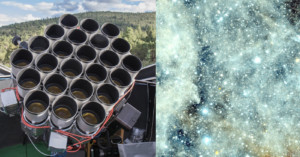
This photo is what you get when you point a massive 4.1 meter telescope (VISTA in Chile) at an unremarkable patch of night sky and capture six thousand separate exposures that provide an effective “shutter speed” of 55 hours. It’s an image that contains more than 200,000 individual galaxies, each containing countless stars and planets (to put the image into perspective, the famous Hubble Ultra-Deep Field contains “only” around 10,000 galaxies). And get this: this view only shows a tiny 0.004% of the entire sky!
Read more…

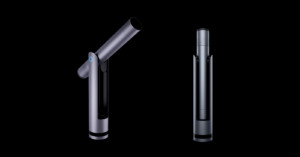
Designer Jean-michel Bonnemoy thinks that traditional camera designs are wrong, and that form factors were driven more by technical necessity (e.g. the need to hold film) than by ergonomics and ease of use. Instead, he proposes that modern digital cameras should be cylindrical and resembling a handheld telescope. A lens cap is built into the front, a viewfinder and LCD screen are built into the back, and the controls are in easy-to-access locations on the side of the camera.

Read more…

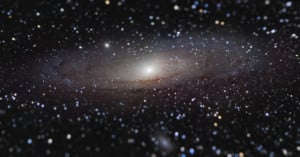
Reddit user tirceol‘s father is an amateur astronomer who captures some amazing photographs of space from his front yard by hooking up a camera to his telescope’s eyepiece. He uses everything from a webcam to a Meade camera to capture the images, which are sometimes composites created using multiple photos. The above image shows the Andromeda galaxy 2.5 million light years away.
Read more…

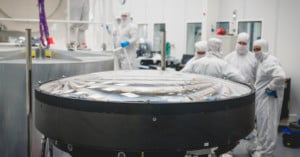
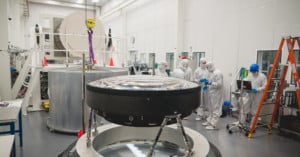
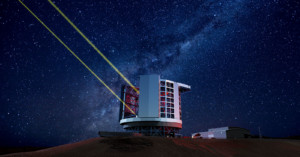
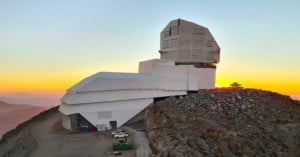
Last week the U.S. Department of Energy gave a green light to a project that aims to build the largest digital camera this planet has ever seen. The camera, built by the SLAC National Accelerator Laboratory for the Large Synoptic Survey Telescope, will cost around $170 million, be roughly the size of a small car, and be able to capture 3.2-gigapixel photographs using a giant sensor composed of 189 CCD sensors.
Sporting an 8.4-meter-diameter primary mirror, the LSST will be a large, wide-field ground-based telescope designed to provide time-lapse 3-D maps of the universe with unprecedented depth and detail. Of particular interest for cosmology and fundamental physics, these maps can be used to locate the mysterious dark matter [...]
[...] Each night, the LSST will take more than 800 wide-field 15-second exposures, each covering 49 times more sky area than the moon. It will photograph the entire visible sky twice a week. [#]
The lens/telescope will be quite a beast as well — it packs “enough resolving power to distinguish [...] a pair of car headlights seen at a distance of 400 miles.”
(via Stanford via R&D via Rob Galbraith)
Image credits: Photographs by LSST Corporation

The Nikon Lens Scope Converter is a rare accessory that attaches to the back of Nikon lenses, turning them into telescopes. You can sometimes find them listed on eBay for around $230. They’re designed for AF D-era lenses that have mechanical aperture rings, but you can “hack” your G lenses to be compatible by using a piece of plastic to keep the aperture blades in the open position.
Furthermore, you can mount the convert onto a Micro lens to make a microscope. Use it on a 105mm Micro lens, and you’ll have yourself a handheld 25x microscope!
How to convert your Nikon lens into a telescope or a microscope [Nikon Rumors]
Image credit: Photograph by Fabrizio Belardetti and used with permission

Last year Canon announced the world’s largest CMOS sensor — an 8-inch chip that’s 40 times the size of those found in Canon’s full frame cameras. Now, a year later, the sensor is finally being put to good use, having found its way into the Schmidt telescope at the University of Tokyo’s Kiso Observatory. The extreme-sensitivity of the sensor has allowed astronomers to detect more faint meteors during a 1 minute period than could previously be seen during an entire year, and has the ability to record those meteors at 60fps. Now we’ll just patiently twiddle our thumbs and wait for the sensor to appear in an upcoming digital camera.
(via Canon via Photography Bag via Engadget)

Amateur astronomy enthusiasts may be content with shooting the stars with a DSLR through a telescope, but what would a consortium of astronomy institutes use for photographing the night sky? The answer is the OmegaCam, a giant 1,700-lb camera found at the heart of the largest telescope designed for visible light surveying: the VST. It uses 32 separate CCD sensors that work together to form a giant 268-megapixel sensor, capturing 30 terabytes worth of photographs every year. The photograph seen above is the first released photo shot with this massive camera.
(via PhysOrg via Engadget)
Update: We’ve posted some photographs of OmegaCAM here.

Believe it or not, the above photograph was made with an iPhone 4. jurilog created a tiny astrophotography kit using a small telescope you can buy online for ¥9,800 (~$115) and a miniature tripod mount.
Read more…
Sony recently announced an interchangeable lens camcorder, but if you can’t stand the wait until it’s released, cheap gadget dealer Brando has these Vivikai camcorders that come equipped with an 8x telescope. The Chinese company, Vivikai (no relation to Vivitar) has more photos of this Frankenstein camcorder mod on their site.
In spite of decent specs, including 12 megapixel image resolution and ISO 100, the standard definition telescoped image looks like it was taken with a toy camera. But for $100, that sounds about right.
(via Engadget)