One of the interesting features in Olympus’ OM-D EM-5 retro-styled camera is the 5-axis image stabilization, which shifts the sensor in 5 different axis directions (existing systems generally use 2) to compensate for camera shake. It’s a feature that caught the eye of Vimeo user Fiatopichan, who suffers from essential tremor (a neurological disorder that causes his hands to shake at about 5-10 Hz). He decided to buy the camera to test out the new system, and reported his findings in the video above. The stabilization is quite impressive.
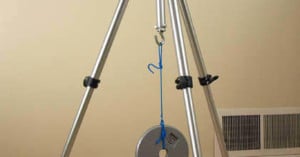
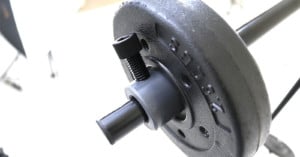
Heavier tripods are generally more stable than lighter ones — wind doesn’t affect them as much — but hauling them around can be a pain. Instructables user Andrew Axley came up with the brilliant idea of making his simple tripod more stable by adding his own weight hook. The tripod is light when not in use and when you need extra stability you simply hang your camera bag onto the hook. All you need to do is figure out a way to attach a hook securely at the center — Axley chose to drill a hole through the side of the center column and attach an S-hook using a bolt and nut.
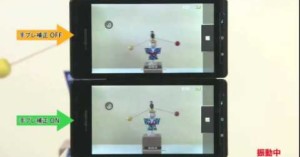
Sharp recently announced its AQUOS SH-01D phone, which is one of the few phones on the market that feature optical image stabilization. The phone is powered by Android OS, and features a 12.1 megapixel 1/3.2-inch CMOS sensor. The demo above shows how effective the stabilization is at canceling out small movements of the sensor.
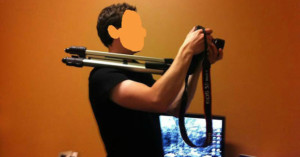
If you ever find yourself needing some quick stabilization when recording video with your DSLR, but don’t have a fancy rig with you (or you’re in a place where you can’t bring one), you can use an ordinary tripod as a makeshift shoulder rig for some extra stability.
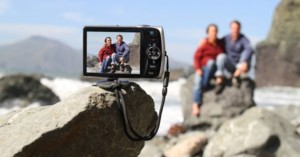
Gomite’s new Tiltpod is a simple “tripod” designed for people who do a lot of traveling with a compact camera. Stored on the end of your hand strap, it attaches quickly to your camera’s tripod mount to help you frame and stabilize your shots when there’s no one around to help you take it. The underside is made of a “grippy” magnetic material that helps it stay still on most surfaces, and the angle of the base can be adjusted after the camera is attached. Read more…