
Sports Illustrated Lays Off Much of Its Staff
Sports Illustrated, the foremost sports journalism outlet and purveyor of some of the world's best sports photography, has reportedly laid off many staffers.
Sports Illustrated, the foremost sports journalism outlet and purveyor of some of the world's best sports photography, has reportedly laid off many staffers.

81-year-old Martha Stewart has become the older ever cover model for Sports Illustrated's annual swimsuit edition.
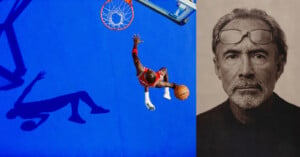
Walter Iooss Jr.'s photos have graced 300 Sports Illustrated covers in a career spanning six decades. He has captured iconic images of every athlete, including Muhammad Ali, Michael Jordan, Pele, Cristiano Ronaldo, Michael Phelps, Tiger Woods, Serena Williams, and Kobe Bryant.
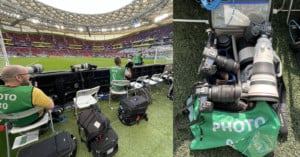
As the United States prepares to take on Iran in a must-win game today, PetaPixel caught up with a photographer shooting at the World Cup to find out what's in his camera bag.
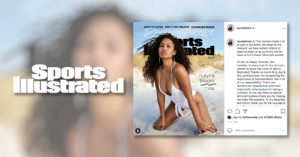
Leyna Bloom, who hopes to inspire young trans children and other women like herself, has marked history as the first transgender woman to be featured on the cover of the 2021 Sports Illustrated swimsuit issue.
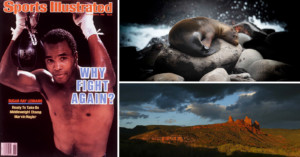
Over the years I’ve been contacted through social media, emails and in person by young photographers seeking advice on being a sports photographer. I never try and discourage them, but I also have to try and be honest: Sports Photography is dead as a profession… sad but true. I know very few who are scratching out a living shooting sports.

Sports Illustrated is going the way of Polaroid and Kodak. Once known for its cream-of-the-crop sports photography, the iconic magazine was just sold in a $110 million deal, and the new owner has big plans to make money by licensing out the brand.
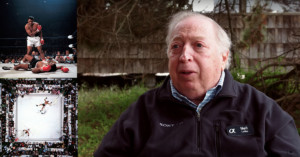
Renowned sports photographer Neil Leifer has captured some of the most recognizable photos in the history of sports, particularly of Muhammad Ali, one of his long-term subjects. Here's a fantastic 17-minute video by The Art of Photography in which Leifer talks about his life, the stories behind his iconic photos, and his experience in the ever-evolving photo industry.
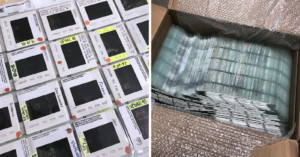
Ever since I was a kid, I loved saving stuff. I saved all my baseball cards in rubber band stacks in shoe boxes. I collected stacks and stacks of 7-Eleven Slurpee baseball cups in 1973. Every San Francisco Giants yearbook and media guide going back to the early 1960s? Yup, got them too.
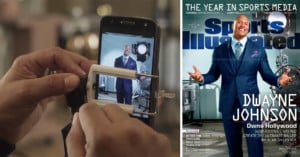
When veteran SI photographer Michael J. LeBrecht II got an email from a DOP at Sports Illustrated offering him the chance to shoot "an A-List Celebrity," he immediately said yes. It wasn't until a later, on the phone, that he hear the catch: "we would like you to try and shoot the cover with a Smartphone."
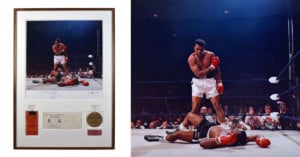
Neil Leifer's photograph of Muhammad Ali standing over a knocked out Sonny Liston is, without a doubt, the most iconic image of the heavyweight champion ever captured. And now, you can own the photographer's own print of the photo, signed by Ali himself.
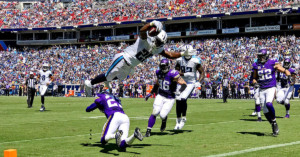
Announced last week, Apple's new iPhone 7 Plus claims to pack the world's most advanced smartphone camera -- a dual camera system that can zoom optically and simulate depth of field. Now the first real-world iPhone 7 Plus photos have emerged: they were shot this past weekend at an NFL Sunday Night game and at the US Open.

Every time the Olympics roll around, there are more photographers and less spots from which to shoot the games. Not an ideal way to express your creativity. If you are not a member of the pool photographers gang it’s even worse... everybody huddled in the same pen shooting the action with the same lenses.
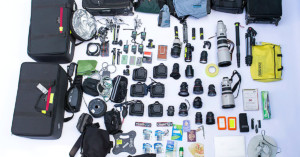
This photo shows what Sports Illustrated photographer Simon Bruty packed for the Rio 2016 Olympic games, the 8th Summer Games he has covered.

There are often stories of huge (and often hilarious) Photoshop fails in the advertising industry, in which models are seen with extra limbs or ridiculous body proportions.
Snickers just released a clever advertisement that pokes fun at these Photoshop fails.

There's more bad news in the photojournalism industry today: Sports Illustrated has laid off Director of Photography Brad Smith, Photo Editor Claire Bourgeois, and Photo Director John Blackmar. This comes almost exactly 1 year after the magazine laid off its entire roster of staff photographers.
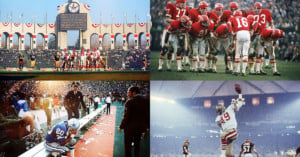
This year's NFL championship game is Super Bowl 50, and it'll be played on February 7th, 2016, at Levi's Stadium in Santa Clara, California (the home of the 49ers). To celebrate what is often the most watched TV broadcast of the entire year in the United States, Sports Illustrated is spending 50 days posting 50 iconic photos from each Super Bowl to the magazine's Instagram page.
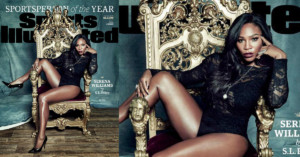
Here's a short behind-the-scenes video showing how fashion photographer Yu Tsai recently photographed tennis superstar Serena Williams for Sports Illustrated magazine. Williams was featured in the cover story after being selected as the publication's Sportsperson of the Year, the first time an individual woman has taken the award in over 3 decades.

I’ve dreamed about shooting Houston Rockets guard James Harden for a long time. How can you go wrong with that beard? He’s just awesome looking. I wanted to pose him with ZZ Top for the last couple of years -- or at least with Billy Gibbons -- but alas, no one has bitten on that idea yet. (You hear that Texas Monthly? It would be a great cover. Trust me.)
Anyway, the call finally came some weeks ago from Sports Illustrated. Harden had a super tight schedule with the All-Star Break coming up, and the editor asked if we could put together something with the iconic Houston skyline with only 24 hours notice.

Sports Illustrated has laid off the last of its staff photographers. All six remaining photographers at the magazine were laid off yesterday due to economic circumstances and company restructuring.
Looking back at this year, I was fortunate enough to photograph a lot of cool things and meet a lot of great people. It’s only right that I write about my biggest shoot this year -- well actually, the biggest shoot of my career to date. I'll start off by saying that everything that could have gone wrong did go wrong.

Sports Illustrated Director of Photography Brad Smith recently sat down with …
Being a freelance photographer has its ups and downs, its pros and cons. We all know this going into it. One of the most exciting parts, for me, is that anything could happen, at any time. Most jobs we get come out of nowhere. And this is a perfect example.
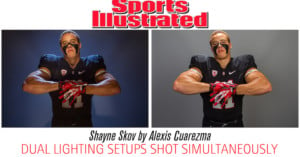
What can I say? What has been the best unexpected early birthday present you’ve ever gotten? For me, it happened last July when I got a call from Brad Smith, the Director of Photography at Sports Illustrated, asking me to shoot an assignment.
Update on 12/16/21: This video has been removed by its creator.
Two days ago was the anniversary of the Boston Marathon bombings, and in true Boston spirit, the city came out in force to show that this tragedy had not stolen, but rather strengthened its spirit.

Not all of the women in this year's Sports Illustrated swimsuit issue are made of plastic, and yet the unique Barbie swimsuit shots we told you about a few days back will STILL play second fiddle to a much cooler photo shoot of model and actress Kate Upton... scantily clad... floating around in actual zero gravity.
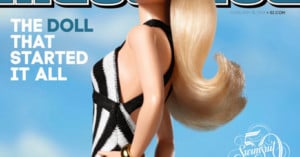
Guys, you may want to be extra careful about where you read your copy of the Sports Illustrated swimsuit issue this year. It will contain a double-helping of grist for feminist outrage this time around, as Barbie, that icon of feminine pulchritude and academic rigor ("Math class is tough. Let's go shopping!") struts her stuff alongside the human models.
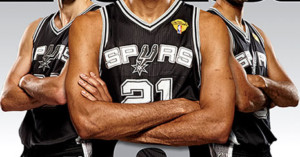
With the NBA Conference playoffs nearing completion and the Spurs already a lock for the Finals, I got a call from Brad Smith, the Director of Photography at Sports Illustrated, asking if I could quickly get to San Antonio.
Tim Duncan, Manu Ginobili, and Tony Parker rarely if ever pose together, but had reluctantly agreed to pose for an SI cover which would come out a couple of days later, to coincide with the beginning of the finals.
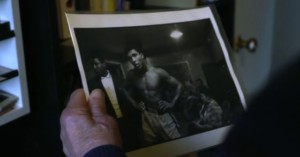
Born in 1922, photographer and writer Art Shay has had a career that most creatives only dream of. Between Life, Time, Fortune, Sports Illustrated, Forbes, Business Week, Parade, The New York Times Magazine and many more, Shay has shot about 1,100 magazine covers.
This video -- shot and produced by Bradley Rochford of Hanson Dodge Creative -- gives you a quick overview of the amazing life and work of this still-active 91-year-old photographer.
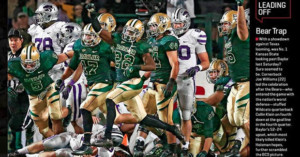
Last week, Sports Illustrated magazine published the above photograph by US Presswire photographer Matthew Emmons. Found in the "Leading Off" section, the photo shows the Baylor Bears football team celebrating after their upset victory over the #2 ranked Kansas State Wildcats.
The image has many people talking, not because of the unlikely event that it captures, but because it appears to be heavily manipulated. And it's not just the fact that the picture looks like it passed through an HDR program, but that the Baylor football players didn't wear green jerseys during that game. They wore black.
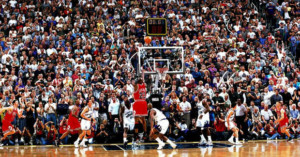
This photo is the greatest sports photo of all time -- at least according to Sports Illustrated. The magazine has published a gallery containing 100 of the greatest images (from an American's perspective), and the #1 image is the above shot of Michael Jordan hitting the game-winning shot to help the Chicago Bulls beat the Utah Jazz and win the 1998 NBA Finals in 6 games.
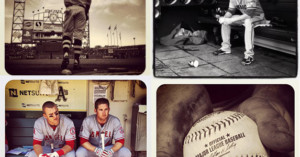
The latest issue of Sports Illustrated magazine features 18 baseball photographs by sports photographer Brad Mangin across 6 of …
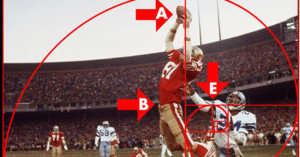
“The Catch” is one of the most famous plays in American football history, …
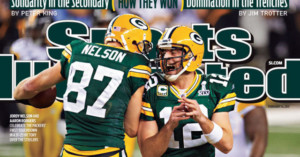
The Super Bowl isn’t just the biggest event in the NFL season, but one of the biggest events for …
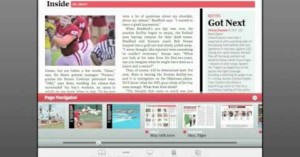
Today at Google I/O, Sports Illustrated editor Terry McDonell showcased this demo of the HTML5 version of the magazine. Last December, SI released a mockup video of how their online version would look as an app, but this version is based on the web and can be viewed with laptop and tablet browsers. It looks like a print magazine layout, with fantastic spreads, photos, and fonts, but it also has a lot of unique multimedia features that are incorporated into the design.
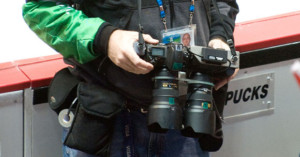
About a week ago at the 2010 Vancouver Olympics, Russ Beinder caught a …

This Sports Illustrated Tablet Demo by Jared Cocken came out a few months ago, before the announcement of the Hearst/LG/Marvell lovechild, the Skiff e-reader and Apple's iPad. With the more announcements of technology that will become available just around the corner, this demo is worth a second look.