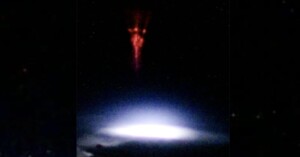
Astronaut Captures Image of Elusive ‘Red Sprite’ High Above The Earth
An astronaut captured a stunning photograph of an extremely rare lightning phenomenon known as a "red sprite" -- which is rarely visible from Earth.
An astronaut captured a stunning photograph of an extremely rare lightning phenomenon known as a "red sprite" -- which is rarely visible from Earth.
Space travel requires instruments made on Earth to be specially adapted to the harsh extra-terrestrial world -- and that includes tweaking a camera's software.
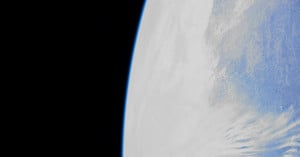
Sony has released the first photo captured by its new Star Sphere satellite, which aims to allow ordinary people to have access to a camera in Earth orbit and shoot their own space photos.
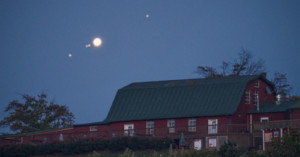
Photographer Brennan Gilmore took advantage of Jupiter's closest position to Earth in the last 59 years and captured a photo of the gas giant along with its four Galilean moons over the roof of a barn.
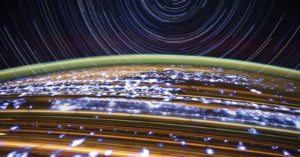
NASA astronaut and photographer Donald Pettit recently posted some of his stunning star trail photography taken aboard the International Space Station (ISS).
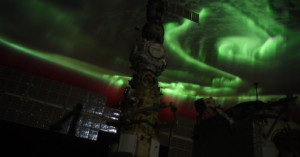
Astronaut Samantha Cristoforetti this week posted awe-inspiring photographs of the aurora australis from aboard the International Space Station (ISS).
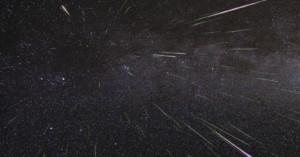
The Perseid Meteor Shower will reach its peak tonight (August 12) but those looking to photograph this annual celestial event will have to contend with a very bright supermoon known as a Sturgeon Moon.
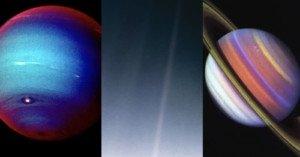
The Voyager Space Probes -- the most distant cameras in the universe -- are being powered down after 44 years of interstellar travel.
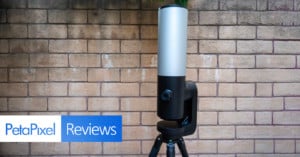
A few months ago Unistallar and Nikon announced the launch of a new smart-telescope called the eVscope 2. The two companies claimed it was the world's most powerful and simple-to-operate digital telescope for consumers. While I absolutely agree the system is incredibly easy and actually fun to use, dubbing it as the world's most powerful is a hefty over-promise.
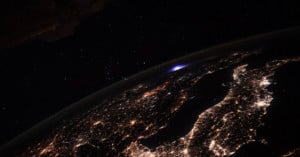
Astronaut Thomas Pesquet has photographed a rare blue "transient luminous event" over Europe that was captured as part of a timelapse he shot from on board the International Space Station (ISS).
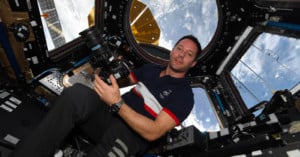
Astronaut Thomas Pesquet has shared numerous beautiful photos of Earth taken from the International Space Station, but contrary to popular belief, making these photos isn't as simple as just hanging out in the space station's cupola.
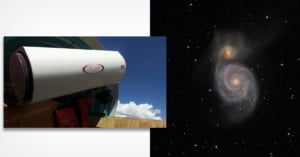
Are you a photographer who would love to give deep space imaging a try – but you’re not quite ready to spend thousands of dollars (or more) to build your own astrophotography rig? With remote astrophotography, you can create astonishing images without the high startup costs.
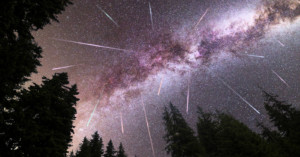
The Perseid Meteor Shower is one of my favorite times of the year, there is nothing like getting out of the city on a summer night to watch a star-filled sky as the bright Perseids streak across in vivid colors.
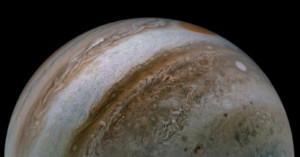
The stunning photos sent back from the Mars Perseverence Rover have made it easy to miss the other beautiful imagery NASA spacecraft have been capturing. One such image you may have missed is this incredible new photo of Jupiter that was captured by the Juno Probe.
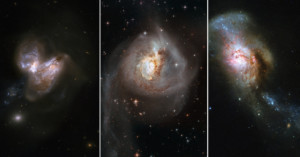
As part of its celebration of a new year, the NASA/ESA Hubble Space Telescope has published six different galaxy mergers. These rare astronomical phenomena were captured as part of a recent survey to investigate the rate of new star formations.
As a showcase of its CE-SAT-1 Earth-imaging satellite, Canon is allowing anyone to take their own photos of Earth from space as part of a demonstration for CES.
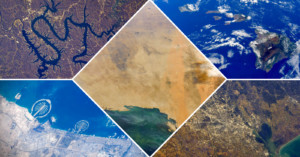
Japaneses astronaut Soichi Noguchi has emerged as the International Space Station's resident photographer, uploading a slew of incredible images of Earth taken from the Cupola Observational Module.
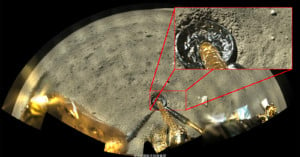
China's Chang'e 5 probe landed on the surface of the moon on December 1, 2020. Less than a day later, it has sent back a short video of its descent along with an extremely high-resolution panoramic image of the surface of the moon.
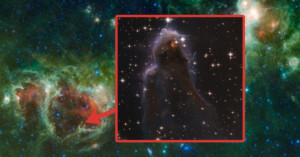
In just one relatively small "bulge" of the Soul Nebula (also known as Westerhout 5) in the constellation of Cassiopeia, the Hubble Space Telescope has captured an image of a star that is still being born.
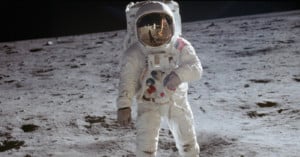
If you ever wanted to get a quick history of cameras and their use by NASA, YouTuber Scott Manly put together an excellent resource. In this 14-minute video, Manly explains the history of cameras used in the Space Program, what they were, and the changes manufacturers eventually made at NASA's request.
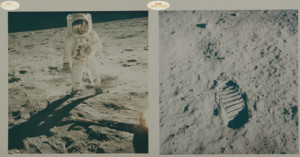
As we wrap up 2019 and the 50th anniversary of the moon landing in 1969, Sotheby's has one more NASA-themed auction up their sleeve. Launched yesterday, the Space Photography auction includes over 100 original NASA "red number" prints, including some of the most iconic images to come out of the US space program.
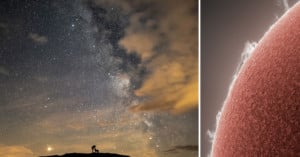
The Royal Observatory Greenwich has revealed the winners of the prestigious Insight Investment Astronomy Photographer of the Year 2019 competition, and as always, the winning images are spectacular.
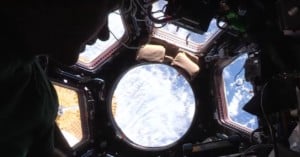
We can come to terms with the fact that that astronauts aboard the ISS get a view none of us can access and gear few of us can afford, but do they have to rub our noses in it!? We're joking of course, but the latest vlog from aboard the ISS does have us pretty jealous.
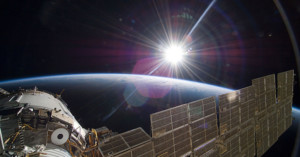
Spoiler Alert: The first paragraph of this article gives away a major part of the movie 'Gravity.' Skip past it if you haven't seen the movie yet.
"You should see the sun shining on the Ganges. It's amazing..." says George Clooney in the movie 'Gravity,' as his character floats through the cold vastness of space, cool as only a very George Clooney-ish character can be when facing insurmountable odds and indescribable beauty all at the same time.
But while Sandra Bullock's character had more important things to worry about just that second, chances are anyone reading this doesn't. And so, ahead of the Oscars where 'Gravity' is bound to take home at least a few of the golden statuettes, NASA has released a beautiful photo series to remind us what the view really looks like from space.
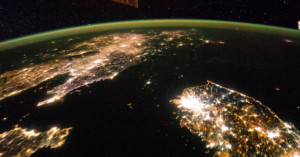
A new photo released by NASA and taken from the International Space Station shows just how dark North Korea really is, and we don't mean figuratively. Taken on the night of January 30th as the ISS was passing over the Korean Peninsula, a nearly completely blacked-out North Korea jumps out at you, surrounded by its well-lit neighbors.
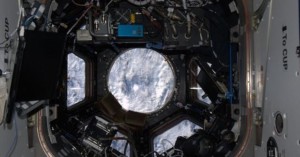
NASA astronaut Rick Mastracchio just arrived on the ISS last week (with the Olympic torch in tow, no less), and even though he wasn't one of the astronauts who got to take the Olympic torch for a spacewalk/photo shoot, he wasted no time starting to upload photos from orbit.
All of the photos he's uploaded (gallery below) are awesome for one reason or another, but one in particular has gotten a bunch of attention. Uploaded yesterday, the photo above shows the view Mastracchio and his fellow astronauts have while exercising on the ISS.
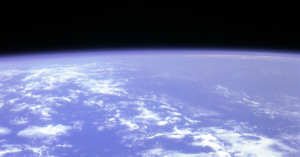
One of the key challenges in environmental portraiture is finding the right balance between subject and setting. Zoom in too close, and you lose the magic of location. Too wide, and it's not a portrait anymore.
There are times, however, when you have to forget the rules. Like when you're orbiting 150 miles above the Earth and one of your colleagues is about to take the first ever untethered space walk.
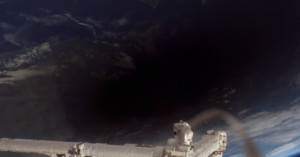
Over the years, we've seen some pretty incredible eclipse photos, be they composites that'll blow your mind or time-lapses that'll capture your attention for minutes at a time.
What we haven't seen nearly as much of are solar eclipse photos taken from space. What exactly does it look like when you turn the cameras the other way and capture the Moon's shadow hitting the Earth?
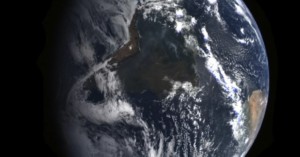
In August of 2005, one year after being launched into space, the NASA spacecraft MESSENGER performed a gravity assist swing-by of our little blue planet. As it drifted away from Earth on its way to Mercury, MESSENGER proceeded to capture hundreds of stunning photos, many of which have been compiled into this amazing time-lapse view of Earth.
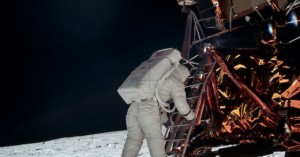
The title sort of gives it away, but did you know that there is an online archive that contains high-resolution film scans from every Apollo mission? The gallery contains all of the incredible photos taken during each of the missions -- from Apollo 1 all the way through Apollo 17 -- with some 1,000+ photos from Apollo 11 alone.
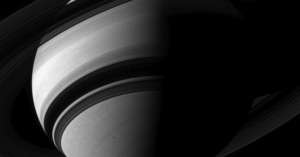
The tagline for the 2014 IMAX movie In Saturn's Rings simply states: "This is Real." And it's a tagline that bears repeating to yourself over and over again as you watch the preview footage above.
A fly-through put together from over one million real photographs -- many taken by NASA’s Cassini spacecraft -- the movie promises to contain zero CGI. And above, we have the first teaser for the film, available in 4K as long as your monitor can handle it.
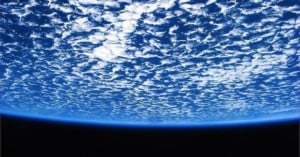
A beautiful photo of a partly cloudy day is, in and of itself, nothing special. When it's taken from the International Space Station looking down, however, it takes on a new meaning. The above photo was snapped by European Space Agency astronaut Luca Parmitano the other day, and it shows what a cloud-covered Earth looks like from orbit.
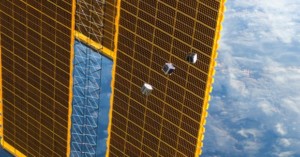
There are a couple of different types of imaging satellites currently orbiting our planet. On one end of the spectrum are specialized satellites that gather very high-resolution imagery in which you can identify objects as small as 3 feet across. On the other are the lower resolution satellites that beam down photos of larger areas.
California company Planet Labs wants to fill the space in-between, by providing an affordable middle-of-the-road option for companies interested in using it. To that effect, they're planning on launching 28 tiny, mid-resolution satellites called "Doves" into space before the year is out.
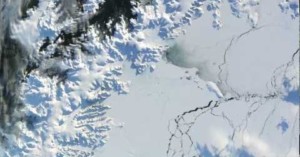
Taking a cue from the music industry and those incessant Now That's What I Call Music! albums, NASA has released its own "best-of" compilation of the most compelling imagery its satellites collected this past year. A mixture of true color, computer models, visualizations, and time-lapses from the ISS, the video gives us yet another stunning view of our little blue planet.
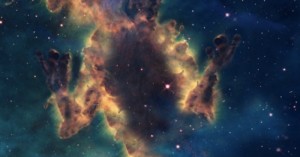
By using Photoshop on photos taken by NASA at the Chandra X-Ray Observatory, London-based illustrator Chris Keegan is able to create beautiful images of people and creatures out of deep space nebulae.
The process begins a lot like those summer days as a kid lying in the grass and picking shapes out of the clouds -- just replace clouds with celestial imagery. Once Keegan has picked out a shape, he takes the image into Photoshop and strengthens that shape until it will be recognizable to everyone.
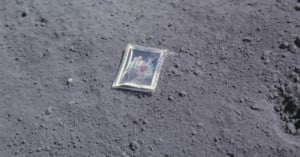
We've seen photography of the Moon, and photography taken on the Moon; people have even left photography gear up there. But this is the first we've heard of a photo from Earth, not only making it to the Moon, but staying there.
Fortunately, it was left there on purpose (Can you imagine? "Uhhh ... John ... we need to turn around, I forgot something..."), and the story behind the picture goes something like this.

Canadian astronaut Chris Hadfield is a bit of a space celebrity. Some of his hobbies include tweeting back and forth with William Shatner, posting recordings from space on SoundCloud, and even beaming down the occasional video of himself playing the guitar.
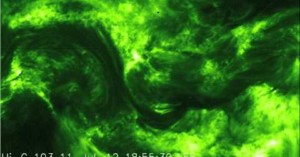
Many of the photos we get back from space come either via powerful telescopes in orbit or talented astronauts in the ISS. Another way to explore the cosmos in pictures, however, is to mount a high-powered telescope to a sub-orbital rocket, and fire away. During the trip, the telescope is allotted about 10 minutes to get the photos it's looking for. And lest you think 10 minutes isn't enough, a couple of weeks ago NASA used this exact method to capture the clearest ever images of the Sun's corona.
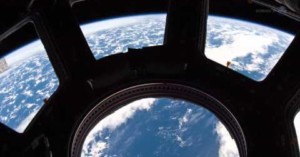
In a couple of short days, Don Pettit intends to do something that has never been done before: photograph …
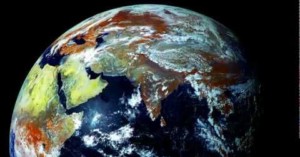
It looks like not even space photography has managed to escape the pixel war, but in the case of …