
Ethereal Slow Motion Skydiving Captured with GoPro and Slowed with Twixtor
Melbourne-based design studio Betty Wants In captured some skydiving footage using a GoPro …
Melbourne-based design studio Betty Wants In captured some skydiving footage using a GoPro …
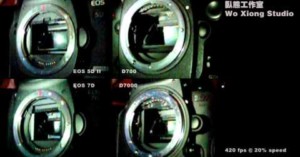
Here’s a video comparing the mirror and shutter curtain mechanisms of the Canon 5D Mark II, Canon 7D, Nikon …

Devin Graham shot this beautiful surfing footage using a Canon 7D and a …

Here’s an interesting glimpse into what a DSLR’s aperture blades and shutter curtain look like in super slow motion.

Last year we featured a pretty neat slow motion video shot from a moving train. British band …

Tom Guilmette was doing a project in Vegas that involved a …

Ever wonder what you camera flash would look like if you watched it in super slow motion? Thanks to …

This is what lighting a match looks like up close and in super slow-mo at 2000 frames per second.

Forget throwing water balloons at people’s faces — if you ever get your hands on a super …

When a NASA Space Shuttle lifts off, there’s always high definition cameras carefully placed around the launch site, documenting …

Graeme Taylor took his Casio High Speed EXILIM EX-FH20 camera and shot some 210fps footage out the window, resulting in some pretty beautiful slow-motion footage.

Another entry for our list of “random things made awesome by slow motion”: here’s a video of a steel …
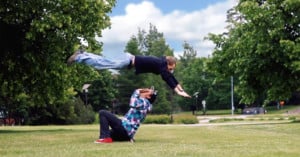
Here’s another beautiful example of what Twixtor, the $300 frame-rate conversion …
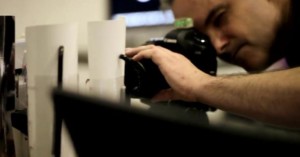
Dentsu London, the same ad agency that recently experimented with iPad …

Who needs an uber-expensive Phantom camera or fancy slow-mo software when you can fake the effect with dance? This doesn't have anything to do with photo gear or software, but we found it interesting since we've been sharing a lot of slow motion work lately. These are music videos for songs from retired MMA-fighter Genki Sudo's album "World Order". The name of the dance group is "World Order" as well.

Update on 12/11/21: This video has been removed by its creator. Here’s a suggestion for how to create some instant …
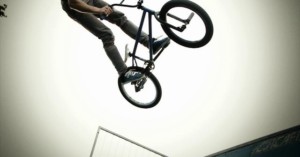
If you don't have the $2,500 needed to rent a Phantom camera for a day but would like to have super slow motion in your videos, you can fake the effect using special software designed for the task. The above video by Oton Bačar was recorded on a Canon 7D at 60 frames per second, but was slowed down to mimic 1000fps in After Effects with Twixtor, a plugin that allows you to speed up or slow down footage smoothly. It uses warping and interpolation to provide smooth results, avoiding the choppiness that you see when you play normal video back in "slow motion".

You know all those eye-popping slow motion videos we feature occasionally on PetaPixel? Many (if not most) of them were filmed with the Phantom HD Gold camera. This camera is capable of shooting thousands of frames per second, and costs a staggering $2,500 to rent for a single day.
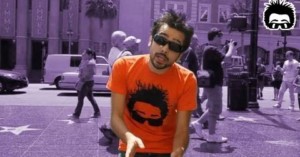
This music video by YouTube celebrity Joe Penna (AKA MysteryGuitarMan) shows him dancing in various locations while the world around him moves in slow motion. What's even cooler is that he also published a behind-the-scenes video showing how you can do the same thing. Check it out!

This amazing video shows what lightning looks like when slowed down to 9,000 frames per second. Even if you’ve …

Lets say you had an uber-expensive Phantom slow motion camera, a flamethrower, and a fire extinguisher at your disposal. What would you do?

OK Go, an LA-based rock band, makes some of the most creative music videos you'll ever see, from the treadmill video that amassed over 50 million views on YouTube to their gigantic Rube Goldberg machine one that dropped jaws around the world. Their latest video for the song "End Love" is yet another display of pure creativity, as they blend stop motion and slow motion techniques in strange and awesome new ways.
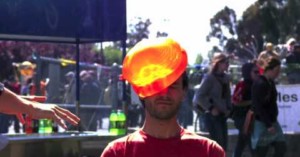
Gosh, if I had access to a HD camera capable of ultra-slow motion, …

Early last month we shared a creative viral video Google made to show off the fast rendering …

Google just released the latest beta version of its Chrome browser, and created a pretty amazing video to demonstrate how fast pages load. Using a Phantom v640 high speed camera, they film the browser racing random Rube Goldberg-style contraptions at up to 2700 frames per second. For example, in one test Chrome races a potato gun. Sweet.

Slow motion videos have a way of making most things (that move) fascinating. Cupcakes being shot at faces are no exception.

This amazing video by Spacecraft Films shows the July 16, 1969 launch of …

The above is a beautiful slow motion video (1000fps) shot of dogs jumping for dog treats flying through the …