To keep itself lean and focused, Google is planning to do some spring cleaning and shut down a number of non-critical projects and services that don’t attract enough attention to keep alive. One of the services marked for termination is Picnik, the online photo editor that Google acquired back in 2010. The service will remain online until April 19, after which the team will be folded into the Google+ team.
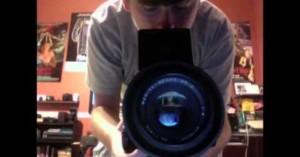
Shutterlog is an interesting YouTube channel started earlier this year by Mijonju and Cameron Lew that collects user-submitted videos of people taking a picture with their favorite camera. After receiving and sharing over 100 videos, they decided to take some of the shutter click clips and remix them into a beat. It’s like a simpler version of Lv Sisi’s Digital Analogue.
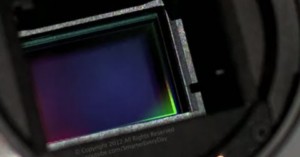
Here’s an interesting glimpse into what a DSLR’s aperture blades and shutter curtain look like in super slow motion. Specifically, it’s a Nikon D3 shooting at 11 frames per second with 1/4000 shutter speed and f/16, all captured at 5,000 frames per second. What’s amazing is that the shutter curtain moves so quickly that you can’t see the sensor at all, even at 5000fps!

Lyrebirds are ground-dwelling Australian birds that have the remarkable ability to mimic sounds, both natural and artificial. In addition to copying the calls of other birds, they imitate whatever they hear around them, including the sound of cameras if photographers are working nearby.
This short BBC clip features a Lyrebird that makes realistic camera shutter sounds (including the motordrive sound). It only runs 3 minutes, but if you want to skip to the camera-related part it’s at around 1m50s.
Even if you know how to operate your SLR camera and external shoe-mount flashes, you might not have any understanding of the complicated, technical mojo going on that limit and affect your photography. This uber-informative lesson by photographer Paul Duncan brings you up to speed on how things like focal plane shutters and “second curtain sync” work.
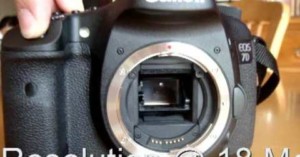
This video, created by PhotoErrant, shows a Canon 7D shooting at 8 frames per second on high-speed continuous mode. This definitely isn’t something you should try yourself, since it whacks hundreds of shutter actuations off the lifespan of your camera and exposes the sensor to dust. Luckily for us, there’s people willing to do these experiments and upload them to YouTube.