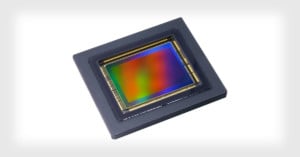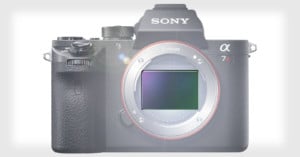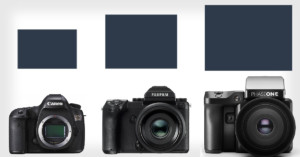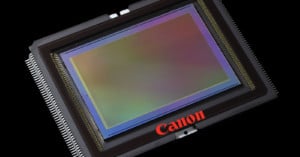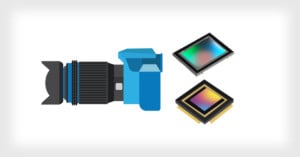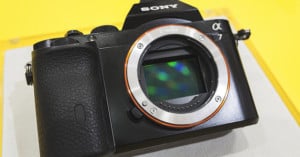
Fujifilm’s new X-Trans sensors diverge from the traditional way CMOS sensors are designed by using an irregular pattern of red, green, and blue pixels. This allows the sensors to eschew the standard anti-aliasing filter, eliminating moiré patterns without putting an extra component in front of the sensor. Roy Furchgott over at The New York Times has an interesting piece on how the new tech is inspired by Fujifilm’s glory days in the film photography industry:
Old fashioned analog photographs didn’t get a moire pattern because the crystals in film and photo paper aren’t even in size and placement. That randomness breaks up the moire effect.
So Fuji built a new sensor employing what it knew from the film business. Instead of using the Bayer array, it created a pattern called the X-Trans sensor which lays out the red green and blue photo sensors in a way that simulates the randomness of analog film.
Furchgott does a good job of explaining the new sensor design (and its benefits) in an easy-to-understand way.
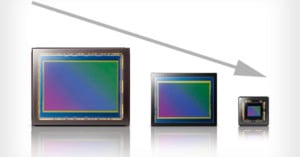
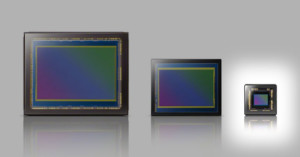
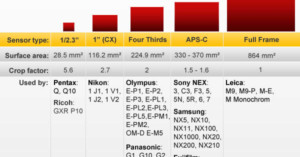
Mirrorless cameras feature sensors larger than compact cameras and bodies smaller than DSLRs, but how do their sensor sizes compare with one another? To give you a better idea of how formats such as Nikon CX and Olympus/Panasonic Four Thirds stack up against each other, Digital Camera Database created this helpful graphic showing the relative sizes of each format. Read more…
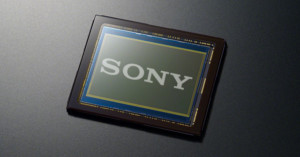
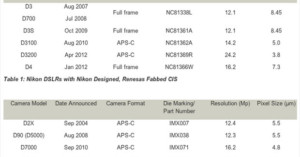
Electronics reverse-engineering company Chipworks has published an article that discusses and reviews Nikon’s use of Sony CMOS sensors in certain DSLRs:
The recent high profile Apple vs. Samsung patent infringement case further emphasizes the incestuous nature of the supply chain for components in consumer electronics. Apple has traditionally sourced a great many components for its smartphones and tablets from its competitor Samsung. An analogous relationship exists in the DSLR world where Nikon both designs its own CMOS image sensors (CIS) to be fabricated by a foundry partner, and sometimes uses CIS components from its camera competitor Sony [...] What is somewhat interesting is that after a run of Nikon-designed CIS devices in Nikon FF and APS-C cameras, Sony has muscled its way back in for the FF format D800 [...]
Sony supplies the CIS for the D800, a camera with the resolution (36.3 Mp) and performance that approaches the performance of medium format cameras for some applications [...] While there are certainly those who groan at the prospect of cranking up the resolution of a FF sensor, the D800 appears to be a disruptive event in the FF camera segment – one that Canon is rumored to likely respond to.
Chipworks notes that the D800 has the smallest pixel size of any full frame sensor it has examined so far. Canon is reportedly hard at work testing tiny pixels of its own.
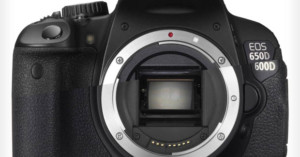
With each new generation of popular digital camera lines, consumers generally expect that feature upgrades also be accompanied by improvements to the image sensor. According to camera testing service DxOMark, that’s not the case with Canon’s entry level DSLR lineup. Read more…
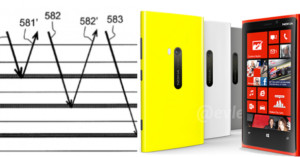
Photos and details of Nokia’s upcoming Lumia 920 smartphone leaked earlier this week, revealing that the new flagship Windows phone will feature a 8-megapixel sensor, a 4.5-inch display, 32GB of storage, and wireless charging via a special pad.
Although the camera specs seem rather pedestrian compared to the 41MP 808 PureView, patents published last month reveal that the company is working on some special sensor tech for future devices. More specifically, Nokia is working on developing camera sensors that use layers of graphene — one-atom-thick layers of carbon — for big performance advantages over existing sensors. Read more…
Idan Shechter, the guy behind Camera Size, has launched a new website for photographers who understand sizes better through visual comparisons than through specs and figures. Sensor Size is a website that offers quick visual comparisons of sensors found in popular digital cameras. Select the cameras you want to check out from a couple of drop-down menus, and the sensors are displayed in relative sizes next to each other. You can also stack the images or display them in a 3D overlay for a better view. Read more…
4K video is the realm of high end cinematography gear right? Maybe not. Two new 16MP sensors announced yesterday by OmniVision may be bringing smooth 4K video technology to everything from compacts to smartphones. The sensors, which are the tiny 1/2.3-inch format, can record 4K (3840 x 2160) video at 60fps, or even higher resolution (4608 x 3456) at 30fps.
The two sensors are no less powerful in the area of still photography either, being able to capture 12-bit RAW images. Of course your phone or camera processor will have to be able to handle the load, but newer devices with beefier image processors may well be sporting the new OmniVision sensors before long. Check out the press release for all of the juicy technical details.
Digital camera sensors come in two flavors, charge couple device (CCD) sensors and complementary metal–oxide–semiconductor (CMOS) sensors. In this video, Bill Hammack the Engineer Guy offers a short explanation of how CCD sensors capture and store images, and how a color filter array is used to capture color photos.
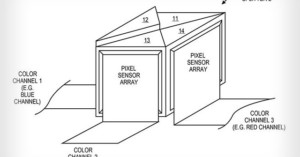
Some time ago Sony announced a new series of “stacked” CMOS sensors that would bring a new level of quality to smartphone cameras. And now, several months later, rumors are floating about that Sony’s new LT29i smartphone — codenamed the Hayabusa — will be packing a 13-megapixel version of the new tech. Read more…
Samsung has developed what the company claims is the world’s first CMOS sensor that can capture both RGB and range images at the same time. Microsoft’s Kinect has received a good deal of attention as of late for its depth-sensing capabilities, but it uses separate sensors for RGB images and range images. Samsung’s new solution combines both functions into a single image sensor by introducing “z-pixels” alongside the standard red, blue, and green pixels. This allows the sensor to capture 480×360 depth images while 1920×720 photos are being exposed. One of the big trends in the next decade may be depth-aware devices, and this new development certainly goes a long way towards making that a reality.