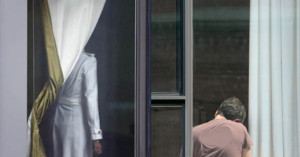
Photographer Arne Svenson lives on the second floor of an apartment building in the Tribeca neighborhood of New York City. For his project “The Neighbors,” he pointed his camera at a luxury apartment building across the street and secretly photographed its inhabitants through open windows.
Those photographs are now being sold for thousands of dollars at a gallery in NYC, but it turns out the subjects aren’t very happy with having their images stealthily snapped and sold. Read more…
Last week we shared some photos from an awareness campaign by the Mexican organization Save the Children, which showed the “cycle of abuse” through powerful, hard-to-stomach photos of children growing into future abusers. The ads were meant to illustrate the statistic that 70 percent of abused children turn into abusing adults.
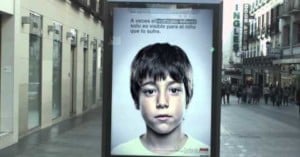
Spanish organization the ANAR Foundation (Aid to Children and Adolescents at Risk) recently released a campaign that makes similarly powerful use of photography, only they’re taking advantage of the process of lenticular printing to send an offer of help to abused children without alerting their abusers, even if they’re walking together. Read more…
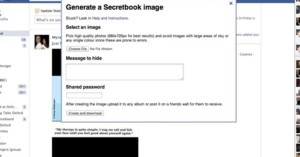
Steganography is the art of passing secret messages in a way that most observers wouldn’t detect even though the message is in plain view. Unlike cryptography, which attempts to transmit messages as nonsense, steganography uses security through obscurity, relying on the fact that most people aren’t looking for secret messages in ordinary things. Passing notes in invisible ink would be one example.
New York-based photographer Trevor Paglen‘s photos blur the lines between a number of fields, including art, science, and journalism. For his project Limit Telephotography, Paglen used powerful telescopes designed for astrophotography in order to see things that people aren’t supposed to: classified military bases. Read more…
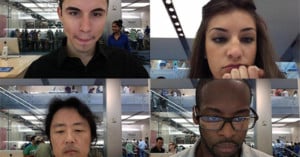
Swedish YouTube user AnteboyanRox received an interesting surprise after purchasing a brand new HP laptop recently. After finding the operating system already configured, he/she discovered the above video sitting inside the “My Documents” folder. Apparently an assembly line worker at a factory in China was testing the laptop’s camera and then forgot to wipe it afterward. Chinese manufacturing companies are generally quite secretive, so candid videos like this one aren’t easy to come by. Last year something similar happened to camera megastore B&H.
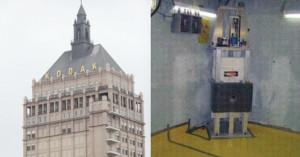
Many words and/or phrases come to mind when you think of Kodak: photography, disposable camera, kodak moment, and more recently bankruptcy. But we never thought we would be able to associate the phrases “nuclear reactor” and “enriched uranium” with the once-great photography giant — until recently that is. That’s because a few months ago a former Kodak employee let slip to the Democrat and Chronicle the existance of a little known, and never publicized, nuclear reactor hidden in the bowels of Kodak city for the last 30 years. Read more…
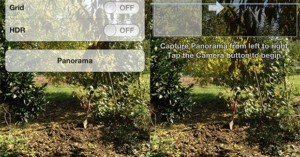
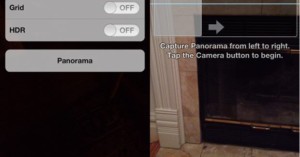
A couple days ago it was discovered that iPhones, iPods, and iPads running iOS 5 have a secret panorama mode that’s hidden in the operating system. The feature can be enabled, but featured either a jailbroken device or knowledge in how to edit a particular iOS 5 preference file. Luckily for non-hackers, Redmond Pie has discovered an easy way to do this by taking advantage of iTune’s backup feature. This tutorial will teach you how to get the panorama feature unlocked in 5-10 minutes. Read more…
Developer Conrad Kramer was poking around in iOS 5 when he stumbled upon a hidden panorama feature built into the operating system. It allows you to create panoramic photos by simply sweeping your camera across a scene. If you’re familiar with iOS, unlocking the feature involves changing a single line in a preference file (set EnableFirebreak to “YES” in com.apple.mobileslideshow.plist). People with jailbroken iPhones and iPods can also download the new Firebreak app in Cydia.
Ordinarily if there’s movement in a timelapse video, it’s constrained to a small area because a dolly or crane system was used to change the position of the camera small distances between shots. The folks at T-RECS came up with a special way to introduce large distance movements into timelapse shots, but are keeping mum on how they did it. Check out the showreel above and see if you can figure out their secret technique.
If you’re not convinced that Google is jumping into the photo-sharing pool head first, get this: the company has not one, but two stealthy photo sharing apps in private beta. Besides the Pool Party app that came to light at the beginning of the month, the rumored Photovine service has now materialized into a website — well, a landing page, at least. Read more…