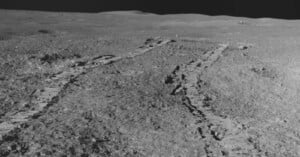
It would be nice if the pictures took themselves. But it takes a village, it seems, to get a picture taken on Mars [...] for a single snap shot you might have the Geology Science Theme Group conceive and design it en masse; the PUL-1 plan it; the entire (on staff) Science Operations Working Group discuss it and include it in the daily plan, the PUL-2 actually write it, and the engineering uplink team review and approve it before the Ace hits the button to radiate it, with the sol’s command, bundle to the rover. That’s a group the size of a small village.
Camera operator Mark Lemmon also talks about how the team often goes to great lengths to nail lighting and composition. With so many resources drained into each photo, casual snapshots aren’t exactly Curiosity’s thing.
Researchers at the University of Leuven in Belgium are embarking on an interesting mission, and they need the help of willing photographers. What they’re attempting to do is create a database of photos based on how they make the viewer feel. The project and website, dubbed Pictures With Feelings, can then be used to further our knowledge about human emotion and how specific moods come about. Where you folks come is in providing the most emotionally stimulating images buried in your archives. Read more…
Want to learn how to be more productive with your photography? Instead of simply “trying harder” and relying on your willpower, a better way may be to take simple steps that have been shown to be effective by science. The above 3-minute video, created by artists/educators Mitchell Moffit and Gregory Brown, offers some tips that science has taught us about being more efficient at working and spending less time getting our work accomplished. Read more…
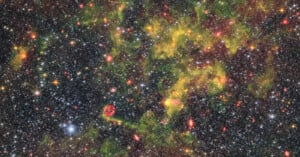
When Hurricane Sandy struck the East Coast back in October, the photograph above was widely circulated by people who believed that it showed the storm bearing down NYC. It doesn’t. The image is actually a composite photograph that combines an ordinary photo of the Statue of Liberty with a well-known image by weather photographer Mike Hollingshead. Read more…
You’ve probably heard of The Blue Marble, an iconic photo of Earth captured in 1972 from 28,000 miles away by astronauts on the Apollo 17 spacecraft. Well, NASA has just released a number of photographs titled “Black Marble.” They offer the same perspective as the iconic photo, except these new images show what our planet looks like at night! Read more…
Auroras are quite popular as a photo subject these days, especially for time-lapse photography, but a team of researchers in Norway recently snapped pictures of one in a way that hasn’t been done before: with a hyperspectral camera. The special device can simultaneously capture multiple spectral bands of light. The composite photograph above was created by combining three such bands of light, with each one assigned a different RGB color. Read more…
An interesting photographic first has been announced by a scientist at the University of Genoa in Italy. Enzo di Fabrizio revealed the world’s very first true photograph that shows the double helix structure of DNA, shown above. Read more…
This article started after I followed an online discussion about whether a 35mm or a 50mm lens on a full frame camera gives the equivalent field of view to normal human vision. This particular discussion immediately delved into the optical physics of the eye as a camera and lens — an understandable comparison since the eye consists of a front element (the cornea), an aperture ring (the iris and pupil), a lens, and a sensor (the retina).

Despite all the impressive mathematics thrown back and forth regarding the optical physics of the eyeball, the discussion didn’t quite seem to make sense logically, so I did a lot of reading of my own on the topic. Read more…
Back in September, we shared the first photos snapped by the world’s largest and most powerful digital camera: the 570-megapixel Dark Energy Camera located on a mountaintop in Chile. Reuters recently paid a visit to the massive astro-camera and the scientists behind it, and created the short 2-minute piece above that offers a closer look at the unique piece of camera equipment. Read more…