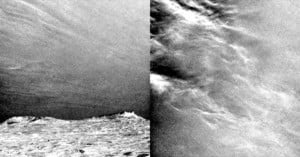
Curiosity Shoots First Nighttime Photos on the Surface of Mars
![]()
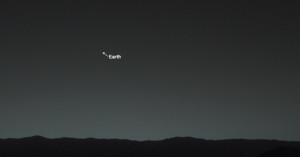
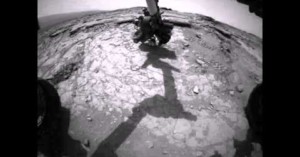
NASA’s Curiosity rover quietly accomplished another photographic first today. This time it was the first nighttime photographs captured on the surface of the Red Planet.
Read more…
![]()
NASA’s Curiosity rover quietly accomplished another photographic first today. This time it was the first nighttime photographs captured on the surface of the Red Planet.
Read more…
![]()
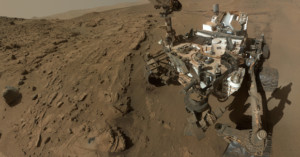
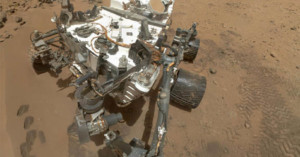
Facebook users here on Earth aren’t the only ones shooting arm’s-length self-portraits: NASA’s Curiosity rover over on Mars is doing it as well! Curiosity captured the image above a couple of days ago using its Mars Hand Lens Imager (MAHLI), which is attached to an extendable robotic arm. The image is actually a composite of 55 separate photos shot using the 2-megapixel RGB color CCD camera.
Read more…
![]()
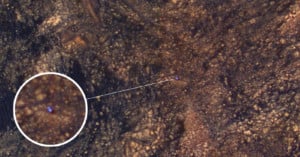
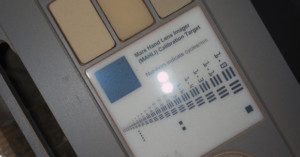
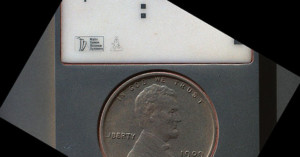
Did you know that there’s US currency on Mars? It’s true: when NASA’s Curiosity rover was launched back on November 26, 2011, one of the things it carried with it was a penny from over a century ago. The 1909 Lincoln cent is part of the rover’s onboard calibration target used to check that the cameras are working properly.
Read more…
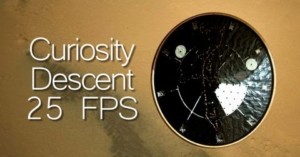
NASA’s Curiosity Rover snapped photographs at 5 frames per second as it descended onto the face of Mars a few weeks ago. The footage that results when the images are combined into a 15 frame per second HD video is pretty amazing, but apparently not amazing enough for a YouTube user named hahahaspam. He spent four straight days taking the 5 fps footage and interpolating it to 25 frames per second. This means that instead of a video showing the choppy landing at 3 times the actual speed, his video shows the landing smoothly and in real time!
Read more…
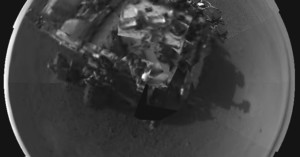
The first self-portrait captured by the rover
Ever since NASA’s Curiosity rover landed on Mars and started beaming back photographs earlier this week, people have been wondering, “why are the photos so bad?” The criticism seems merited: consumers these days are snapping great high-res photographs using phones that cost just hundreds of dollars, yet NASA can’t choose a camera with more than 2-megapixels of resolution for their $2.5 billion mission?
In an interview with dpreview, project manager Mike Ravine of Malin Space Science Systems — the company that provided three of the rover’s main cameras — explains that there were a couple main reasons behind the “lame” cameras: data transfer and fixed specifications.
Read more…
![]()
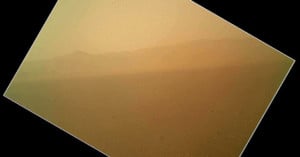
After shooting black-and-white landscape photos for a day, everyone’s favorite Martian robot photographer is now dabbling in color photography. NASA’s Curiosity rover beamed back its first color photo today, showing the rim of its new crater home.
Read more…
![]()
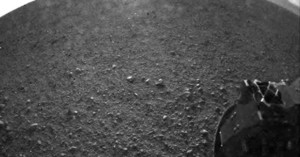
NASA’s Curiosity rover landed on Mars this morning with much fanfare here on Earth. The photo above is one of the first photographs snapped by the rover and beamed back to Earth. Captured through a fisheye wide-angle lens, the landscape photo hows a gravel field in the foreground and the rim of the Gale Crater (the rover’s new home) in the distance.
The image is blown out in the upper region due to the fact that the camera is pointed straight at the sun. Unlike our Earthling cameras, however, the one-megapixel Hazard-Avoidance cameras (Hazcams) on the rover are not damaged by the sun.
Read more…