Posts Tagged ‘rogercicala’

Disassembling a Tripod Ball Head to See How It Works

Disassembling a Tripod Ball Head to See How It Works ballhead

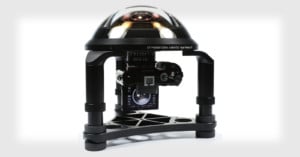
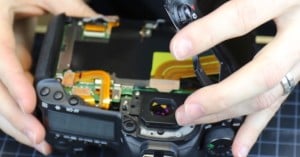
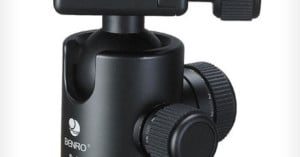
This will probably be of limited interest to most of you, but we like to know how things work, not just how well they work. We thought we’d take a couple of pictures when we disassembled a ballhead in case any of you were interested. Our demonstration partner today was a Benro B1 ballhead that had a stripped tension adjustment knob, but all ballheads work basically the same way.
Read more…

Overcoming My Photo Entekaphobia: The Fear of Shooting at f/11

Overcoming My Photo Entekaphobia: The Fear of Shooting at f/11 aperture

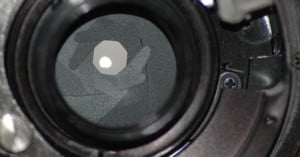
Entekaphobia is fear of the number 11. I’m a resolution fanatic. I test every new lens for resolution. For personal use, I’ll choose the lens with higher resolution over the one with creamy bokeh every time. When choosing a camera, I have a (yes, I’m ashamed to admit it, but it’s true) strong tendency to want the most megapixels. I’m a resoholic.

Being a resoholic, I’ve always been somewhat fanatical about apertures. Whenever possible I shoot with the lens stopped down at least one stop to wring the maximum sharpness out of my lens. But I’m always careful not to stop down too far because I was taught, soon after I picked up a camera, that if you stopped down too far the dreaded diffraction softening would kick in.
Read more…

A Graph of New Camera Gear’s Perceived Worth Over Time

A Graph of New Camera Gears Perceived Worth Over Time graphofperceivedworth

For several years now, my occupation has been to basically read everything written about new equipment. In order to help everyone save time, and to save the Internet millions of electrons, I have developed a concise method to summarize all such discussions for all newly introduced imaging equipment.

I modestly call this Roger’s Law of New Product Introduction and have summarized it in the graph above. You will notice there are two possible paths a new product may follow. To date, these two paths accurately describe every introduced product.
Read more…

Sigma’s New 35mm f/1.4 Has Impressive Sharpness Compared to Its Rivals

Sigmas New 35mm f/1.4 Has Impressive Sharpness Compared to Its Rivals sigma35mm

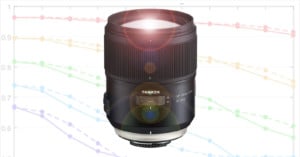
If you use a major-brand DSLR, you should be keeping a close eye on the new $899 Sigma 35mm f/1.4 (above center). It undercuts the popular (but pricey) lenses of rival camera makers by hundreds of dollars, and appears to have build- and image-qualities that are equal to (if not better than) those lenses.
Read more…

Canon 24-70mm f/2.8 Mark II Trounces the Mark I in Sharpness

Canon 24 70mm f/2.8 Mark II Trounces the Mark I in Sharpness chart

Despite its girth, weight, and price, Canon’s original 24-70mm f/2.8L is a highly-regarded general-purposes lens. When the followup Mark II version was announced back in February, the higher-price tag, similar specs, and lack of IS had many photographers scratching their heads. Then the reviews started coming out.
Read more…

First Impressions of the Canon EOS M Mirrorless Camera

First Impressions of the Canon EOS M Mirrorless Camera firstbatch

I am not a reviewer. I don’t even play one on TV. There are already some in-depth reviews out on the new Canon EOS-M, and more coming daily. But I handle a lot of equipment and test a lot of equipment. When something new comes in I spend a day handling it and testing it. Hopefully this will give you a quick overview of the camera, and perhaps fill in some things that actual reviewers don’t get to tell you about. We recently got a bunch of EOS M cameras, a bunch of the 22mm lenses, a couple of 18-55 kit lenses, and a single EOS M EF adapter.

For those who don’t want to read this but do want to tell everyone what I said later, here’s the summary: it is the best of mirrorless, it is the worst of mirrorless, it is the camera of wise choices, it is the camera of foolishness, it is the epoch of accurate autofocus, and it is the epoch of slow autofocus. In other words, I’ve got mixed emotions.
Read more…

The Nikon D600 Has Sensor Dust Issues

The Nikon D600 Has Sensor Dust Issues d600

We tend not to get too excited about sensor dust problems at LensRentals; we clean sensors on every camera after every rental, so it’s just routine. When we started carrying the Nikon D600, they all arrived with a fair amount of dust, but that’s pretty routine, too. Manufacturing and shipping can be a dusty experience.
Read more…

How the US Govt Accidentally Created the Golden Age of American Photography

How the US Govt Accidentally Created the Golden Age of American Photography color034.sJPG 950 2000 0 75 0 50 50

“Corn Along a River” Marion Post Wolcott, 1940. Library of Congress.

My overview of American government goes generally like this: (1) Something happens. (2) The government passes some laws in response to it, adds on a few pork projects, and raises taxes to pay for the laws and the pork. (3) The laws (or pork) cause an entirely new problem. (4) Repeat.

The usual outcome of this cycle is that every year we have more laws and higher taxes. But every so often, some accidental side effect occurs and something awesomely good happens. So it was during the alphabet-soup days of New Deal government during the Great Depression. The accidental side effect was the Golden Age of American Photography. How it happened is rather interesting.
Read more…

Canon 24-70mm II “Way Better” Than the Original, Kicks Butt and Takes Names

Canon 24 70mm II Way Better Than the Original, Kicks Butt and Takes Names 2470mm

After being announced back in 2002 as a replacement to the 28-70mm, Canon’s 24-70mm f/2.8 (above right) quickly became an extremely popular and highly regarded lens due to its friendly all-around focal range and sharpness. When the Mark II version was unveiled back in February to succeed “The Brick”, as the Mark I version is called, photographers grumbled at its hefty $2,300 price tag, the fact that it uses an 82mm filter instead of 77mm, and the lack of Image Stabilization. Roger Cicala over at LensRentals tested out the new lens, and has extremely positive things to say about it:

This is short, sweet, and simple. The resolution absolutely, positively kicks butt and takes names. It is way better than the lens it replaces. It’s better at 70mm than the best Canon zoom I know of, the 70-200 f/2.8 IS II. It’s even better at 24mm than the sharpest 24mm prime we have, the Canon 24 TS-E. In the center, in the corners, it doesn’t care. We only had 5 copies to test, but they were all very similar with little copy-to-copy variation.

Resolution is not everything, of course. But it’s certainly an important thing. Unless the real lens reviewers find some dramatic problems with this lens, I’d have to lean towards worth-the-money on this one. I can’t believe I’m saying that a $2,300 standard zoom is worth the money. But then again, I can’t believe I’m seeing a zoom lens out resolve a $2,000 world-class prime, either.

Okay, okay. Time to sell a kidney.

Canon 24-70 f/2.8 II Resolution Tests [LensRentals]

Double Focusing Doesn’t Lead to Sharper Photographs

Double Focusing Doesnt Lead to Sharper Photographs focus mini

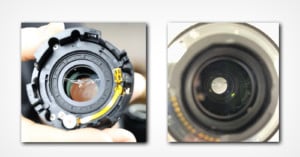
Have you ever learned that you should autofocus on the same point twice in a row to achieve optimal focusing? Apparently it’s a tip that’s often taught to beginners. Roger Cicala over at LensRentals decided to run some tests to see if this theory has any merit:

[If communication between a camera and a lens is one-way], AF may be more accurate if you ‘double focus’, meaning you push the shutter button halfway down until the AF beeps, then release and push it halfway down again. The idea is that you’re providing the camera a ‘recheck’ of the AF point and a chance to fine tune focus. I was taught to do this when I started photography but I have no idea if it really helps. So I thought we’d look at that [...]

If the two click AF method works better than one click AF, that might give us some indication that the system is open and without feedback. Maybe. If it isn’t I’m not sure it means there is a feedback loop. Maybe AF is as accurate as it gets no matter how many times you pre-focus.

After a battery of tests, Cicala came to the conclusion that “pre-focusing” a camera does absolutely nothing for the accurate focusing of photos.

Autofocus Reality Part 2: 1 versus 2, old versus new (via Gizmodo)


Image credit: Lens by 14zawa