The Internet can be a tough place for photographers. One can pour an immeasurable amount of time, money, energy, blood, sweat, and tears into a picture (or a series of pictures), only to have his or her hard work torn to shreds by nameless and faceless commenters who hide behind the veil of anonymity. Read more…
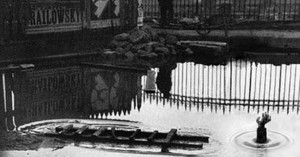
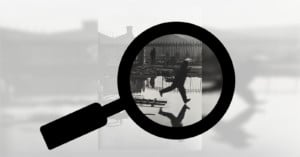
Here’s what Henri Cartier-Bresson, the father of modern photojournalism, said about his concept of “The Decisive Moment” in an interview with The Washington Post in 1957:
Photography is not like painting. There is a creative fraction of a second when you are taking a picture. Your eye must see a composition or an expression that life itself offers you, and you must know with intuition when to click the camera.
That is the moment the photographer is creative. Oop! The Moment! Once you miss it, it is gone forever. [#]
The phrase was taken from a quote by the 17th century Cardinal de Retz, who stated, “There is nothing in this world that does not have a decisive moment.”
Lee has often worked without a specific project in mind, simply making pictures of what he saw, in order, as Garry Winogrand said, to see what it looked like photographed. This way of working led him to look at his contact sheets (of which there have been an astonishing number) to find out what was there that he might not have expected. His shadow, and more clearly defined versions of himself, turned up with regularity. At some point early on Lee realized that he was making self-portraits along with many other photographs that were defining a new landscape for all of us who saw his work. There is a great lesson in this for photographers of today who dedicate themselves to one project or another, failing to understand that the best work might come from an obsession with the medium rather than the personally oriented choice of what might be done with it. Lee always has a camera with him and is constantly making pictures. How much better the work of today might be if all the young and dedicated photographers took up this habit.
If you’re in a creative rut and can’t think of a “project” idea, don’t worry — just be obsessed with photography itself and constantly be ready to photograph what interests you.
Your photos look better processed in Lightroom 4. Period. [...] The improvements in Lightroom’s Development module are so significant, and so much better than what we’ve ever had before, that I think you’ll be hard-pressed to find most anyone still using Lightroom 3 in just a few months from now. In fact, if they didn’t add another feature, it would still be worth the upgrade just to get better looking images.
You can watch a walkthrough of new the new module here, or play around with the new engine yourself by downloading the free Lightroom 4 Beta release. This is also great news for Photoshop users: the same engine is coming to Photoshop CS6 and Adobe Camera Raw.
Many potential buyers are also weighing the value of Kodak’s brand-name since there’s been a lot of talk that it may consider filing for bankruptcy. For now the company plans to restructure out of court.
Kodak’s brand name (not its patents) could easily generate more than double Polaroid’s sales price, said Jamie Salter, the CEO of Authentic Brands. “There are a lot of categories that Kodak could attach its name to. People would feel very comfortable using Kodak paper,” said Salter.
Like Polaroid, Kodak has brand cache all over the world offering potential buyers the opportunity to tap global markets.
The Polaroid brand name sold for $88 million in 2009 after Polaroid the company declared bankruptcy in 2008.
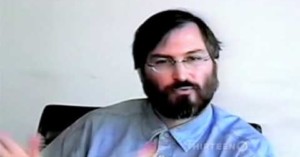
Here’s an old clip in which Steve Jobs talks about how he sees the world:
When you grow up you tend to get told the world is the way it is and your life is just to live your life inside the world. Try not to bash into the walls too much. Try to have a nice family, have fun, save a little money.
That’s a very limited life. Life can be much broader once you discover one simple fact: Everything around you that you call life was made up by people that were no smarter than you and you can change it, you can influence it, you can build your own things that other people can use.
Once you learn that, you’ll never be the same again.
All the most famous and powerful images captured throughout history were shot by ordinary human beings as well…
If you think you can’t compete as a photographer because you’re past a certain age, think again. Here’s a fantastic quote by National Geographic Editor-in-Chief Chris Johns from an interview he gave back in 2005:
There are a lot of exciting photographers out there. Our new director of photography, David Griffin, and assistant director Susan Smith are making a much stronger push than we have in the past to identify young, emerging talent. They’re not necessarily age-specific either. Often photographers start to find their traction in their 50s.
Johns also says that photography’s transition to digital has also helped photographers develop more quality; getting feedback is easier than ever, and many of the prohibitive costs are no more.
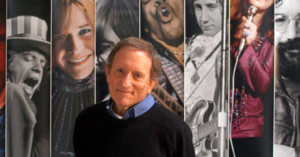
Renowned rock photographer Baron Wolman, the first photo editor at Rolling Stone magazine, is speaking out against the worrying trend of copyright grabs by music artists. He recently spoke to makingimages.com.au, saying:
I think it’s horrible – here’s how I feel about that. They own their likeness, they are the creative force – if they were not musicians, we would not have been taking pictures, right? So they’re the source of the creativity, but on the other hand, we are the source of the visual creativity recording them. So I think that that copyright should remain with the photographer, but with limitations upon how the pictures can be used.
[...] But to just say “they own everything”, I mean, why even do it?
Photographer Rodney Smith writes that the greatest gift possessed by still photographers is under attack like never before:
So dear photographers, others before you fought hard and long to give you a gift. And although everyone from corporations, to magazines, to art buyers try desperately to take it away from you, I implore you not to give it away.
Most of you are young and feel the need to work, and feel powerless against larger forces. You do not realize that when you get older, having the rights to your own work will be the best gift you have as a still photographer. It will help you when you need it most.
[...] The pressure is on. The economy is awful and people will grab what they can get away with. I implore you to stay strong and fight hard for what many other photographers, over the last 50 years, have fought hard to give you; the right to own and control your own work.
Is it your dream to become a professional photographer? Magnum photographer Christopher Anderson says you should focus more on the word “photographer” than the word “professional”:
Forget about the profession of being a photographer. First be a photographer and maybe the profession will come after. Don’t be in a rush to pay your rent with your camera. Jimi Hendrix didn’t decide on the career of professional musician before he learned to play guitar. No, he loved music and created something beautiful and that THEN became a profession. Larry Towell, for instance, was not a “professional” photographer until he was already a “famous” photographer. Make the pictures you feel compelled to make and perhaps that will lead to a career. But if you try to make the career first, you will just make sh*tty pictures that you don’t care about.
IdeasTap has a great two-part series in which Magnum members offer advice for young photographers looking to get into the game. Definitely worth a read.