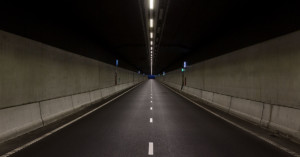
Mesmerizing Photos of Car Tunnels in Holland
"Tunnel Vision" is a new series of photos by Dutch photographer Patrick van Dam, who visited car tunnels in Holland and captured mesmerizing views from directly in the middle of the lanes.
"Tunnel Vision" is a new series of photos by Dutch photographer Patrick van Dam, who visited car tunnels in Holland and captured mesmerizing views from directly in the middle of the lanes.
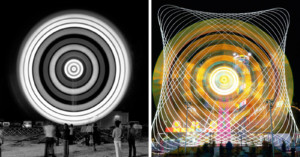
Since the early 1970s, photographer Roger Vail has been visiting carnivals and documenting the amusement rides through long exposure photos, which turn them from beastly metal machines into beautiful light shapes.
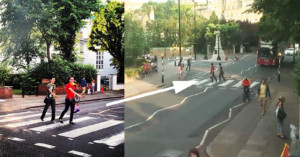
Publicly accessible live webcams can be found all over the world these days, especially at famous tourist locations. Photographer and artist Carlos Pacheco realized that this means anyone can find the exact moment any photo was shot there given a time stamp. That's the premise behind his new project, titled Found.
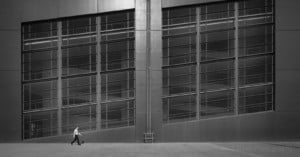
Insignificant Moments is a photo series by Australian photographer Thomas Ryan that juxtaposes tiny, lone human figures against the architecture of large structures.
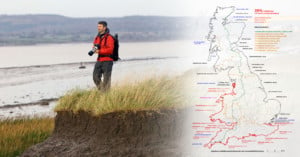
We first spoke with Quintin Lake back in 2015, when he had completed just 4% (361km) of his journey around the perimeter of Britain. He’s now covered 39% (3,928km), and we caught up with him to see how he’s been getting on.
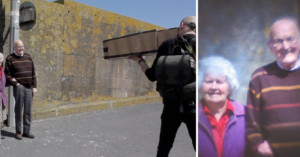
"Camera obscura" refers to a device for viewing an image that makes use of the principles of pinhole imagery, and is usually made with a box of sorts. It's this that was eventually turned into the first pinhole camera - and now you can make your own!
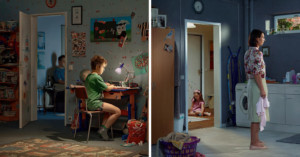
German photographer Thomas Friedrich Schaefer has created Experiential Spaces, a series of photos that are inspired by fragments of his childhood memories of growing up. At the same time, he wants to stimulate the viewers to bring out their own childhood memories too.
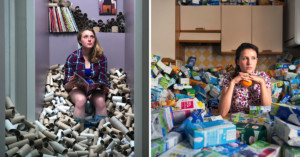
Photographer Antoine Repessé has a new photo series titled "#365 Unpacked" that required some rather unusual preparation: he spent 4 years gathering trash to create the garbage-filled sets.
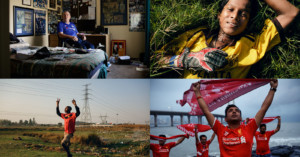
It has been two years since I approached the Premier League with an idea of photographing their fans around the world. I had gone out of the blue to pitch the idea to them, something I had never done before.
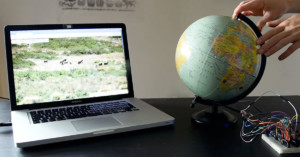
Have you ever found yourself sitting and watching someone browsing through their travel snaps, flitting between endless folders on their computer? No one likes looking at someone else's holiday snaps, but Caroline Buttet wants to change that with her interactive globe project.
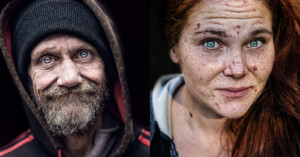
I had just moved to the pretty, but constantly rainy, Portland, Oregon, and the weather was getting to me! After going through a hard period of homesickness and mild depression, following a friend’s advice, I got my very first DSLR camera. I liked the idea of registering anything I wanted, and by anything I mean everything: landscape, objects, wild life (as wild as downtown Portland can get!), you name it…
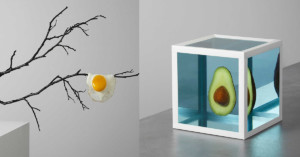
What would Salvador Dali eat for brunch? Designer Kyle Bean recently teamed up with photographer Aaron Tilley and food stylist Lucy-Ruth Hathaway to answer this very question by recreating the works of Dali and other artists using various brunch ingredients.
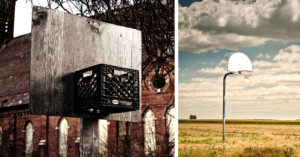
As we roll into the climax of the NBA season, photographer Rob Hammer has a new personal photo project that may be intriguing to basketball fans. It's called The Basketball Hoops Project, and it consists of photos of all kinds of basketball hoops found across the United States.
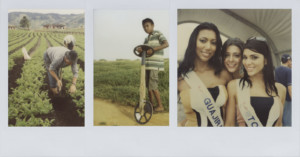
Before ever setting foot in Colombia, I knew there was more to the country than the stories and imagery of war, violence, drug trafficking, and assorted horrors which pervade the media. So, in 2003, I headed to Colombia for the first time. Little did I know that would be the start of a project that I would carry out over eleven years and become the book No Dar Papaya.
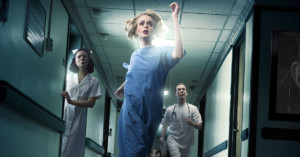
I had been itching to do a composite photo series for quite some time. It’s something I had never actually done up to this point, but I was and currently am a huge admirer of the art form. I’ve been following the great composite photographers like Dave Hill and Drew Lundquist for the past several years.
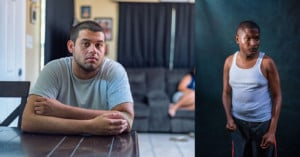
Johnson & Johnson has been fined over $3 billion for marketing the antipsychotic drug Risperdal to children. Over 18,000 boys and young men are now suing the company over a side effect of the drug called gynecomastia, which causes adolescent boys to develop female breasts. Photographer Richard Johnson recently completed a photo project to tell the boys' stories: it's titled Risperdal Boys.

In April of 2015 with the approval of the Birmingham Barons of the Southern League, I began a photo project by following the team through the season from beginning to end.
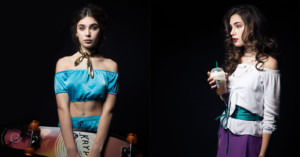
What if Disney's famous princesses lived in our modern day world instead of in theirs? That's what photographer Qingjian Meng explores in his latest photo project, titled "Modern Princess."
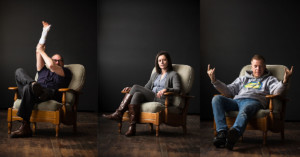
My parents bought this chair and a matching couch not long after they were married in 1951. This was my dad’s chair. If you were sitting in it when he walked into the room he gave you the friendly thumb twist, which simply meant: get up.
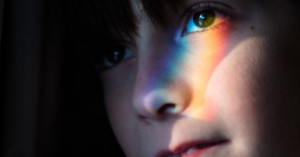
April is Autism Awareness Month, and photographer Kate Miller-Wilson has released a series of photos showing what life is like as a mother of a 10-year-old boy with autism.
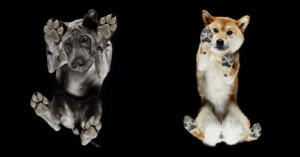
Photographer Andrius Burba is back again with another set of his trademark "Underlook" photos, which show what various animals look like when viewed from directly below. After tackling cats, rabbits, and horses, Burba's latest series focuses on dogs.
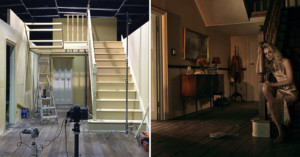
Fine art photographer Nicky Hamilton just completed an impressive photo series titled "The Lonely Man." Each photo in the project took him an average of 3 months to sketch, build, light, and shoot.
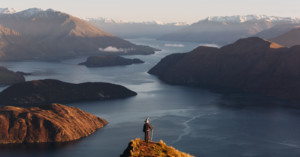
What better way to explore the far reaches of New Zealand ... uhh, I mean Middle Earth... than with Tolkien's Gandalf as your guide? That's what photographer Akhil Suhas was thinking when, while planning his 6-month trip across the country after university, he packed a Gandalf costume... just for fun.
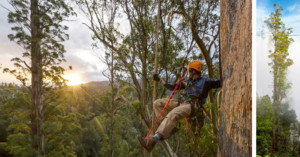
The Australian island state of Tasmania has 4 of the top 10 tallest tree species in the world and is home to the tallest flowering plant in the world, the Eucalyptus regnans, which can measure 99.8 meters (327 feet) tall.
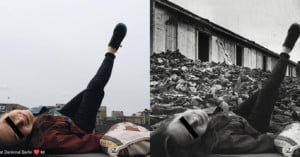
Holocaust memorials are somber places designed to honor the memories of the millions who lost their lives in the genocide, but tourists at the memorials can often be seen posing for lighthearted and disrespectful photos. Jewish artist Shahak Shapira has created a project called Yolocaust to speak out against this.
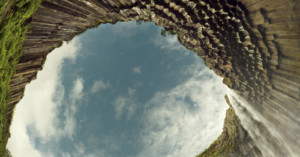
German photographer Christian Schmidt was commissioned last year to shoot a series of photos of the world, from the perspective of Earth itself.
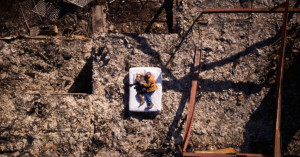
In November 2016, wildfires broke out near Great Smoky Mountains National Park and devastated the town of Gatlinburg, Tennessee, claiming 14 lives and over 2,000 homes and businesses. Nashville-based photographer Jeremy Cowart recently decided to use his camera to help bring healing and awareness to the area's victims.
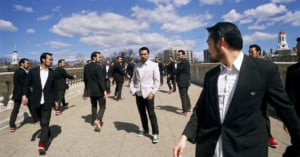
Brooklyn-based fine art photographer Johnny Tang has spent the past five years working on an impressive series of clone photographs. Some of the images are created with over 100 photos... shot entirely on 35mm film.

Photographer and digital artist Karen Alsop wanted to bring Christmas cheer to sick children, so she decided to use her photography and Photoshop skills to transport them to magical places. She calls it the The Christmas Wish Project.
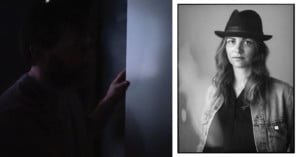
It's not every day that you come across a camera that's big enough for the photographer to stand in. But that's what photographer Ross den Otter built for the recent Capture Photography Festival in Vancouver, Canada: he shot portraits from inside a 4x8x8-foot camera obscura.
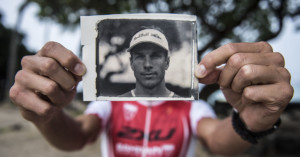
For his project "The Spirit of Iron Man," photographer Dan Votjech visited the world's hardest triathlon, the Ironman World Championship in Kona, Hawaii, and shot portraits of the competitors using a large format Polaroid camera.
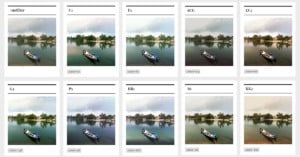
CSSCO is a new free and open source project that offers VSCO-style retro photo filters made and used entirely with CSS.
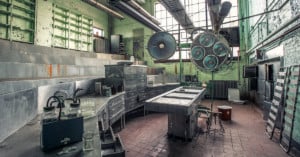
For his book and project Abandoned Asylums, Ottawa, Canada-based photographer Matt Van der Velde took his camera into abandoned state hospitals, asylums, and psychiatric facilities across the United States.
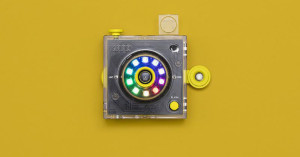
London-based DIY computing company Kano has created a new kit for people who would like to assemble and program their own digital camera. It's called the Kano Camera Kit.
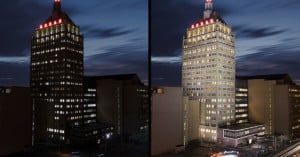
For their 32nd annual Big Shot nighttime community photo project this year, the folks over at RIT decided to light the iconic 19-story Kodak Tower skyscraper at night... by hand... with the help of 2,800 volunteers holding flashes and flashlights.
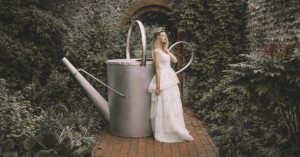
For the past two years, I have been working on a series titled GIANT. I started this project because, well, it seemed like it would be hella fun. And it truly has been -- every agonizing moment of it.

For his personal project "Gold Rush," Los Angeles-based photographer Qingjian Meng combines two different eras. The subjects look like they're from the 19th century, except each of the 8 people is using some piece of technology from the 21st century.
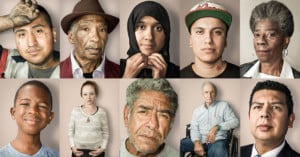
San Diego-based photographer John Mireles is working on an ambitious photo project titled Neighbors. His goal is to shoot portraits of Americans in all 50 states, from various backgrounds and in every corner of the country.
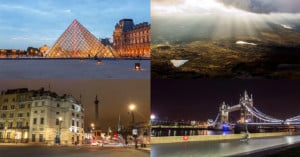
Photographer Paul Richardson of Manchester, UK, just released a time-lapse short film that's garnering high praise on the Web. It's titled "Patience," and is a 4K journey around Europe that took a great deal of patience to create.
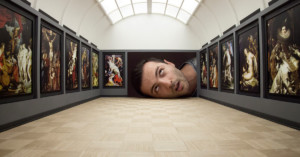
"Put Your Head Into Gallery," is an unusual interactive art project by Tbilisi, Georgia-based artist Tezi Gabunia. After creating realistic small-scale models of famous rooms in art galleries, Gabunia and his collaborators put them on display and invited visitors to his exhibition to pose with their heads inside the tiny spaces. The resulting photos show giant heads peering into well-known art galleries.