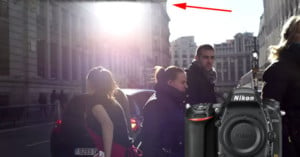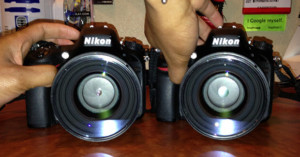
Remember this photograph tweeted last week by @weaksauce12? It shows the strange purple flaring reported by many iPhone 5 users, which is being called everything from “purple haze”, to “the Hendrix effect”, to “Purplegate”. Fingers were pointed at everything from the phone’s new sapphire lens to the infrared filter — or supposed lack of — inside.
If you were patently waiting for a fix, you’ll be disappointed to know that there doesn’t appear to be one on the horizon: Apple is saying that the excessive purple flaring behavior is “normal”. Read more…
If your DSLR ever dies in your arms or starts acting funny, here’s a simple thing to check before shelling out money to have it examined by professionals: the camera’s internal clock battery. Redditor Aero93 writes,
So my camera died out of nowhere. No matter what I did and tested, it wouldn’t turn on. Canon quoted $400 to check the cam + labor parts. Independent repair guy was around $250. It was too much for me. I decided to tackle the problem on my own. I got the manual online. Started taking the camera apart. I got stuck on one thing.
After that, I started asking around on a forum. Somebody suggested I check the internal clock battery, I didn’t even now it existed and its right next to the regular battery. I went out and bought a new one. Boom, camera fired right up.
The internal clock battery is the one that keeps the clock in your camera running even when the main battery is removed. They usually cost about a buck each. Read more…
Remember Facebook’s “zombie photo” problem? Photos that users deleted on the website actually remained very much alive on Facebook’s servers, available to anyone who held on to the images’ URLs. Earlier this year Facebook acknowledged the issue and promised changes that would ensure permanent deletion within 45 days.
Now, it appears that Facebook has honored its word. The company tells Ars Technica that deleted photographs are now vaporized from the web within 30 days — a claim that Ars has confirmed through tests. Read more…
Canon made a splash earlier this month by announcing its first EF pancake lens, the Canon 40mm f/2.8 STM. If you’re considering this lens, one thing you should know is that the autofocus noise may interfere with your videos unless you use an external mic. In his review of the lens, photographer Dan Carr writes,
Here then is probably the biggest problem with this lens. With any other Canon lens, if you think the AF motor is making too much noise you can either switch to manual focus mode to disengage the focus motors or with Canons l-series lenses and their ultrasonic motors you simply just turn the focus ring manually yourself and it doesn’t engage the noise producing AF motor. Unfortunately though, the STM motor works in a different way [...] Even when you switch to manual focus mode, rotating the the focus ring engages the STM motor to move the lens elements as the whole thing is a focus by wire system. This means that there is absolutely no way for you to get a silent video. Whether you let the camera do the focusing, as with the new cameras like the 650D/T4i , or whether you do it yourself, you are going to get the background hum as demonstrated in my video
It’s an interesting quirk, since the STM technology is meant to provide smooth and quiet focus for video recording. It may be quiet (here’s a comparison with the 50mm f/1.8 II), but you can’t eliminate it completely. On the flip side, the lens is attracting rave reviews.
A quick update on the “light leak phenomenon” on the 5D Mark III that Canon confirmed last week: after emailing Canon about the issue recently, photographer birdbrain received the following response:
Further to your enquiry we would like to inform you that we very recently (in April) have become aware of this and is now a known issue with the EOS 5D Mark III model. The AE sensor in the camera detects the light from the LCD panel when it is turned on and the exposure value will be altered. The change is not significant as it will be altered by approximately 1/3rd of a stop but can be noticeable. You can continue to use your 5D Mark III and the LCD screen can be turned off to receive the correct exposure.
The video above shows examples of what this 1/3 stop difference does for nighttime photographs. The issue definitely isn’t a huge one (don’t cancel your orders), but the 5D Mark III is a $3,500 camera and it’ll be interesting to see how Canon decides to deal with this flaw.
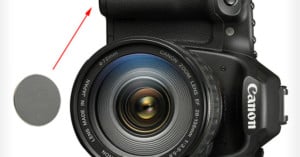
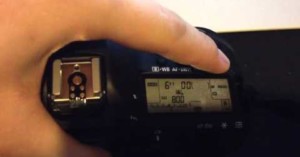
Earlier this month, reports started emerging that Canon’s new 5D Mark III DSLR has a “light leak” issue. Photographers found that turning on the LCD backlight in a dark room directly affects the camera’s metering system (as seen in the video above). Canon published a product advisory today acknowledging the issue, saying,
In extremely dark environments, if the LCD panel illuminates, the displayed exposure value may change as a result of the AE sensor’s detection of light from the LCD panel.
The phenomenon [...] has been confirmed when using the Canon EOS 5D Mark III Digital SLR Camera. Canon is now examining the countermeasures and once the countermeasures are decided, we will post the information on our Web site.
Problem is, the issue isn’t limited to the LCD’s backlight in a dark room. Apparently any light (e.g. sunlight) shining onto the LCD screen can affect exposure. Read more…
If you’re one of the many frustrated Sony NEX-5N owners who are experiencing a mysterious clicking noise when moving the camera around, hope for click-free video recording has finally arrived. Sony updated its support site yesterday acknowledging the issue:
We have received reports of a “clicking” sound which may be heard in the audio playback of movies recorded by the NEX-5N camera. This phenomenon occurs if the camera undergoes sudden motion while recording; motion generally inconsistent with smooth video recording. [...] an adjustment has been developed to reduce the clicking sound resulting from sudden motion during movie recording.
Sony will offer this performance improvement to NEX-5N end users during the period of its limited warranty accompanying the product. Please call 888-868-7392 to arrange for this improvement.
So basically, if you insist on doing motions “inconsistent with smooth video recording”, just give Sony a call and they’ll give your camera the repair performance improvement it needs.
Here’s a clever trick to keep in mind if you use SD cards for your photography: if the locking mechanism on the side of the card breaks off and renders your card unwritable, covering over the area with a little scotch tape magically makes your card useable again.
When Apple unveiled the iPhone 4, they also showed off a white version that would be available alongside the black one. Since then, however, the company repeatedly pushed back the launch date for the white version, claiming that the white one was, “more challenging to manufacture than we originally expected”. Now, Cult of Macis reporting that the problem has to do with the camera design, with the white semi-translucent glass causing light leaks and washing out photographs taken with the phone.
The white iPhone 4 can’t take accurate photographs. The handset’s semi-translucent glass case leaks light in, ruining pictures taken with the internal camera, especially when the built-in flash is used.
“You don’t get accurate pictures on the white iPhone because of the color of the glass back. It washes out the pictures,” said a source with connections to Apple who asked to remain anonymous.
Too bad — they should have released the “broken” ones as a special edition for photo enthusiasts who like low-fi photography.
Here’s a quick photo related life hack: if you have a lens filter that just won’t come off, try using a rubber jar opener to do the task. If you don’t have one already in your kitchen, there might be cheap ones at your local dollar store!