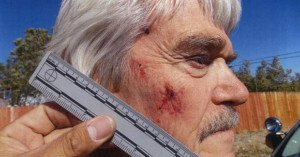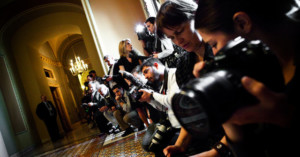
It’s like “déjà vu all over again”: New York Times freelance photographer Robert Stolarik was arrested this past Saturday while on assignment in the Bronx. As he was taking photographs of a developing street fight, Stolarik was confronted by officers, ordered to stop, and then allegedly assaulted. Read more…
Freelance news photographer Phil Datz was recording the conclusion of a police chase from the opposite sidewalk last Friday when he was confronted by a police officer and commanded to “go away”. Though he politely obeyed and moved a block further from the scene, the officer decided to arrest him for “obstruction of governmental administration”. The latest news is that the department is planning to drop the charges and put its officers through “media relations training”.
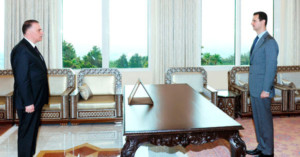
Government officials have been caught in a number of Photoshop flubs recently, from the Egyptian president being edited to be walking at the head of a pack of world leaders to a badly Photoshopped photo of Chinese officials that went recently went viral. Now the Syrian government may be the latest culprit — the country just released an image of its president swearing in a newly appointed governor, and something doesn’t quite look right…
The Guardian’s imaging expert David McCoy believes two pictures have been merged to make it seem like the men are in the same room, with the one on the right positioned fractionally higher than the one on the left. This becomes clearer when you look closely at the floor, which is distorted. The right hand side of the picture has been stretched downwards into place to line up with the left side (which is not distorted). [#]
What’s your analysis? Is this this yet another government manipulated photo?
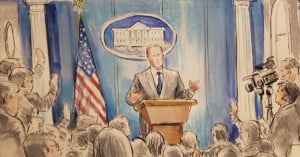
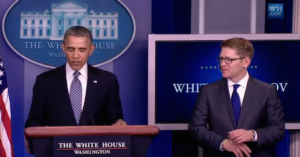
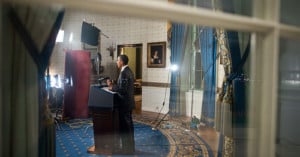
The White House is ending its long-running practice of reenacting speeches for still photographs after the controversy was rekindled last week by President Obama’s Osama bin Laden speech.
After Obama’s live, late-evening address from the East Room of the White House on May 1, five photographers were ushered in to shoot pictures as the president stood at the podium and re-read a few lines of his speech – a practice that news organizations have protested for years.
Even though The Associated Press and other news outlets said in captions to the photos that they were taken after the president delivered his address, many people who saw them may have assumed they depicted the speech itself. That raised questions of whether news organizations were staging an event. [#]
Today a spokesperson for the President stated, “We have concluded that this arrangement is a bad idea,” and that the administration is working on a new method for photojournalists to make photographs of actual speeches.
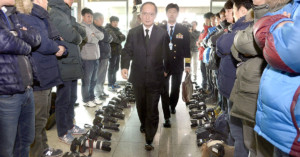
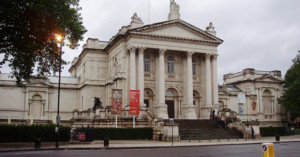
What was supposed to be a routine press preview of the Turner Prize exhibition in London turned a two-hour standoff between photographers and Tate Britain gallery contract-wavers.
Press photographers refused to sign a problematic form at the door that required them to guarantee their images would not “result in any adverse publicity” for the host gallery and reportedly signed away permission sans-royalties for gallery publicity.
Instead of securing a monopoly over the favorable images produced at the event, the gallery succeeded in the opposite, mucking up press relations in a very public way. Read more…
There’s a bit of bad blood going on between user-generated “street journalism” website Demotix and the UK Press Card Authority.
Over the past year, Demotix has issued press passes to select active citizen journalists. But now, the UK Press Card Authority, which issues press credentials for news organizations like BBC and SKY, warned that the press passes are not the same, nor should they be treated similarly to official credentials issued by the Authority. Furthermore, UK Press Card Authority chairman Mike Granatt said he would share his concerns with UK police and authorities, saying that the Demotix passes may appear similar to the official national press passes.
Granatt said:
Our concern is that the police and third parties might be misled by the Demotix card. Its intention is confirmed by Demotix’s advice on their website, which suggests ‘ … walking up to the authorities with swagger, then shove the press pass in their face along with “that’s right, I have access to this event” grin on your face’.
No professional journalist would behave like that. And no one should encourage anybody to try to bluster their way past a cordon or into an event with this hobbyists’ ‘press pass’.
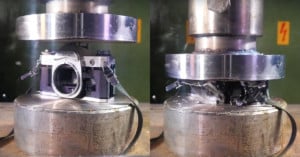
Nikon’s new president Makoto Kimura believes that the explosive growth of the digital camera market is ending, and that the market is near its saturation point.
Kimura was previously the head of Nikon’s imaging business and instrumental in leading the company from its film photography business to the new world of digital.
Nikon’s imaging business has been expanding quite steadily over the past 10 years. ‘But can it enjoy the same stable growth for the next 10 years? The answer is no,’ Growth for existing digital camera products will inevitably slow and they are set to move into a phase of saturation. I intend to keep dialogue open for everyone to decide what we should do to achieve further growth despite this trend.
Digital photography exploded between 2000 and 2010, with compact cameras being widely adopted and DSLRs becoming more and more accessible to ordinary consumers. Kimura believes that camera companies will now need to look for new directions to grow besides introducing digital cameras to new users.
What do you think will characterize this next decade in digital photography?
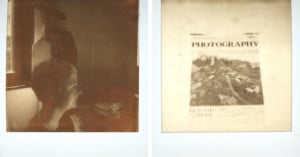
The Impossible Project’s new instant film for Polaroid cameras will go on sale later this week, but the British Journal of Photography has already gotten their hands on a pack of PX100. They were mailed a comprehensive press kit that included a box of the black and white film, and promptly exposed the film with a SX-70, publishing the results on their blog.
Of the eight exposures they had to play around with, only a few of them produced semi-recognizable images. Olivier Laurent writes,
But my initial impressions are that PX100 behaves like a expired pack of 669 or Time-Zero. You’re never sure of what you will get. To be fair, Impossible did warn us about this during its press conference yesterday. A slight change in temperature or pressure can ruin or enhance your image. One thing is sure, do NOT use this film outside in the winter or early spring, when there is still a cold breeze. Also, in some situations, you will need to keep your ND filter on.
Apart from some disappointing results (especially when shooting outside), it feels good to load a SX-70 with some new film.
$21 a pack means this is some seriously expensive experimentation. However, lets wait until the film is in the hands of the masses before coming to a verdict on this new film. Here’s to hoping the film is a success!