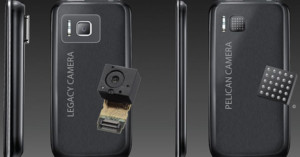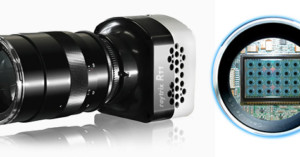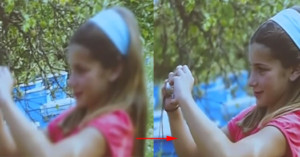
Lytro is currently the only camera on the market that lets you refocus photographs after they’re shot, thanks to its fancy schmancy (and proprietary) light field technology, but it won’t be the only one for long. Toshiba is reportedly developing its own Lytro-style camera that will target a different segment of the photography market: smartphone and tablet photographers. Read more…
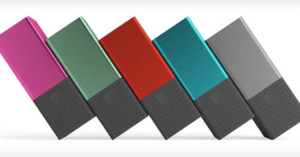
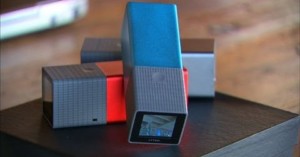
Lytro’s light field camera began hitting store shelves around the world today, and to celebrate, the company announced a couple of upgrades to the camera: manual new colors and manual controls. Read more…
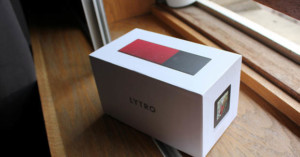
It has been nearly a year since Lytro announced the world’s first consumer light-field camera that lets users focus photographs after they’re shot. Throughout this time, the camera has only been available direct from the company when ordered through the website. That’ll soon change, as the company announced today that it will be partnering with major retailers around the world to have the camera appear on a store shelf (and website) near you. Read more…
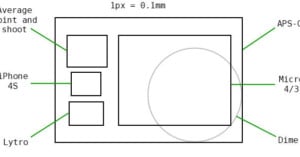
Devin Coldewey of TechCrunch created this helpful diagram showing the relative sizes of various sensors, including the one found inside the Lytro light field camera (a camera that lets you focus after shots are taken). The FCC published photos of the Lytro camera’s guts last week, revealing that the sensor inside is roughly 6.5×4.5mm (smaller than our previous estimate). This means that it’s slightly larger than the iPhone sensor and slightly smaller than the one in most point-and-shoot cameras.
Another interesting finding is that the chip inside supports Bluetooth and Wi-Fi. The company says that they’re working on wireless connectivity, but doesn’t have it enabled in the initial Lytro camera.
Yesterday we wrote that Steve Jobs had been interested in Lytro‘s novel camera technology during the final years of his life. PC World did an interview with Lytro executive chairman Charles Chi, who seems to indicate that Lytro is very open to the idea of partnering with cell phone makers and licensing light field technology to them:
If we were to apply the technology in smartphones, that ecosystem is, of course, very complex, with some very large players there. It’s an industry that’s very different and driven based on operational excellence. For us to compete in there, we’d have to be a very different kind of company. So if we were to enter that space, it would definitely be through a partnership and a codevelopment of the technology, and ultimately some kind of licensing with the appropriate partner.
He also states that Lytro has “the capital to do that, the capability in the company to do that, and… the vision to execute.” If Apple were to form an exclusive partnership with Lytro for its iPhone cameras, light field photography would instantly be adopted by the millions of people who purchase the phones every year. That’d definitely be a huge shift in the way people take pictures.
In November of last year, Steve Jobs’ official biographer Walter Isaacson revealed that Jobs had wanted to reinvent three things: television, textbooks, and photography. Last week Apple announced that it was reinventing textbooks with iBooks 2, which is intended to start a digital textbook revolution. The company is also rumored to be working on a Siri-enabled TV. Now, hints about what Steve Jobs wanted to do with photography are starting to emerge, and the murmuring is centered around one company: Lytro. Read more…
Lytro‘s consumer light field camera is currently paying a visit to the FCC on its way to store shelves near you. Along with documents related to their testing of the device, the agency has also published the User Guide that comes along with the camera.
Here’s CNET’s introduction to the new Lytro camera. The square LCD screen on the back of the camera might be small, but it’s a touchscreen display that lets you play around with the focus directly in-camera rather than having to connect the device to a computer.
AllThingsD also has a video showing the camera being demoed at their conference last Thursday.
Camera startup Lytro made a splash back in June when it announced that it was working on a revolutionary new light-field camera geared towards consumers. Rather than capture traditional 2D images, the new camera will record information about the scene’s light field, allowing photographers to do things such as refocus a shot after it is made or display any photo in 3D. The camera is scheduled to be announced within the next few months. Read more…
After reading about the revolutionary “shoot first, focus later” Lytro camera that’s currently in development, Canadian fashion model Coco Rocha reached out to the company to ask if they could work with a prototype. The next week, Lytro sent photographer Eric Cheng with one of the prototype cameras to do a fashion shoot with Rocha. In addition to the photos from the shoot, Rocha also released a behind-the-scenes video. While the video mainly shows Rocha posing, we get a few very brief glimpses of Chen holding a blurred out camera. The camera is entirely obscured, but we do see that it’s relatively small (roughly the size of a P&S), and that you compose shots with a screen on the back.