Here’s a TEDx talk photographer Brandon Stanton gave at Columbia University last October about “how our worldview is negatively affected by good stories.” Stanton is the photographer behind the website Humans of New York. Read more…
Created by five former Apple employees, Fotonaut’s Fotopedia is a much more photographic way to get educated about the world around you, and Fotopedia Reporter was their way of letting anyone contribute to the archive. Be it an encyclopedia entry about The Brooklyn Color Run or a photo essay on slaves in the Antilles, you can showcase your photojournalistic skills by telling whatever story strikes you.
But those stories don’t always strike you at home when you have easy access to Fotopedia Reporter on the Web, so the Fotonaut folks have decided to make it easier on you by releasing a companion iPad app. Read more…
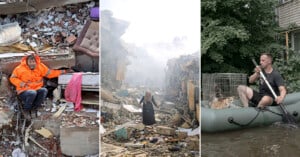
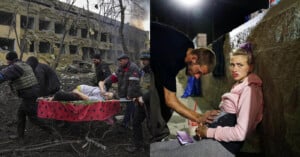
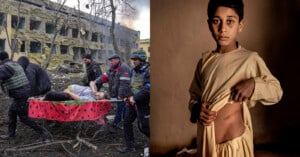
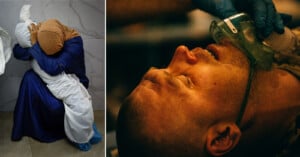
Columbia University has announced the winning photographs of both the Breaking News and Feature Photography Pulitzer prizes for 2013 — all of which depict the heartrending civil war in Syria. At first glance that may not seem like a big deal, but when you consider that the Breaking News prize wasn’t awarded to one, but five AP photographers jointly, the power of these photos begins to sink in. Read more…
Magazine and newspaper stories have traditionally revolved around the writer. A writer would pitch stories and was almost always the architect of the piece. When the story needed visuals, a photographer or illustrator would be brought in, often after the story was finished. This order of operations placed the writer in the driver’s seat.
The primacy of the writer was reflected in the leadership of the publication where editors, responsible for direction and content, rose from the ranks of authors. During the nineteenth century, when publications were gray tomes celebrating the written word, this was a perfect arrangement. Artwork accompanied the story, augmented it, clarified it, attracted attention to it, but always served a subordinate role. Photography was the appetizer to the article’s main course — the words. Read more…
Being a photojournalist in a war zone is a dangerous job. In addition to the physical hazards of combat photography, there’s always the possibility that you will be kidnapped and taken hostage by insurgents.
In recent years, photographers — and particularly photojournalists — have had to compete more and more aggressively with the everyday Joe and his smartphone who happens to be at the right place at the right time. And with technologies like CrowdOptic in the works that will help sift through the plethora of photographs taken every second, news agencies may soon be able to find that Joe in record time.
But according to an article by Jenna Wortham of The New York Times, one branch of photography is already taking a significant hit: the paparazzi are being replaced by Instagrammers. Using a recent photo of Beyoncé and her daughter as an example, Wortham shows how the paparazzi are already losing their battler with those same amateurs. Read more…
My name is Chris Rusanowsky, I am a 22-year-old freelance photographer based out of Los Angeles, California. In February of 2012 I took a trip to document poverty in Manila, Philippines for 32 days. Read more…
On the morning of December 14th, 2012 I found myself scanning the redundant array of social media apps on my phone. Just as I was about to pry myself out of bed, I had come across a recent twitter post by one of my fellow graduates of Newtown High School. In just a few minutes I would learn that my former hometown elementary school had become the site of one of the most horrific school shootings that this country has ever seen. Read more…