Mexican photojournalist Julian Cardona has lived in Ciudad Juarez since 1960 and began documenting the city in the early 1990s as a photojournalist for the local newspaper, El Diario. He says he’s seen Juarez shift from an idyllic postcard-worthy border town to the city known as the homicide capital of the world. Read more…
Here’s a short video by PBS about Duluth, Minnesota-based street photographer Kip Praslowicz. Praslowicz talks about his work and his approach to shooting in his community.
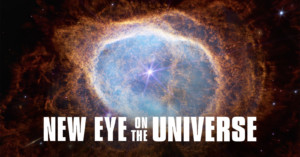
“Science can be beautiful. Art can be scientific.” This latest episode of the PBS series Off Book, titled “Seeing Beyond the Human Eye“, looks into how science and photographic techniques are helping transform how we see the world.
Technology defies the boundaries of human perception. From photomicrography to astrophotography, size and distance are no longer barriers, and through slow-mo and timelapse, we are allowed to see time and humanity in a new light. Through our curiosity and thirst for the unknown, the beauty of the universe can now be explored beyond the limits of the naked eye.
Legendary photographer Alfred Stieglitz was one of photography’s pioneers. In a time when the arts, photography included, were stuck in the past and unwilling to change, he drove the art of photography into a new erra of expression. Because of this he is known by many as “the father of modern photography.” As the documentary explains:
What Stieglitz was driving at was a new vision for a modern world; to teach America to see, and photography was the epitome of a new way of seeing… to shock the world of the arts out of its blind attachment to the past.
Part of the PBS American Masters series, The Eloquent Eye is an in-depth documentary on the life and work of this great man. And it’s well worth an hour and half of your weekend if you can spare it.
Now there’s a headline that’s sure to cause some heated debate (click here for another one). It’s the question asked by the latest episode of PBS’ show Idea Channel:
With its ability to make boring cellphone photos look “vintage” and “artsy”, Instagram has exploded worldwide. Derided by its detractors as a tool for making bad photos worse, we take an alternate view and argue that Instagram is the greatest thing to ever happen to photography. Its simple filters and social networking features are training cellphone photographers everywhere to think creatively about their photos. Plus, the app is turning its worldwide user base into an army of photojournalists capturing striking images of the people and events around them. As the old photography adage goes, “The best camera is the one you have with you.”
Here’s a great 6-minute video in which PBS Off Book examines the impact three Internet phenomena — Kickstarter, Creative Commons, and The Creators Project — are impacting the world of art.
Traditional funding models are dissolving, new forms of expressing ownership have arisen to accomodate for remix culture, and artists are finding ways to connect physical art experiences and traditions to the internet. In the digital era, the experience of art from the perspective of the artist and the art audience is shifting rapidly, and bringing more people into the creative process.
PBS art series Off Book created this short video that presents a brief history of the animated GIF:
GIFs are one of the oldest image formats used on the web. Throughout their history, they have served a huge variety of purposes, from functional to entertainment. Now, 25 years after the first GIF was created, they are experiencing an explosion of interest and innovation that is pushing them into the terrain of art. In this episode of Off Book, we chart their history, explore the hotbed of GIF creativity on Tumblr, and talk to two teams of GIF artists who are evolving the form into powerful new visual experiences.
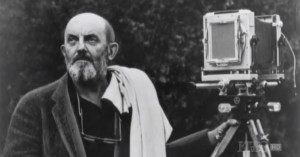
[...] an elegant, moving, and lyrical portrait of this quintessentially American photographer. The documentary weaves together archival footage, photographic images, dramatic readings of the artist’s own writing, and interviews with leading photographers, historians, curators, naturalists, as well as Adams’s family, friends, and colleagues, to tell the story of a man who was at once a visionary photographer, a pioneer in photographic technique, and an ardent crusader for the cause of environmentalism.
It’s about 80 minutes long. You can find out more about the film here.
PBS is starting a new web-only video series called “Off Book“, and the inaugural episode features Patrick Rochon and Aurora Crowley, two photographers dedicated to the art of light painting.
PBS NewsHour recently aired this interesting and inspiring video profiling photographer Alec Soth, providing a glimpse into what it’s like to work as a fine art photographer. Here’s an interesting quote by Soth in the video,
In a world where there are 500,000 pictures a second being uploaded onto Facebook, what does it mean to be a photographer in that environment?
Soth’s career got a jump start after he was selected for the 2004 Whitney Biennial, and he became a member of Magnum Photos in 2008. Visit Soth’s website here.