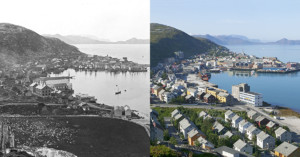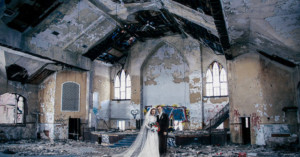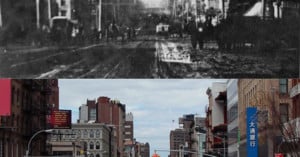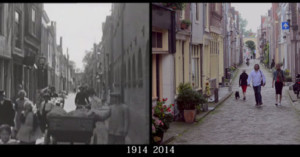
To “raise awareness of the social and economic challenges the city of Detroit,” website Detroiturbex explores and photographs abandoned buildings and places in and around the city. One of its recent projects focuses on Lewis Cass Technical High School, which had its building devastated by a major fire in 2007 (the building was subsequently demolished).
By combining old photographs of the school with new views of the abandoned building, it offers us a look into two different times: one that shows a vibrant campus and one that shows empty ruins. Read more…
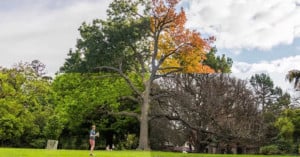
The amount of dedication required for the time-lapse video above is astounding. Titled “Fall,” it shows the colors of New York City’s Central Park changing with the seasons over a period of half a year. Here’s what its creator, photographer Jamie Scott, says about it:
One of the most striking things about New York City is the fall colors and there’s no better place to view this then Central Park. I chose 15 locations in the park and revisited them 2 days a week for six months, recording all camera positions and lens information to create consistency in the images. All shots were taken just after sunrise.
When his wife Osher became pregnant with their first child, photographer Tomer Grencel had the idea of documenting the pregnancy through a stop-motion video. Over the next 9 months, he snapped 1000 photographs at different points and with different creative concepts. After his daughter Emma entered the world, he spent a month combining the images into a single stop-motion animation that tells the story of Emma’s journey from the womb into the world.. Read more…


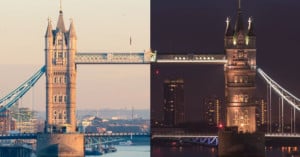
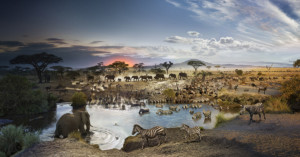
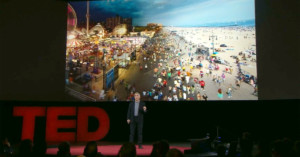
Photographer Stephen Wilkes has become well-known for his project titled “Day to Night,” which features single images of various locations that capture the passing of a day. CBS News recently caught up with Wilkes and aired the feature above. In it, the photographer talks about how the project began and walks through how the composite images are shot and created. Read more…
Photographing people on park benches is nothing new in photography, but photographers usually capture different people sitting on different benches. Ukrainian photographer Eugene Kotenko did something different: he spent four years documenting the life of a single park bench outside his house. Read more…
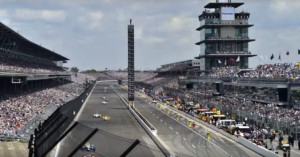
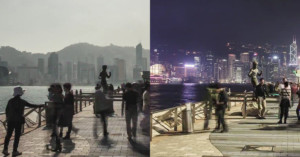
Now here’s a creative idea that we’ve never seen before… For this short film titled New York: Night and Day, New York City-based filmmaker and animator Philip Stockton blended daytime and nighttime images of his city into single shots. He explains,
New York: Night and Day is a combination of non-traditional video time-lapse and animation. I filmed day and night scenes from around New York City and combined them back into single sequences using rotoscoping techniques. The piece explores the relationships between night and day, by compositing together scenes shot in the same location over a time period ranging from 4 – 8 hours. I hope you enjoy it.
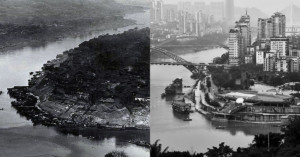
If you have two minutes to spare, you’ve got to check out this time-lapse video by photographer Rob Whitworth. There are plenty of time-lapse projects on the web, but one thing in particular about this one caught out eye: the transitions. Whitworth came up with some of the most creative transitions we’ve seen so far in a city time-lapse. Scenes bounce between day and night. Shots zoom from one into another. It’s like a roller coaster for your eyes. Read more…
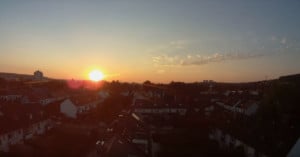
Turkey-based photography enthusiast Isil Karanfil created this beautiful image showing an entire sunset in a single photograph. Karanfil fixed her Nikon D60 in its view of the seascape, and then shot a single photograph every hour for seven hours between 3pm and 9pm as the day turned into night. She then took the resulting photographs, sliced them up, and combined them together using Photoshop for the image seen above, which she titles, “Sun Lapse”. Read more…
Inspired by photographer Richard Silver’s time-slice photos that we featured last month, European Southern Observatory Fellow Gabriel Brammer decided to do the same thing, except with photographs of the ESO’s Very Large Telescope in northern Chile instead of NYC buildings. Read more…
People sometimes use the expression “slow as a glacier” to describe something so stagnant that even the speeds of snails and molasses would feel inadequately fast in comparison. The fastest glaciers ever measured move at tens of meters per day, while the slowest ones may budge only have a meter over the course of a year. Most of the time, the movement is too slow for the human eye to see.
Luckily for us, there’s something called time-lapse photography. Back in 2004, PBS aired a NOVA episode titled Descent into the Ice, which followed photographers and adventurers as they ventured deep into the heart of a glacier found on Mont Blanc. One of the things they did was set up cameras to capture the movement of glaciers over extremely long periods of time. The video above shows 5 months of movement seen under a glacier moving 2 feet per day. Read more…