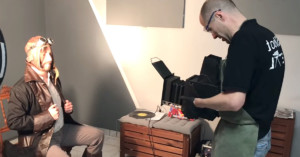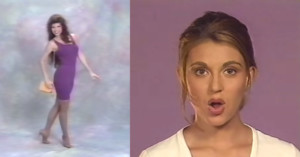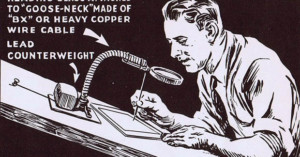
Retouching and manipulating photographs is done with fancy photo-editing programs these days, but back in 1946, making adjustments required a lot more than a computer, some software, and some pointing-and-clicking skills. Retouching required a whole box of tools, a very sharp eye, and an extremely steady hand.
Last year, Gene Gable of CreativePro came across a retouching book from 1946, titled, “Shortcuts to Photo Retouching For Commercial Use.” In it, retoucher Raymond Wardell explains the basics of the techniques at the time–think of it as a “Photoshop 101″ book for photographers who came more than half a century before us. Read more…
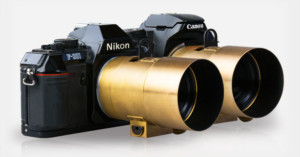
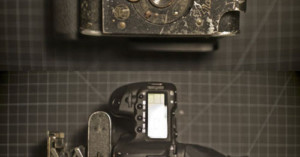
One of the big trends in the camera industry these days is the stuffing of “big camera” sensors into “small camera” bodies. After all, if you can get the same image quality from a camera that’s smaller in size, why wouldn’t you want to? (That’s the idea, at least).
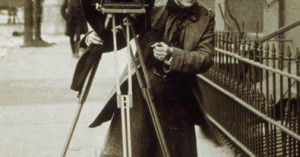
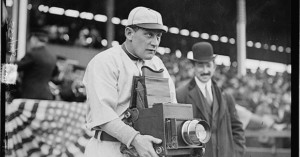
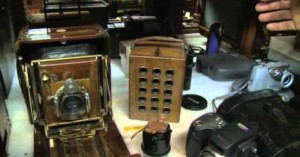
The quality and portability of cameras these days would be quite astonishing to photographers from back in the earlier days of photography — the days in which you needed both hands and a strong back to work as a photojournalist. In this post, we’ve compiled photos from those “good ol’ days” to see how far photography has come. Read more…
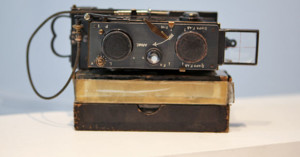
Two years ago, photographer Chris A. Hughes purchased a 1914 French Richard Verascope camera (shown above) from an elderly man who was clearing out his camera collection in preparation for retirement. When he got into his car after the purchase, Hughes was surprised to find two packages of slides in the camera’s leather case.
Upon closer examination, he discovered that the photographs on the slides were captured by a French soldier during World War I. Read more…
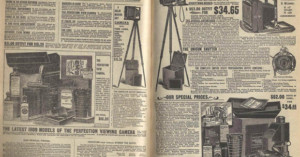
Want to buy all the camera equipment you need to start a photography business for just $15.35? All you’ll need is… a time machine! Reddit user sneeden found this Sears Roebuck and Co. consumer guide for the fall of 1900. Two of the pages inside the catalog are for view camera kits that can help anyone “start in a pleasant and good paying business.” Read more…
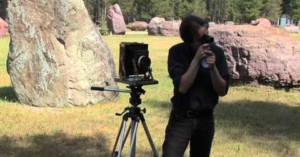
In daguerreotype photography, the first commercially successful photographic process, a positive image is recorded directly onto a silvered copper plate. Although mercury is traditionally used to develop the plate, there’s a way of creating daguerreotypes called the Becquerel method that eschews mercury in favor of non-lethal ingredients. According to Contemporary Daguerreotypes,
A polished silver plate is sensitized with iodine vapor. After the sensitized plate is exposed to light in a camera, the image will develop if the plate is further exposed to bright light through a red or amber filter. He called this the action of “continuation rays.” The curious aspect is you can watch the image form much like a Polaroid. Depending on how the subject of the image, how the plate was prepared and the development time, Becquerel images can be indistinguishable from mercury developed plates.
Did you catch that? The mysterious process uses sunlight to magically develop the images. In the video above, photographer Jerry Spagnoli shows how the Becquerel method is done, from start (polishing a piece of metal) to finish (a great looking photo). Read more…
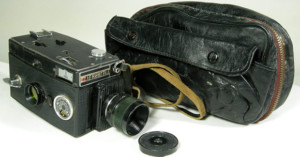
Soviet photo equipment collector Vladislav Kern recently purchased this crazy camera contraption. Upon first glance, it might look like a 8mm motion picture camera that an ordinary tourist might use, but take a closer look (or open it up) and you’ll see that the design is simply a façade. The device is actually a still camera that exposes 35mm film using a smaller lens on the right side of the body! Read more…
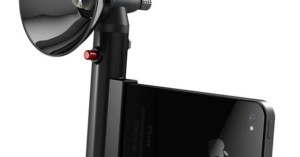
How’s this for a strange camera accessory: the Paparazzo Light is a lighting attachment for iPhones that mimics the look of vintage press camera flashes (yes, the kind the original Lightsaber was made from). The light comes from a 300 Lumen LED that’s powered by two dedicated CR 123 batteries, and three modes offer different brightness settings for photos and videos. Read more…
The Afghan box camera, or kamra-e-faoree as it’s called in Afghanistan, is a humble creation that has served its purpose well for many years. We say humble because the “camera body” consists of a wooden box, the “focusing apparatus” is a metal shaft attached to a piece of wood, and the “shutter” is controlled by removing and reinserting the “lens cap” manually. Read more…
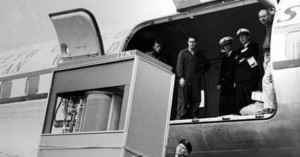
This photo shows what 5MB of hard drive storage looked like in 1956. The IBM 305 RAMAC hard disk was state of the art, weighed just shy of a ton, required a forklift to be carried around, and was composed of 50 separate 24-inch discs that occupied 16 square feet. The annual cost of using it was a staggering $35,000 — steep even in today’s money. Nowadays most RAW photos outweigh the storage capabilities of that behemoth of an external hard drive…