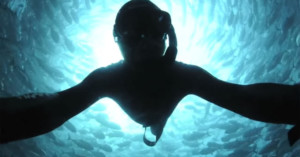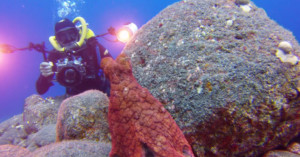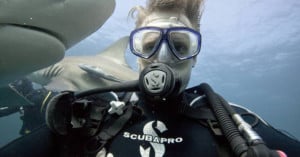
Everyone knows you shouldn’t leave DSLRs unattended in public places on land, but did you know that the same is true for when you’re shooting on the ocean floor? In the video above, one unlucky diver leaves his DSLR rig sitting on the ocean floor while swimming with sharks, only to have a klepto tiger shark swipe it and swim away.
Apparently tiger sharks have a thing for cameras: here’s another video that shows what it’s like to be gobbled up by a shark and then spit out.
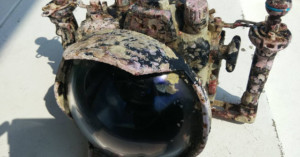
P.S. Can anyone identify the rig and/or the camera being used?
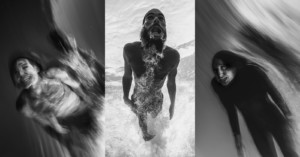
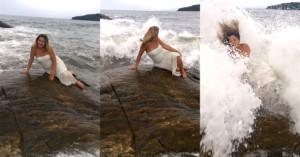
Denmark-based photographer Nikolaj Lund specializes in shooting the world of classical music, and captures some pretty unique portraits of musicians with their instruments. He takes the subjects out of their natural environment — the orchestra pit — and has them do epic poses in random places (e.g. streets, oceans, deserts). Read more…
Researchers have created the first comprehensive image of the entire 3×5-mile debris field around the sinking of the Titanic:
Compiled from more than 100,000 photos taken by underwater robots, the composite image shows the world’s best remembered shipwreck in strikingly sharp detail. Although much of the debris is hidden, you can see how the ship split apart and tell by the debris that they hit the ground violently. In just over a month — April 15 — it will have been a century since the ship hit an iceberg and sunk to the bottom of the Atlantic.
New service called the Catlin SeaView Survey is planning to do for the ocean what Google Street View has done for land. Using a special camera, the joint venture between the University of Queensland, Google, and insurance firm Catlin Group will use a specially designed underwater camera to capture interactive 360-degree panoramic photographs. The purpose will be to carry out one of the most intensive studies of reefs ever, starting with Australia’s Great Barrier Reef. It’ll go into full swing starting in September, but some sample imagery is already viewable over at the SeaView website.
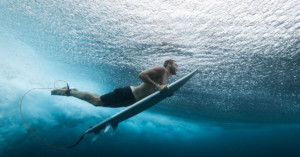
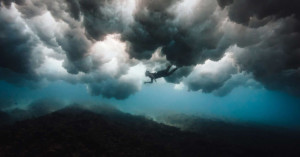
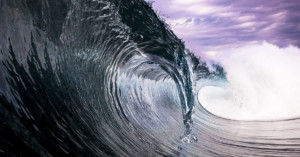
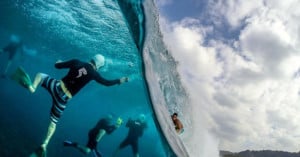
You’ve likely seen plenty of images of giant waves from above the surface of the water, but have you ever seen what it’s like to pass under a wave? Photographer Mark Tipple has an amazing project called “The Underwater Project” in which he captures epic photographs of swimmers diving deep in order to survive passing waves, which look like ominous storm clouds rolling overhead. In the interview and behind-the-scenes video above, Tipple shares how he was inspired by a powerful photo by Brian Bielmann, and how he goes about shooting his images.
Kurtis Hough of Portland, Oregon made this informative step-by-step video on how you can quickly lose $2,400 in just 24 seconds. It was shot using a Canon 5D Mark II.
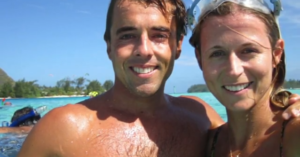
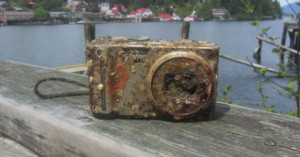
Wildlife photographer Markus Thompson was scuba diving in Deep Bay outside Vancouver recently when he stumbled upon a rusty Canon Rebel DSLR at the bottom of the ocean floor. After taking the SD card out and cleaning it, he was surprised to discover that it still worked, especially because the photos on it revealed that the camera was dropped back in August 2010. Thompson then turned to Google+ to find the owners, writing,
Approximately 50 pictures on the card from a family vacation. If you know a fire fighter from British Columbia whose team won the Pacific Regional Firefit competition, has a lovely wife and (now) 2 year old daughter – let me know. I would love to get them their vacation photos :)
After receiving thousands of comments and shares, he received an email from a friend of the owner, making this yet another crazy example of the Internet being used to reunite lost photos with their owners! You can see more photos of the DSLR here, in case you’re wondering what a year of seawater can do to a camera.

Here’s an amazing clip from the BBC series Frozen Planet. The film crew used time-lapse photography to capture “brinicle” forming under sea ice. As the beautiful icicle forms, it also becomes deadly — once it touches down, the resulting web of ice kills the slow-moving life on the sea floor. You can read more about the phenomenon here.
Photographer Sharon Rainis recently collaborated with wedding dress designer Erez Ovadia for an underwater photo shoot in which models wearing wedding dresses were photographed 20-meters under the sea. In an interview with MegaPixel, Rainis shares some of the challenges involved in such a unique shoot:
What a model goes through during such a project is, well, A LOT! First, wearing nothing but a wedding dress, the model’s body temperature rapidly decreases, making it difficult for her to keep a natural look and to hold her breath during the shots. The model isn’t wearing a mask and therefore her communication with the divers around her is very limited. In fact, the only diver she can really communicate with is her air provider, who is the only one close enough for her to see. The model has to hold her breath for quite long periods, which becomes more difficult the more time she spends underwater and the lower her body temperature reaches. If that’s not enough, she’s also tied with weights to the bottom of the sea, which doesn’t add much to her sense of confidence.
Check out the behind-the-scenes video above for a better idea of what was involved. The resulting photographs can be seen over in the MegaPixel interview.
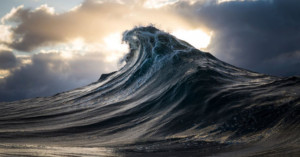
Cinematographer Chris Bryan used a Phantom HD Gold camera in a custom underwater housing to capture super slow-motion footage of waves in Sydney, Australia. Water looks amazing at thousands of frames per second. Be sure to watch it full screen and in high-def.