Earlier this week, we wrote about a unique fashion show put on in NYC by DVF that extensively featured Google’s Project Glass camera glasses. Google released a video today that provides an interesting look at the show, as recorded by various people wearing the devices.
Experience the DVF Spring 2013 show at New York Fashion Week through the eyes of the people who made it happen—the stylists, the models and Diane von Furstenberg herself. All the footage you see here was filmed using only Glass, Google’s latest technology that lets you capture moments from a unique, new perspective. See what happens when fashion and technology come together like you’ve never seen before.
It’s interesting seeing what goes on behind the scenes at a fashion show, especially from the diverse perspectives see in this video (glasses were given to everyone from the designer herself to the cameramen at the back of the runway room). Read more…
Men at Lunch is an amazing new documentary film by Seán Ó Cualáin that explores the story of one of the most iconic photographs of the 20th century: Lunch atop a Skyscraper. the 1932 photo of eleven construction workers taking a lunch break while sitting on a girder suspended 850 feet above New York City. Read more…
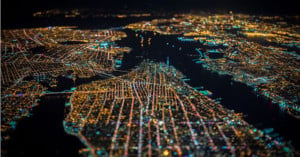
While visiting beautiful New York City earlier this year, an Australian photographer named Kiernan traveled to the top of the Empire State Building and snapped a photograph of the cityscape. After returning home, he decided to do a reverse image search on Google just to see what he might find. He was surprised to discover that the top result was a nearly identical photograph that was captured 36 years ago. Read more…
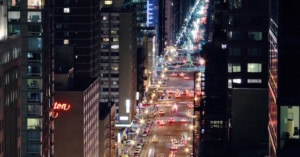
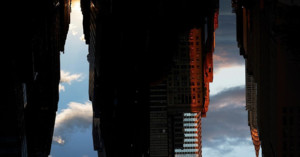
Twice per year something really cool happens: the stars, or rather one particular star, aligns with the grid of streets running through Manhattan island, offering photographers and astronomers alike an opportunity to go out and snap a few very unique and very cool photos. On May 29th (today) and July 12th of this year (it varies a bit each year) the sun sets in perfect alignment with the Manhattan grid. It’s known as “Manhattanhenge“. On those specific days, when the sun sets, you will see half of the glowing orb above and half below the horizon — although you can still get some cool, though not quite as perfect, photos on the days before and after. Read more…
The United States is a diverse country, but there are few places in the US as diverse as New York City: “the greatest city on earth.” In many ways The City’s diversity makes it a street photographer’s gold-mine, and it’s this mine that photographer Brandon Stanton has been meticulously digging through over the last couple of years. Read more…
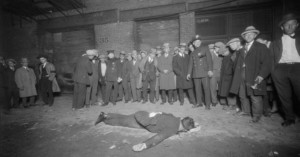
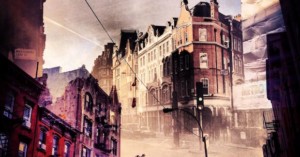
Over the past 4 years the New York City Department of Records has been compiling an online database made up of rare photographs of “the greatest city on earth,” and now that database is available to the public. The compilation consists of over 870,000 photos ranging in subject matter from landmarks to crime scenes put together from a Municipal Archives collection of over 2.2 million photos. Read more…
While visiting New York City by himself, Serbia-based art director Marko Savic came up with an interesting way of creating “tourist” photos with himself in the frame. Instead of setting the timer on his camera, asking passers-by for help, or photographing his reflection, he decided to shoot self-portraits by illuminating his face and photographing it in various reflections. Read more…

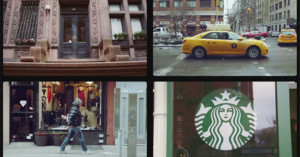
Street photographer Markus Hartel recently did some shooting on the sidewalks of New York City on a rainy day with a Kodak Playtouch rigged to his Leica M9 and 28mm Elmarit. The above video shows a point-of-view documentation of his walk along with the “keeper” shots that resulted. Read more…
Red Peak Branding conducted an experiment last year in which they chained a fully loaded bicycle (bells, basket, lights, and the whole shebang) to a post on a busy New York City sidewalk. They then visited and photographed the bicycle every single day, resulting in the 365-photo time-lapse video seen above. What’s interesting is that the bicycle remains untouched for roughly 230 days, but once small parts start getting stolen the rest of the bicycle soon follows. This might have something to do with what’s called the “broken windows theory“.