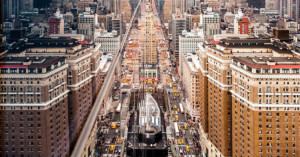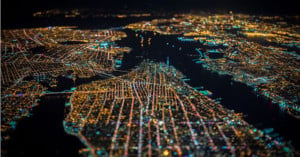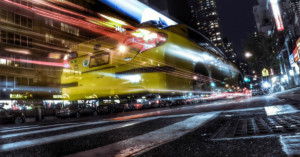
New York City is undoubtedly one of the most photographed cities on Earth, but photographer Richard Silver doesn’t let that fact faze him. He’s on a personal mission to capture facets of The Big Apple in ways people have never seen before. A month ago, we shared his New York Sliced series, which consists of spliced photos of buildings that show day turning into night.
Silver has now followed that project up with a new one titled, NY Churches, which documents the various churches in NYC through beautiful (and disorienting) vertical panoramas.
Read more…
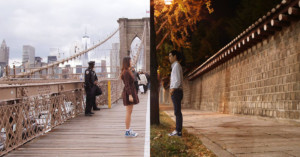
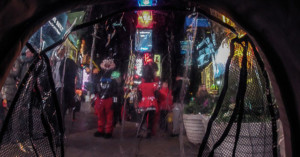
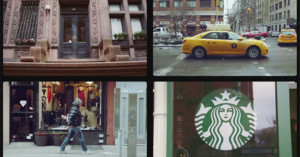
Now here’s a creative idea that we’ve never seen before… For this short film titled New York: Night and Day, New York City-based filmmaker and animator Philip Stockton blended daytime and nighttime images of his city into single shots. He explains,
New York: Night and Day is a combination of non-traditional video time-lapse and animation. I filmed day and night scenes from around New York City and combined them back into single sequences using rotoscoping techniques. The piece explores the relationships between night and day, by compositing together scenes shot in the same location over a time period ranging from 4 – 8 hours. I hope you enjoy it.
Read more…

“New York Sliced” is a beautiful and creative projected by photographer Richard Silver. No, it’s not a project about the multitude of pizza shops in The Big Apple. Instead, Silver applied a very interesting technique he calls “sliced-time photography” to documenting the architecture found within the city.
Read more…

Light painting has become quite trendy as a photography project as of late, but it’s by no means a new idea. The earliest known light painting photos were created back in 1914, and the technique has been employed by countless photographers over the years — including Pablo Picasso in 1949.
Another artist to use light painting decades ago was American artist Eric Staller. In the 1970s, Staller would roam the streets of New York City, armed with a Nikon 35mm SLR camera, some 4th of July sparklers, and a set of Christmas lights. The surreal light art he created at the time is better than many of the light painting efforts seen these days with the latest and greatest digital cameras.
Read more…
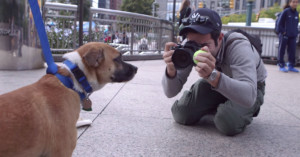
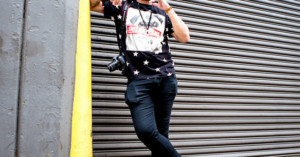
Here’s a behind-the-scenes look at what it’s like to be a photographer covering New York City’s Fashion Week 2012. Racked writes,
Photographer Astrid Stawiarz regularly works for the Wall Street Journal and the New York Post, but when Fashion Week rolls around, she’s on full-time Getty Images duty, shooting front-row celebrities and pre-show atmosphere for the photo agency. We shadowed her earlier this week as she captured the action at Osklen and Badgley Mischka. Above, watch her dodge paparazzi and security guards in her quest for the perfect shot.
Stawiarz notes that, just as in many other types of photography, shooting photos deep inside fashion week often depends more on who you know rather than what you know. You could be the best photographer in the world, but if you don’t know the right people inside the venues, you may find it very difficult to get the shots you’re looking for.
(via Doobybrain)

Geotagging is one of the big trends in photography these days, as more and more cameras allow GPS coordinates to be baked into the EXIF data of photos to document where they were taken. iOS app developer Reddyset wants to join in on the location tagging fun, but from a very different angle: taxitagging.
They’ve released a fun new iOS app called Taxi Snapshot that allows people to snap and share anonymous photos based on New York City taxicabs rather than static locations.
Read more…

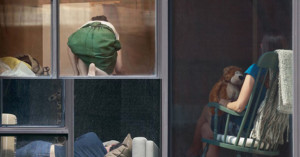
The photographs in photographer Gail Albert Halaban‘s series Out My Window are unsettling and beautiful at the same time. Each of them shows people framed by open apartment windows in New York City — quite creepy if the images are actually of unsuspecting strangers. At the same time, the voyeur is quite a photographer, as each shot perfectly balances the lighting of the subject inside with the cityscapes and brick walls outside.
The scenes were actually all staged, and are intended to share something that Halaban says New Yorkers can relate to: “connecting” with neighbors through apartment windows.
Read more…

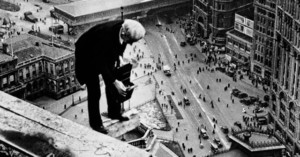
While visiting beautiful New York City earlier this year, an Australian photographer named Kiernan traveled to the top of the Empire State Building and snapped a photograph of the cityscape. After returning home, he decided to do a reverse image search on Google just to see what he might find. He was surprised to discover that the top result was a nearly identical photograph that was captured 36 years ago.
Read more…

New York City was battered by heavy storms yesterday, and photographer Ryan Brenizer managed to snap this ridiculously epic photograph (larger version here) of the ominous clouds hanging over the city (which looks more like Gotham city… or Mordor).
The 50 megapixel panorama was created using 23 photographs shot at 24mm. Brenizer says that the image wasn’t “Photoshopped to heck” — the scene actually looked like what’s seen in the photo. Needless to say, the photo has gone viral online. You can buy a print here.
(via Boing Boing)
Image credit: Photograph by Ryan Brenizer and used with permission

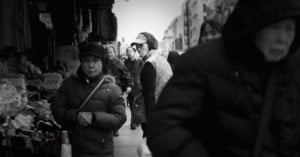
The United States is a diverse country, but there are few places in the US as diverse as New York City: “the greatest city on earth.” In many ways The City’s diversity makes it a street photographer’s gold-mine, and it’s this mine that photographer Brandon Stanton has been meticulously digging through over the last couple of years. Read more…