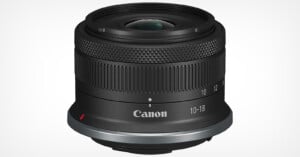
Canon Announces Ultra-Wide RF-S 10-18mm f/4.5-6.3 IS STM Lens
Somewhat surprisingly, Canon has yet to offer an APS-C ultra-wide zoom for its EOS R cameras. That changes with the introduction of the RF-S 10-18mm f/4.5-6.3 IS STM.
Somewhat surprisingly, Canon has yet to offer an APS-C ultra-wide zoom for its EOS R cameras. That changes with the introduction of the RF-S 10-18mm f/4.5-6.3 IS STM.
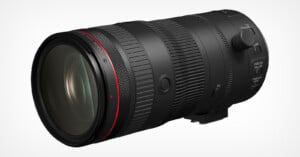
Alongside the RF 200-800mm telephoto zoom lens, Canon has announced the RF 24-105mm f/2.8 L IS USM Z, the world's first 24-105mm zoom lens with a constant f/2.8 maximum aperture.
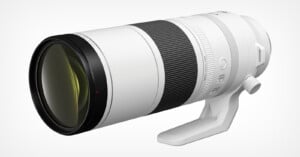
Canon has announced three new RF-mount lenses, including the RF 200-800mm f/6.3-9 IS USM super-telephoto zoom lens for full-frame Canon EOS R-series mirrorless cameras.

When buying memory cards and external drives online, even from retailers like Amazon and Walmart, customers run the risk of getting a fraudulent product that cannot match the promised storage capacity or speed of a product listing.

Just two days after President Joe Biden issued an executive order outlining the federal government's first regulations concerning artificial intelligence (AI) systems, Vice President Kamala Harris has announced the establishment of the United States AI Safety Institute.

It has been a busy week for the James Webb Space Telescope. Fresh images of the Crab Nebula and the Messier 83 spiral galaxy have been shared, showcasing incredible new views of the cosmos.

Blind Spot Gear, the company behind the Power Junkie, has announced the LumiCard, a new wirelessly-powered credit card-sized LED that attaches to the back of a smartphone to provide instant light.

Think Tank has launched new and improved versions of its popular Cable Management pouches.

While the European Union's move to make USB-C the common charging standard for nearly all electronics by the end of next year is good news for many consumers, it may spell the end for DSLR cameras.

Last night, Apple's "Scary Fast" event saw the introduction of the Apple M3 family of processors, including the M3, M3 Pro, and M3 Max. Apple also introduced updated MacBook Pro models, including a beautiful Space Black version, and the first iMac update since 2021. The event was also significant for another reason. It was shot entirely on an iPhone.

Gordon Laing of Camera Labs has returned with a new episode of his excellent "Retro Review" series, taking photographers on a nostalgic stroll down memory lane. This time, Laing has reviewed the Canon EOS D30, the company's first DSLR built from the ground up in-house.
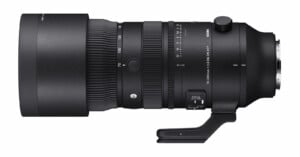
Sigma has launched new teasers of its upcoming 70-200mm f/2.8 DG DN OS Sports lens, which will be "coming soon" to full-frame E-mount and L-Mount cameras.

Apple has rounded out the new product announcements today with the updated 24-inch iMac which is now "supercharged" by the M3 chip, offers a 4.5K Resolution, and is available in seven different colors, making it ideal for both work and play.

At tonight's "Scary Fast" online event, Apple has unveiled its M3 family of chips. Coming less than five months after Apple unveiled its most recent M2 chip, the M2 Ultra, the M3 series has been built using three-nanometer technology, besting the five-nanometer tech of the M2 family.

Sony Japan has launched a dedicated teaser website for an upcoming event related to its Alpha products. While details are scarce, Sony fans will not need to wait long to see what Sony has up its sleeve.

French company Pixii has announced the latest version of its APS-C digital rangefinder camera, the Pixii+.

Wondershare has announced Filmora 13, the newest version of the company's AI-powered video editing suite.

Nikon has returned to a somewhat unusual and very consumer-friendly marketing tactic with a new 30-day Trial program for the retro-inspired Nikon Zfc APS-C mirrorless camera.

Australian film lab FilmNeverDie has announced a new motorized and reusable 35mm "simple" film camera called the Nana for $130.

The German Society for Nature Photography (GDT) has announced the winners of the prestigious European Wildlife Photographer of the Year 2023 photo contest.

Baseballs won't be the only thing flying through the air in Texas tonight as Fox Sports has integrated drones into its World Series coverage for the first time.

Death Valley National Park in southern California is well known for being the hottest place on Earth, but is also popular because of its spectacular and incredible photo opportunities.

Fujifilm has suspended the sales of two of its top-selling cameras in Japan.
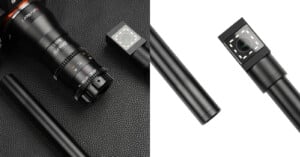
AstrHori has announced a new version of its 28mm f/13 2x Macro Probe lens.

Qualcomm announced its new Snapdragon 8 Gen 3 mobile platform on Tuesday and smartphone maker Xiaomi wasted no time in launching its first smartphones to utilize Qualcom''s new, super-fast chip.

New lens manufacturer Thypoch unveiled its first lenses last month, the Simera 28mm f/1.4 and 35mm f/1.4 manual-focus prime lenses for Leica M-mount. The fascinating and affordable new lenses are now available for purchase.
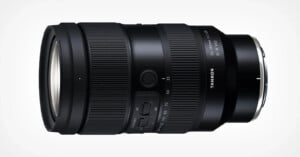
Tamron has announced a new firmware update for its 28-200mm f/2.8-5.6 Di III RXD (Model A071) and 35-150mm f/2-2.8 Di III VXD (Model A058) full-frame lenses for Sony E-mount.

Leica has announced the Leica M11-P, the world's first camera to create a seamless chain of authenticity from capture to publication.

Google's "About This Image" tool, announced last May during Google I/O, combs an image's metadata to find context and identify if it's an AI fake or not. The tool is now rolling out as part of Google's updated search tools.

Amazon has released a new beta feature that uses artificial intelligence (AI) to generate virtual backgrounds for product advertisements, putting virtual backgrounds behind real items.

After California signed its "Right to Repair" bill into law, tech giant Apple today has come out in full support of a nationwide federal law and is ready to share tools, parts, and documentation with consumers and repair shops.
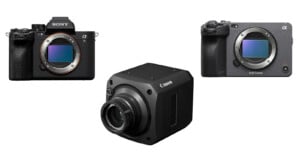
TIME has announced the 200 best inventions of 2023 and three cameras have made the cut in the consumer electronics segment.

Photography website ePHOTOzine has been purchased by Giggster, an online studio space rental company.

New details have emerged about the world's highest-resolution single-photon super conducting camera. The camera has been developed by research team at the United States Department of Commerce's National Institute of Standards and Technology (NIST).

DJI has announced the Osmo Pocket 3, a new pocket-sized gimbal camera driven by a Type 1-inch CMOS image sensor.

Chronophoto is an incredibly simple yet addictive immersive guessing game where players are presented with a series of random images and they have to guess what year a photo was taken. The game tests users knowledge of visual history by examining the details of each image to zero-in on the specific year or decade the photograph was taken.

TechCrunch describes the social media photo-sharing app Daylyy as the "anti-Instagram."

A new tool created by a team at the University of Chicago can add undetectable pixels to images to help creatives protect their work from AI image generators by effectively poisoning (corrupting) the AI's training data.

Fotodiox has announced the DLX Parabolic Focusing Softbox, a new hybrid softbox/reflector that provides photographers extensive control over the direction and quality of their light.

A trio of international designers have built a simple 35mm camera using existing camera parts and an eye-catching transparent body design.