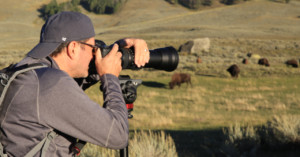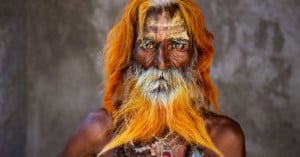
‘Life In A Day‘ is a historic crowdsourced documentary film that shows what the world was like on a single day: July 24, 2010. People in 140 countries around the world captured snippets from their lives on that day and submitted 80,000 video clips to YouTube. Oscar-winning director Kevin Macdonald and executive producer Ridley Scott then edited those 4,500 hours of footage into a 95 minute long feature film. After debuting at Sundance and being streamed on YouTube earlier this year, the film is now free to watch. Enjoy.
If you think you can’t compete as a photographer because you’re past a certain age, think again. Here’s a fantastic quote by National Geographic Editor-in-Chief Chris Johns from an interview he gave back in 2005:
There are a lot of exciting photographers out there. Our new director of photography, David Griffin, and assistant director Susan Smith are making a much stronger push than we have in the past to identify young, emerging talent. They’re not necessarily age-specific either. Often photographers start to find their traction in their 50s.
Johns also says that photography’s transition to digital has also helped photographers develop more quality; getting feedback is easier than ever, and many of the prohibitive costs are no more.
Back in 1996, National Geographic released a documentary film titled “The Photographers” that gives the world a behind-the-scenes look at how the magazine’s amazing imagery is created:
Going behind the camera and on assignment with veteran photographers for National Geographic, this documentary answers the eternal question asked by the magazine’s readers: “How in the world did they get that shot?” The photographers recount the grueling preparation that shooting for the magazine entails, from mundane details such as obtaining visas to preparing oneself for dangers such as severe climates, deep-sea dives, raging beasts, and local bandits. [...] this video is a visual delight, as many examples of noteworthy National Geographic photographs, and entertaining explanations of how the shot was set up and snapped, appear throughout. [#]
What’s great is that you [US residents] can watch the entire 53-minute film for free over on SnagFilms.
Here’s an inspiring video in which photographer and speaker Dewitt Jones talks about how he looks for “right answers” when he was doing assignments for National Geographic. Rather than specific tips or techniques, he mostly talks about high level ideas while showing off some of his stunning photographs.
Here’s an uber-inspiring video in which National Geographic photographer Sam Abell discusses the difference between “taking” and “making” photographs through his experience of shooting one particular photograph for a story on painter Charles M. Russell. He explains that taking an image is shooting a photo as a reaction, without any preparation, while making a photograph is a process.
Abell spent one-and-a-half years hunting for and making the perfect photograph of bison skulls, and shot 25,000 frames for the 8 photographs that appeared in the story. Now that’s commitment.
In 1505, Leonardo da Vinci painted a vast mural in Florence’s town hall titled “The Battle of Anghiari” — believed to be one of his greatest works. After being on display for more than 40 years, the unfinished painting was lost when the hall underwent renovations and new murals by Giorgio Vasari were added. There are no known records explaining what happened to the piece, but many people believe that it is currently hidden behind one particular mural called “Battle of Marciano in Val di Chiana”.
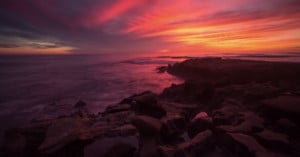
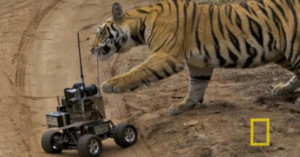
Photographer David Yoder began photographing this mystery for the National Geographic starting in 2007, and soon began looking for a way to photograph the lost painting through the existing mural. He’s currently attempting to raise $266,500 through Kickstarter to develop a camera to do this. Read more…
National Geographic recently gave expedition photographer Jimmy Chin the assignment of shooting a feature story on the Yosemite climbing culture. This jaw-dropping behind-the-scenes video shows the lengths to which Chin goes to capture shots that few photographers would dare attempt. It’s both beautiful and inspiring.
It’s not every where you get to watch and hear someone picking the brain of a National Geographic photographer. The Topeka and Shawnee County Public Library recorded this video interview with photographer Jim Richardson and asked him to share about his experiences and words of advice. Richardson also has an interesting FAQ page on his website that answers a lot of questions about shooting for the famous yellow-bordered magazine.
National Geographic created this nifty little video teaching how to turn any room with a view into a giant camera obscura. For an even more challenging project, you can try setting up some photo-sensitive paper (either photo paper or paper you paint with emulsion yourself) on the wall to shoot giant photos with your giant camera obscura.