Dr. Neal Krawetz, a computer science PhD who specializes in non-classical computer forensics, online profiling, and computer security, made some pretty damning claims in a blog post recently. After taking a close look at Paul Hansen World Press Photo 2012 winner (seen above), he concluded that it was “a digital composite that was significantly reworked.” Read more…
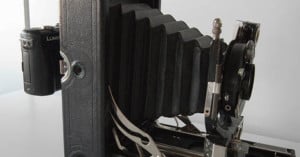
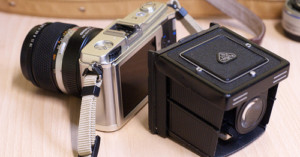
My name is David Lo, and I am a street photographer who enjoys taking vintage cameras, digitizing them, and then using them for street photography. This is a walkthrough on my process of modifying a camera. Read more…
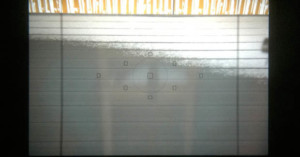
Alternative focusing screens for DSLRs aren’t hard to find, but they usually don’t have any guide lines geared toward photographers who are used to framing scenes in a square format. Zurich-based photographer Howard Linton is one such shooter. Linton decided to take matters into his own hands by modifying his DSLR’s focusing screen with custom lines etched in using an X-Acto knife. Read more…
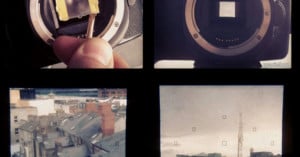
Photographer Maciej Pietuszynski has posted a (hopefully tongue-in-cheek) step-by-step tutorial over on his blog on how he was able to give his Canon 40D a square aspect ratio viewfinder by applying some tape to his focusing screen.
It could be a funny prank for convincing people that you have some kind of special, limited-edition DSLR, but be warned: focusing screens are extremely susceptible to dust and scratches. Unless you want to risk messing up the viewfinder of your camera, you might want to refrain from doing this mod yourself.
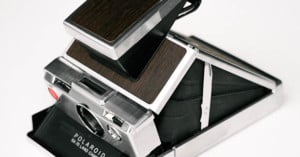
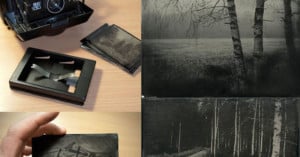
Have an old Polaroid camera lying around collecting dust? Did you know that you can use it for wet plate collodion photography? AlternativePhotography writes,
Most collodion photographers are using dedicated wet plate cameras, because wet plates are not nice to put into any ordinary modern cameras. There are instructions on how to use some normal medium and large format film cameras in the wet plate process. Most modern large format cameras are readily usable; only a special wet plate holder is needed. The drawback is the silver nitrate, possibly dripping from the holder inside the camera and eventually ruining it.
There are, however, certain types of cameras that you can use as is, without any modifications. Polaroid 100 – 400 series cameras were designed for Polaroid instant pack film, and the empty film holder can be converted to an excellent wet plate holder.
Once your film holder is modified to hold wet plates, you’ll also need to give the camera a makeshift “bulb mode” by covering its ‘Electric Eye’ light meter with black tape. The tutorial also discusses how you can expose wet plates using an enlarger and/or digitally printed film.
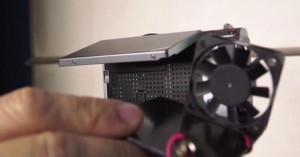
For those of you who use your Sony NEX-5N to shoot video, you may have noticed that longer clips have a tendency to lock up your camera. It’s not a problem for shorter videos, but clips over 20 minutes, especially in hot weather, often brings the camera up to a temperature it would rather avoid. To solve this problem, Aron Anderson of trinityfxmg had the idea of modding the camera by adding a battery powered fan to keep it cool even in blistering weather.
So if you have an NEX-5N and want to rid yourself of overheating woes, this video tutorial will show you how to do the mod from start to finish, and even demonstrates the fan in action in brutal 107-degree weather.
How do photographers get those wide images that bleed through the edges of the negative, showing the sprocket holes? It’s a technique that allows your to create stunning panoramic images — these little bits of film become art in themselves. These photographs are achieved by loading 35mm film into a 120 medium format camera. This tutorial was written with the Holga in mind, but the same technique works for other 120 cameras as well. Read more…
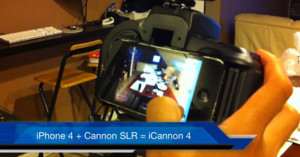
For whatever reason, Vimeo user Aniebres decided to combine the bulkiness of an SLR camera with the lowly sensor of a phone camera. Taking an old Canon film SLR, he gutted it and created a space for his iPhone to snap into place. What’s sad is that the SLR acts as a completely useless shell, and the lens has to be removed for photos to be taken. If only he took off the lame Apple sticker on the front, he might be able to pass off as a photographer… as long as he only snapped photos while changing lenses or something. Read more…
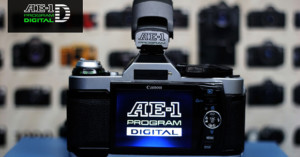
Ken Rockwell posted some links to photos of a Canon AE-1 Program Digital a couple days ago, and photo-enthusiasts around the web have been discussing whether or not it’s a real camera.
From the photos and videos showing the camera, it’s pretty clear that it’s fake, and that someone with a lot of time on their hands hollowed out a Canon AE-1 Program camera and lens, put in a PowerShot SD 870 IS, and got the thing working.
It’s pretty amazing that the AE-1 was modified so that all of the controls on the PowerShot are still accessible. Here’s a video posted to YouTube showing that the camera actually works:
There’s also a separate video on YouTube with a few more still photographs of the mod. Addition photographs posted by Rockwell are here, here, and here.
Anyone know how they were able to get an “AE-1 Program Digital” logo on the point-and-shoot?