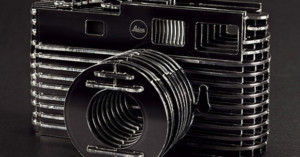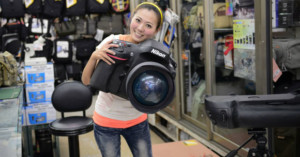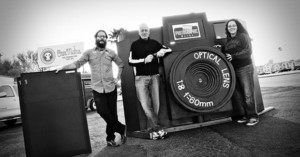
The folks over at Tucson, Arizona-based ArtsEye Gallery love the Holga so much, that decided to create a gigantic version of the plastic 120 format toy camera for an annual photo competition they host. They were originally planning to create it as a fun prop, but midway through the construction process, they had the brilliant idea of making it as a functioning camera. Read more…
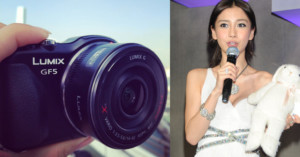
China News reports that Panasonic is seeking a refund of their contract, worth 9,910,014 yuan (about $1,559,181.51 USD) plus another million yuan ($157,334 USD) in damages for the leak: a serious trade secret violation that Panasonic also said would affect their marketing plans and strategies. The ad agency in charge of the Panasonic campaign, McCann Shanghai, countersued Panasonic, saying the terminated contract is unlawful and the terms of their contract were met.
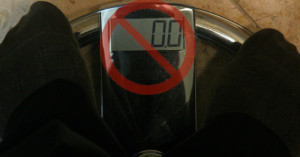
While a number of countries are taking steps to ban the unrealistic Photoshopping of models, Israel has gone a step further: the country has banned the use of underweight models themselves. Additionally, ads that are Photoshopped to make models look skinnier must also now carry a disclaimer. With the new law in place, all models appearing at photo shoots for ads geared toward the Israeli market must provide an up-to-date medical report proving that they aren’t malnourished by the World Health Organization’s (WHO) standards. WHO states that a body mass index below 18.5 indicates malnutrition. By these standards, a woman 5’8” tall must weigh at least 119 pounds.
Here’s a Photoshop protip: before saving a final version of a photo for publishing on the web, make sure all the layers you want in the image are actually visible. Apparently some Photoshopper working for JCrew got careless with his layers, which led to the above catalog photo showing a model with transparent hair (in fact, the hair appeared by itself in a separate photo). The catalog entry has since been fixed, with the invisible-haired woman replaced with a boring photo of a blue blazer.
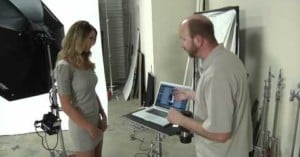
Here’s a crash course on how to work with models as a photographer. Photographer Mark Wallace discusses tips for before, during, and after the shoot, and also how to find a model for your project.
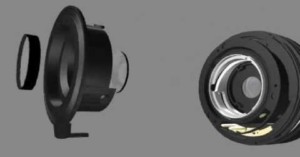
This animation was created by students of the Engineering 128: Advanced Engineering Design Graphics course at UC Berkeley during the Spring 2008 semester. The first part shows a Canon 10D DSLR exploding into its individual parts, and then those parts coming together again to slowly rebuild the camera, while the second part does the same for a Canon 24-85mm lens. Pretty dang impressive considering that it’s for an undergraduate course.
There’s a lot of paranoia when it comes to doing photography in and around airports these days — much to the dismay of plane spotters — but wedding photographer and airplane enthusiast Lynn-Kai Chao came up with a neat way to do airplane photography without worrying the TSA: by using airplane models. Believe it or not, the above photograph is actually a Photoshopped photograph of Chao holding a model airplane. Read more…
Earlier this week Adobe launched a new subscription-based model for their Creative Suite line of software products. The program ordinarily costs $699, but a yearly subscription costs $420 and gives you access to the latest version. You can also subscribe for a monthly fee of $49 if you need the program on a short term basis. While this won’t be very enticing for heavy users of the programs who can just save money by buying and upgrading, renting is a good option for anyone who needs the latest Photoshop on a as-needed basis.
Last November NYC firefighter Robert Keiley posed for a stock photograph that showed him covered with soot and holding a helmet. Despite signing a release when the image was made, he was shocked when he found an edited version of the photo in an advertisement show him holding a picture of the Twin Towers on 9/11. The ad read “I Was There”, and was for a law firm specializing in 9/11 lawsuits. Keiley, previously a model, didn’t join the fire department until 2004. Now, the agency behind the ad has pulled it after Keiley announced intentions to sue. The news clip above shows two lawyers debating this case. Your thoughts?
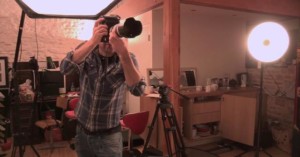
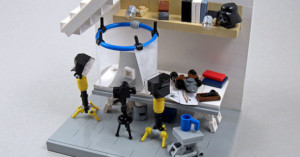
Using Lego pieces, Flickr user and Lego fan Larry Lars created an uber-accurate miniature version of his home photo studio. Maybe this could be a new method of creating lighting diagrams? Read more…