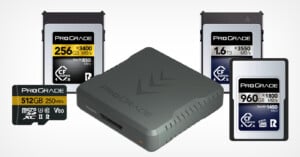
ProGrade Digital’s New Memory Cards Give Users Speed and Space
ProGrade Digital announced six new products meant to help creators speed up their workflows without sacrificing space.
ProGrade Digital announced six new products meant to help creators speed up their workflows without sacrificing space.
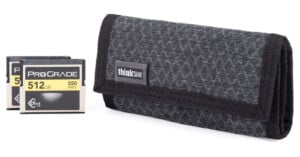
Coincidentally, less than a day after PetaPixel's editor-in-chief Jaron Schneider touted the benefits and quality of his trusted Think Tank's Pixel Pocket Rocket memory card holders in an internal Slack chat, Think Tank has announced an across-the-board update to its Pocket Rocket memory card and battery wallets products.
Nextorage's NX-B2PRO CFexpress Type B memory cards promise high-level read and write performance, including maximum read and write speeds of 3,900 and 3,600 MB/s, respectively.
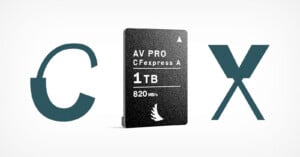
Angelbird has discontinued its massive 1TB capacity CFexpress Type A card. The $500 card was not only cheap, it promised full compatibility with Sony cameras. That might be the source to the "why" it has been taken off store shelves.
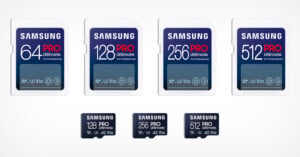
Samsung has announced a new series of UHS-I Pro Ultimate memory cards that are specifically made for professional photographers, videographers, and other content creators.

Sony has reclaimed the title of the largest CFexpress Type A card with its new 1,920GB capacity monster. That's a ton of storage, but it comes with a similarly high asking price.
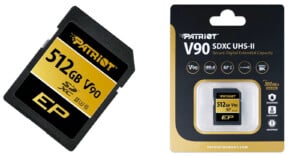
Patriot Memory has announced the Patriot V90 SD card. The company's newest UHS-II card supports 4K/8K video capture and promises read speeds up to 300 MB/s and write speeds up to 260 MB/s.

ProGrade Digital has updated its Refresh Pro computer software -- a tool for maximizing the performance of a card and monitoring product health -- with the ability to update the firmware of its memory cards.
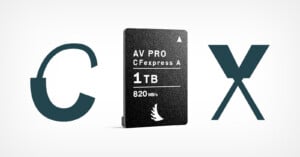
Angelbird has announced a 1TB capacity CFexpress Type A card, which is now easily the largest capacity storage media available to support Sony photographers.
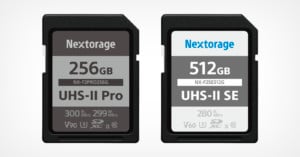
Nextorage, a relative newcomer to the memory card space, has announced two new SD card series. One, the NX-F2PRO SD cards are the company's highest performance while the NX-F2SE cards are slower but still good enough to handle 4K video capture.
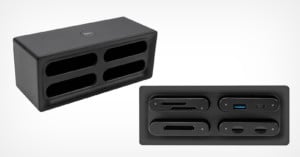
The Pan's Workflow Station is a card reader hub device that allows photographers to offload multiple memory cards at once, and it does so for notably cheaper than other options.
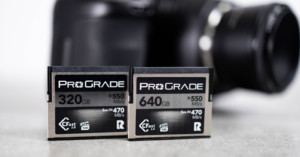
While CFast as a format has been fading in popularity, it's still a necessary memory format for some cameras, such as Blackmagic's Pocket Cinema Camera. As such, ProGrade Digital has announced its third-gen CFast cards which are its fastest ever.
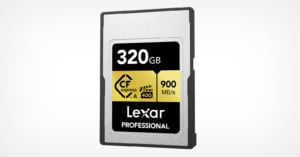
Lexar has announced a new higher-capacity CFexpress Type A card. Categorized into its Gold line, the 320GB card promises up to 900 MB/s read speeds and 800 MB/s write speeds.

OWC has launched several new high-performance SD cards that feature v90 capacities of up to 512GB and v60 capacities of up to 1TB. Its new CFexpress Type-B cards are just as impressive and reach capacities up to 2TB with blazing fast speeds.

Lexar has revealed the pricing of its new Gold Series CFexpress Type A cards and while it is more expensive than both Sony and ProGrade Digital equivalents, in testing the new card handily outperforms both.
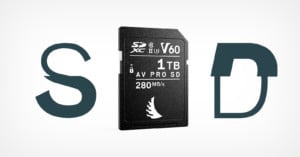
Angelbird has announced the first 1TB capacity V60 speed SD memory card, the highest capacity card available with the promise of at least 60 MB/s sustained transfer speeds.
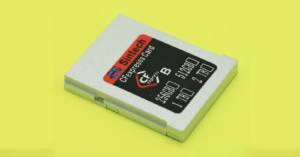
A cheap adapter from Sintech allows industrious photographers to take inexpensive SSDs and build their own CFexpress memory cards at home, allowing them to possibly save hundreds of dollars over "official" cards.
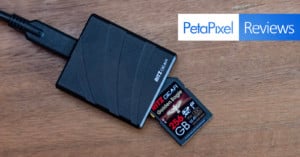
After reading my story on its $300 SD Express card, Ritz Gear reached out and insisted that I try it for myself. The company even included an SD Express card reader in an attempt, I assume, to show its value. After testing, I am at a loss: this is so much worse than I ever thought it could be.
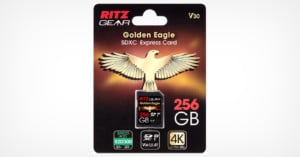
Ritz Gear is currently offering a brand new SD Express memory card that it promises boasts up to 820 MB/s read and 500 MB/s write speeds for $300. In real-world use cases, it will never come close to these promises and it says so right on the box.

Other World Computing (OWC) has announced a set of new SD and CFexpress Type B memory cards, which expands its support to photographers beyond just the computer accessories which it is most well known for.
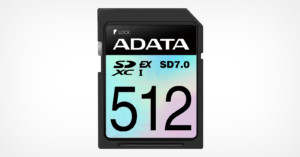
Adata has announced that it will be producing a line of SD Express memory cards, following Lexar which did the same earlier this year. It's unclear who these cards are for, however, as no manufacturer currently supports the spec.
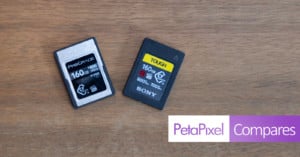
ProGrade Digital just released the first CFexpress Type A cards that aren't made by Sony and while they aren't "cheap" by any stretch of the imagination, they are more affordable than Sony's offering. But does that discount come at a performance cost?
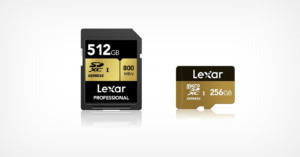
Lexar has announced that it is actively developing on the thus far unused SD Express specification to create SD memory cards that use PCI Express (PCIe 4.0) and will more than triple the speeds of current UHS-II cards, but it's not clear who these cards will work for.

We live in a time when our technology and camera gear usually work extremely well and reliably... Until it doesn’t. Randomly. And at the worst time. When that happens, you’re left feeling unprepared and stressed which is something that none of us enjoy.

If it feels like it's been a long time since Nikon promised the D5, D850, and D500 would get CFexpress support, it's because it has. The original announcement came in February of 2019, and today that promise is fulfilled.

Portrait photographer Miquel Quiles says he has seen new photographers make a lot of mistakes as they get started with their new hobby, one of which is where they choose to spend their money. In this 10-minute video, Quiles highlights five items he says new photographers should never buy.
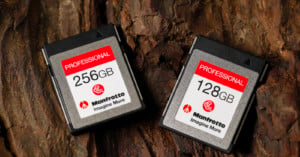
Manfrotto has expanded its growing memory card lineup to include two new capacities of the CFexpress Type B format. The 128GB and 256GB capacities promise 1,730 MB/s read speeds and the capability to record high frame rate 8K video.
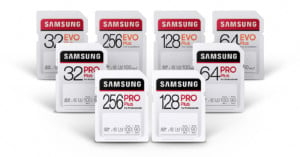
When it comes to 'rugged' SD cards that can withstand drops and water and x-rays, Sony's Tough cards haven't really had any competition... until now. Samsung has just unveiled two new lineups of SD cards that bring some of the same adventure-proof benefits to a more affordable price point.
It's been well over a year since Nikon revealed that the D5, D850, and D500 DSLRs would all be getting CFexpress memory card support "in the future," but users are still waiting for Nikon to reveal exactly when that future will arrive. Fortunately, it seems that wait is almost over.

The plot thickens... in a pair of videos released this week, YouTuber and Twitch streamer Wayne from No Life Digital shows how simply removing the memory cards from the Canon EOS R5 basically "fixes" the camera's overhearing problems when shooting to an external recorder.

Four days ago, Sony quietly issued a product advisory for three of its SD card product lines that could potentially corrupt your video footage when used. The company will replace these cards for free if your serial number is affected.
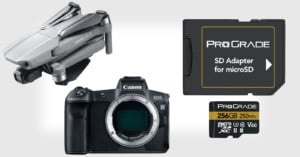
Memory card maker ProGrade Digital has unveiled a new lineup of UHS-II microSDXC cards that are both faster and cheaper than their predecessors. And since they come with a full-size, full performance UHS-II SD adaptor, they're extremely versatile as well.
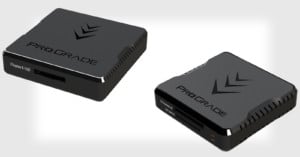
Memory manufacturer ProGrade Digital has revealed its latest pair of memory card readers, a brand new Thunderbolt 3 CFExpress/XQD card reader with "revolutionary" transfer speeds, and an updated dual-slot card reader that pairs an SD slot with CFExpress.
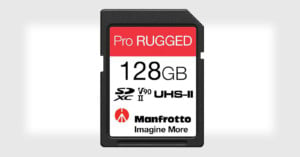
Manfrotto has jumped into the memory card market. Best known for its tripods, lighting supports, and accessories, the Italy-based brand just unveiled its new Pro Rugged line of memory cards. They're purportedly the strongest memory cards on the market.
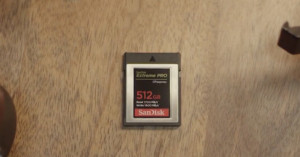
CFexpress is the next generation of ultra-fast memory card, but nobody is selling or supporting them yet. Well, nobody in the US anyway. This week, SanDisk quietly began selling its Extreme Pro CFexpress (Type B) memory cards in the UK, France, Italy and Spain, leaving the rest of us to refresh our browsers in the hopes that they'll appear in the US as well.

Sony's TOUGH SD cards are extremely popular among photographers. But just how tough are they? Photographer and writer Steve Huff decided to put the latest iteration of these TOUGH cards through the ultimate battery of tests: freezer, washer, dryer, pool, and... just for fun... blender.

This article is about how a memory card failure caused a week of photographs to disappear, what I did to try to recover them via software, then physical data services, and the valuable lessons to be learned about memory cards, dual card slots, and backups to prevent such a nightmare scenario from happening.
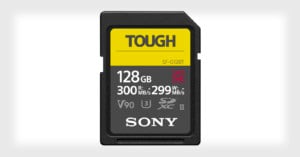
Sony has announced its new Tough line of SD memory cards, which it claims are the toughest and fastest SD cards ever made.
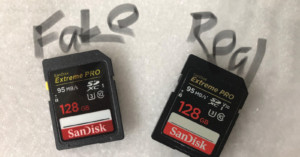
Photographer and Nikon Ambassador Charmi Patel Peña ordered four $60 128GB SanDisk SDXC memory cards from Amazon last month. Things seemed fine... until the cards started constantly stopping her camera. Peña then examined the cards more closely and realized that all of the cards were counterfeit.
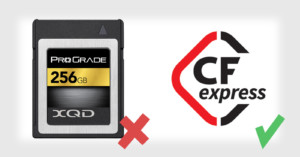
ProGrade Digital, the new memory card company launched in mid-February 2018 by a group of former Lexar executives, is trying to stay ahead of the game in the memory card format wars. It will not be making any XQD cards, and instead the company is pushing for the CFexpress format.