Did you know that it costs the US Mint 2 cents to produce every 1 cent coin due to the cost of materials and production? Countries such as Canada have already done away with their lowest denomination coins due to their costs and lack of usefulness.
As these “worthless” coins cause debates in their governments about whether or not they should be abolished, photographer Martin John Callanan is on a mission to save them… not as a currency, but rather in photographs.
Read more…

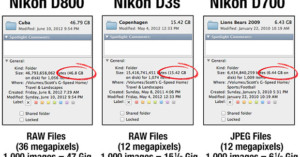
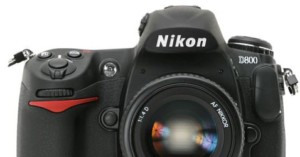
The megapixel war is heating up again in the high-end DSLR market, with the 36MP Nikon D800 leading the charge and rumored high-MP Canon and Sony competitors on the way. If you’ve been drooling over massive megapixels, be warned: with great megapixels comes great responsibility storage costs. Photoshop guru Scott Kelby writes:
I was reminded this week how large the file sizes are for images I shoot with my Nikon D800. I grabbed a hard drive to copy around 1,000 images I took in Cuba, and I was shocked to see that it wouldn’t fit on the drive because it was a whopping 43 Gigbytes!!! I looked at what the Raw files were from my Nikon D3s, and for around 1,000 Raw files it was 1/3 the size (around 15GB) and for the same number of JPEGs from a similar camera it around 6GB. I’ll shoot more than 1,000 photos at any given football game in just three hours (glad I’m shooting JPEG).
If you’re planning to buy a high-MP DSLR this holiday season, you should also be thinking about stocking up on external hard drives as well.
It’s “Lots of Quick News” [Scott Kelby's Photoshop Insider]

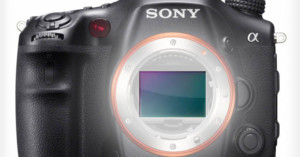
It has only been a month since Sony announced its latest flagship full-frame camera, the A99, but rumors are already beginning to emerge regarding the company’s next top-of-the-line offering. sonyalpharumors writes that Sony has reportedly marked sometime between May and June 2013 as a tentative release date for its next high-end full-frame:
The camera will be more “photographer” oriented. There are currently a couple of different prototypes. One we heard of has a 36 Megapixel sensor (same as Nikon D800) and built-in vertical grip. Priced well above the current Sony A99. A second prototype has a new 50 Megapixel sensor which goal is to go as close as possible to a “medium format” quality.
The new camera wouldn’t be intended to replace the A99, but would instead become the flag-bearer by creating an entirely new tier in the Sony lineup. If the latest rumors pan out, then 50 megapixels may soon become the new standard resolution for flagship DSLRs; Canon is reportedly working on its own high-res (46MP) camera.
Update: Reader Scott Hutchison reminds us that back in May, there was a rumor that working on a “A1S” camera with a full-frame 36x36mm square sensor. Hmm…

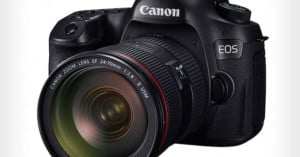
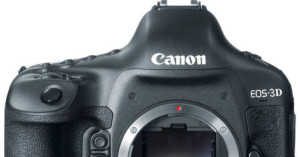
The frenzy of Photokina 2012 is coming to an end, but that doesn’t mean crazy camera rumors are going anywhere. A big one currently floating around is that Canon is working on a DSLR with a massive number of megapixels. Northlight Images writes that we may see a preview of the camera at PhotoPlus 2012 in New York, which starts October 24.
We’re told to expect to see a ‘preview’ of a ‘high MP EOS DSLR’ at the upcoming PhotoPlus show in New York (Oct 24-27). Although the current official line is that 20ish MP is a ‘sweet spot’ for DSLRs, D800 specs, price and performance is considered ‘worrying’ in some market areas.
Nikon’s D800 has a highly-acclaimed 36.3MP sensor. Here are the specs that Canon will reportedly respond with: 46.1 megapixels, 5fps continuous shooting, 16-bit RAW images, and an ISO range of 100 to 12800.
Read more…

Nokia dropped a bomb on the cameraphone market today by introducing its new 808 PureView phone — a phone that is capable of capturing 41-megapixel photos. The native resolution of the phone (16:9) produces 38-megapixel images measuring 7152×5368. The phone also allows you to capture 5-megapixel images by condensing every seven pixels into one, which dramatically reduces noise and improves image quality. Other features include a 4-inch screen, 16GB of built-in storage, a Carl Zeiss f/2.4 lens, lossless digital zoom (i.e. cropping a photo out of the giant image), and HD video recording. It’ll hit store shelves in May at a price of €450 (~$600).
Read more…

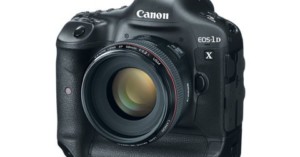
Nikon says the megapixel race ended years ago, but its upcoming camera is rumored to be a 36MP beast. Canon, on the other hand, actually took a step backward in terms of megapixels, dropping from 21 in the 1Ds Mark III to 18 in the new 1D X. However, the company states that camera’s resolution is by no means worse than the 1Ds Mark III, despite what marketers want you to believe. A representative recently spoke to Amateur Photographer, saying:
We have designed the Canon CMOS sensor for the EOS 1DX so that it is much thinner than before and so that the photodiodes are closer to the surface of the sensor. This way the pixels collect more light and produce a better, clearer, signal.
With less noise, and our new improved processing algorithms, the camera is able to reproduce more detail. While using MFT is perhaps not the best way to measure the resolution of the camera, if you did use this method the results for the EOS-1D X and EOS-1 Ds Mark III would be very similar.
The 1D X also has a mirror that utilizes mechanical movement both ways rather than gravity, allowing for faster frame rates while at the same time reducing mirror bounce.
Canon EOS-1D X Equals ’21MP’ DSLR, Claims Firm [Amateur Photographer]

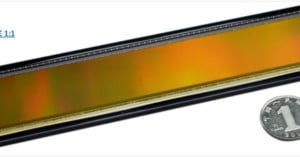
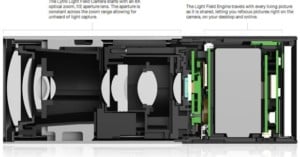
Here’s a cross section view of the consumer light field camera unveiled by Lytro yesterday. Many people have been wondering about the camera’s output resolution. The official specs are enigmatic in this regard, as the resolution isn’t listed in megapixels (it boasts “11 Megarays”). If the diagram is to scale, however, we can learn a little about the sensor’s size. The camera is listed as being 41mm tall, so the sensor appears to be between 7.5×7.5mm and 10.5×10.5mm — roughly the size of a Fujifilm X10 sensor.
Update: Photographer Jim Goldstein did his own calculations can guesses that the photos are equivalent to 1-2 megapixels.

If you thought the megapixel wars were dying down, think again: the upcoming Nikon D800 is rumored to shoot at a whopping 36 megapixels. If true, it would be a crazy leap in resolution from the 12.1 megapixel D700. The rumor originally showed up last week on Japanese site digicame-info, and was “confirmed” today by Nikon Rumors. In addition to the model name and number of megapixels, some other details include: 4fps shooting, 1080/30p video recording, support for both CF and SD, and a shutter rated for 200K shots.
Nikon Rumors also states that the fact that specs are beginning to leak suggests that the camera may be announced in the next month or two.
(via digicame-info via Nikon Rumors)
Vodafone recently ran a pretty creative advertising campaign called “Pixel Hunt” for the purpose of illustrating how many pixels LG’s 5-megapixel Optimus phone packs. They published a 5-megapixel photograph (presumably taken with the phone) on a website and invited people to zoom in and click individual pixels, with 100 of the pixels “containing” a free Optimus phone. It took 300,000 visitors a whole month to click each of the 5 million pixels.
Now if only Canon or Nikon would do the same thing with their flagship DSLRs! I wonder how long it would take a 21-megapixel photo to be fully clicked by rabid Canonites/Nikonians. Any guesses?
(via Mashable)

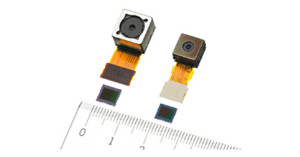
It was only at the beginning of the year that the megapixel race for cell phone cameras hit 14.6 megapixels, but now Sony has unveiled a 16.41 back-illuminated CMOS sensor that can shoot 15 frames per second at full resolution, and is capable of HD video recording (30fps at 1080p and 60fps at 720p).
Read more…