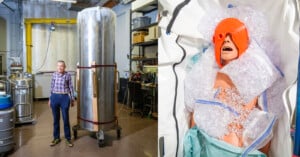
Photographer Visits Creepy Cryogenic Chamber Where 200 Bodies Are Stored
A photographer was given special access to a cryogenics facility in Scottsdale, Arizona that preserves over 200 human bodies and heads.
A photographer was given special access to a cryogenics facility in Scottsdale, Arizona that preserves over 200 human bodies and heads.
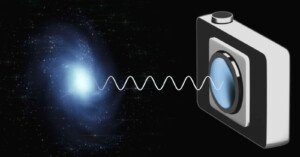
New details have emerged about the world's highest-resolution single-photon super conducting camera. The camera has been developed by research team at the United States Department of Commerce's National Institute of Standards and Technology (NIST).
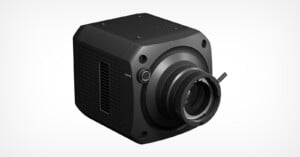
The world’s first ultra-high-sensitivity interchangeable-lens camera equipped with a Type 1 Single Photon Avalanche Diode (SPAD) image sensor is finally coming to market, and the ultra low light vision capabilities it brings don't come cheap.
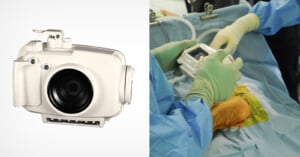
OM System has created a housing for the Tough TG-6 camera that can be autoclaved, making it ideal for use in the medical field.
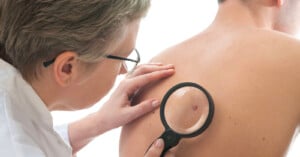
A new smartphone camera lens that takes detailed photos of moles or skin lesions could be used to diagnose tens of thousands of skin cancer patients faster.

Researchers from The University of Texas at Austin have published a study that describes a brain-computer interface that can decode continuous language from non-invasive brain recordings. In other words, an interface that can decode someone's thoughts into a word sequence.
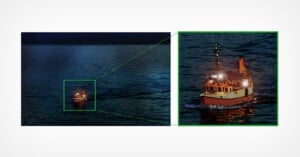
Canon Inc. has announced the development of the MS-500, the world's first ultra-high-sensitivity interchangeable-lens camera (ILC) featuring a Type 1 Single Photon Avalanche Diode (SPAD) image sensor.
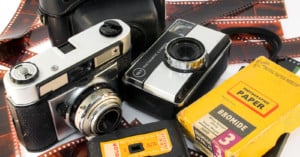
A new report from the World Silver Survey found that demand for silver increased 19% last year achieving its highest levels since 2015. Part of this increase is being attributed to the rising demand and surging popularity of film.

A recent campaign partnership between Vaseline and VisualDx aims to set a new standard for diversity in skincare.
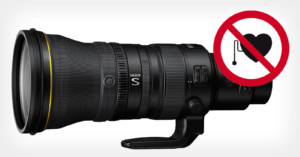
Nikon's new $14,000 400mm f/2.8 TC VR S lens for mirrorless cameras has been getting terrific reviews, but there is another more unusual reason the lens stands out in Nikon's lineup: Nikon warns that you should not use it if you have a pacemaker or any other kind of medical device.
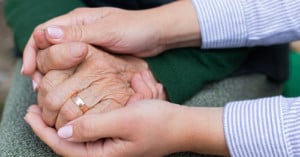
The National Institute for Dementia Education has published the results from a study that shows discussing past events along with photos of those events improved medication compliance and general cognitive performance of those with dementia.
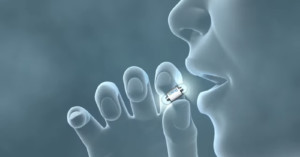
More than 2,000 patients in Scotland have swallowed a tiny pill-shaped camera in order to be screened for bowel cancer. The medical program replaced traditional colonoscopies and has reduced waiting times and allowed for faster diagnosis.
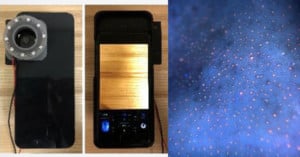
Researchers from the University of Washington have developed a way to use smartphone photos to identify potentially harmful bacteria on skin and in the mouth. The method can visually identify microbes on the skin that contribute to acne as well as those that cause gingivitis and dental plaques.
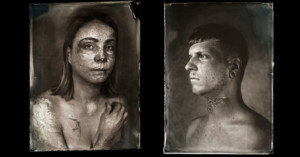
Clément Marion, a French photographer in his early twenties, shoots only with analog processes. In his latest project, he decided to use wet plate collodion to capture intimate portraits of burn victims.

Canon USA has jumped into the battle against the novel coronavirus, announcing that the company's medical division (Canon Medical Systems Corporation) has started "development of a rapid genetic testing system for the novel coronavirus."
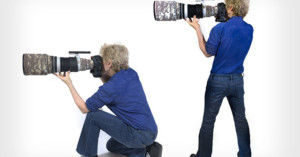
As a chiropractor, I’m always looking for improved biomechanics that reduce injury and fatigue. Proper camera technique increases stability, improves capture quality and protects your joints from repetitive microtrauma.
Last year Nikon announced that it had set aside $1.96 billion for mergers and acquisitions into new industries in order to diversity from the camera industry that had grown the 98-year-old company to greatness.
The Japanese company is now using a portion of that cash pile on its first major expansion purchase: a £259M (~$400M) acquisition of the Scottish retinal imaging firm Optos.
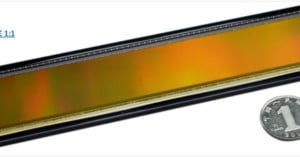
The technology that makes its way into the cameras and imaging tools used for scientific and research applications tends to be vastly different than what we have in our more consumer-oriented cameras. Proving just how different is GPixel's new GMAX3005 sensor -- a 150MP full-frame monochrome behemoth.
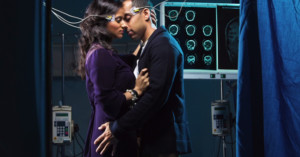
"Don't be afraid to be different." That is the moral of this video. Usually you save the moral for the end, but it is stated, restated and demonstrated so well with this shoot that it's worth starting the post with. Don't be afraid to let your creativity break the barriers of the proverbial box and try something different, because you might just stumble onto an idea as unique and creative as "Love Sick" by Simeon Quarrie of Vivida.
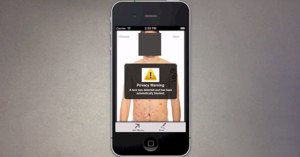
Step aside, rich kids of Instagram. There's a new group of people in town sharing images that are equally as unappealing and vomit-inducing. They're called doctors, and they've got themselves a new app dubbed Figure 1.
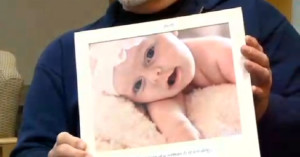
PTSD, or Post-Traumatic Stress Disorder, is a serious problem that affect a huge percentage of war veterans. A condition once associated most strongly with Vietnam War veterans, the Afghanistan and Iraq war have brought the condition back into the public eye with a vengeance.
According to the National Institute of Health, the VA estimates that approximately 31% of Vietnam vets, 10% of Desert Storm vets, 11% of Afghanistan vets and 20% of Iraq war veterans are affected. And while photography has been used to great effect to document PTSD in the past, one nurse at the VA in Palo Alto, California is using it to help treat veterans with the condition.
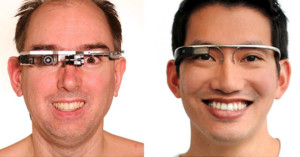
Professor and self-proclaimed cyborg Steve Mann created an eye and memory-aid device he calls the EyeTap Digital Glass. The EyeTap, worn by Mann above on the left, is a wearable device that is similar to Google Eye, pictured right, but he's been making them at home since the 1980s. The goal of his project is to use images to aid memory, or even to augment the memories of people with Alzheimer's Disease or who simply want to preserve their memories more permanently. However, a recent misunderstanding over Mann's technology allegedly caused a confrontation between Mann and several employees at a Paris McDonald's restaurant.
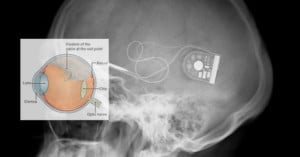
Image sensors and the advent of digital imaging have been met with differing reactions from the photographical community. But what a team of doctors at the Oxford Eye Hospital have managed to do with the technology is 100% digital, and 100% amazing. Clinical trial leaders Robert MacLaren and Tim Jackson have helped two blind men to partially see again.
Mother Jones reports that the U.S. Environmental Protection Agency is cracking down on …
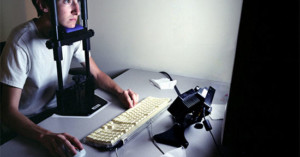
Medical experiments can be quite bizarre -- I once heard about one that involved injecting subjects with various kinds of animal feces. After a year of participating in various clinical trials for cash, photographer and recent art-school graduate Josh Dickinson decided to start a project called Studied to document what it's like to be a human guinea pig. His experiences range from being pricked with needles and subjected to pain to being suffocated...

According to Hoya founder Shigeru Yamanaka’s grandson, Yutaka Yamanaka, Hoya’s acquisition of Pentax may not have been the best business …