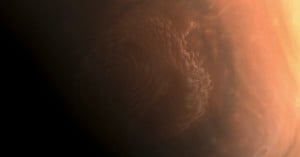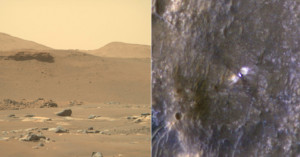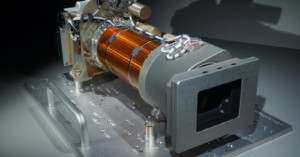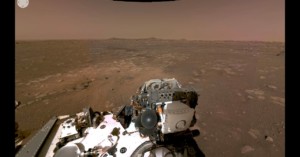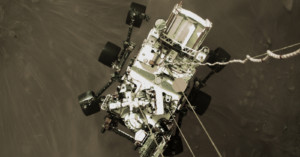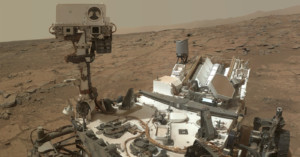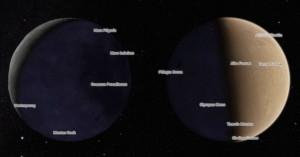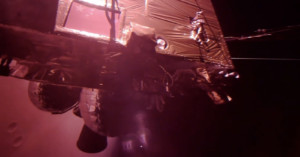
When NASA’s Curiosity rover performed its “seven minutes of terror” landing on Mars a couple weeks ago, the Mars Descent Imager (MARDI) camera had the task of capturing 1600×1200 (~1.9 megapixel) photographs at a rate of 5 frames per second. The camera began snapping away from when the heatshield separated to a few seconds after the rover touched down. The amazing high-definition video above was created with these photographs, showing what it’s like to fall onto the surface of the red planet. Read more…
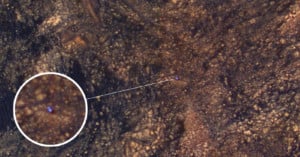
Ever since NASA’s Curiosity rover landed on Mars and started beaming back photographs earlier this week, people have been wondering, “why are the photos so bad?” The criticism seems merited: consumers these days are snapping great high-res photographs using phones that cost just hundreds of dollars, yet NASA can’t choose a camera with more than 2-megapixels of resolution for their $2.5 billion mission?
In an interview with dpreview, project manager Mike Ravine of Malin Space Science Systems — the company that provided three of the rover’s main cameras — explains that there were a couple main reasons behind the “lame” cameras: data transfer and fixed specifications. Read more…
After shooting black-and-white landscape photos for a day, everyone’s favorite Martian robot photographer is now dabbling in color photography. NASA’s Curiosity rover beamed back its first color photo today, showing the rim of its new crater home. Read more…
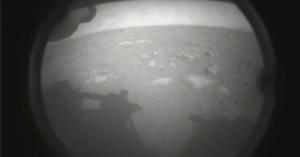
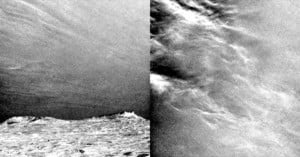
NASA’s Curiosity rover landed on Mars this morning with much fanfare here on Earth. The photo above is one of the first photographs snapped by the rover and beamed back to Earth. Captured through a fisheye wide-angle lens, the landscape photo hows a gravel field in the foreground and the rim of the Gale Crater (the rover’s new home) in the distance.
The image is blown out in the upper region due to the fact that the camera is pointed straight at the sun. Unlike our Earthling cameras, however, the one-megapixel Hazard-Avoidance cameras (Hazcams) on the rover are not damaged by the sun. Read more…
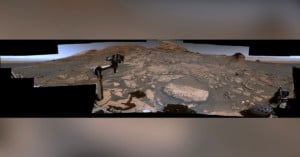
Mars rover Opportunity has spent more than 8 years on the Red Planet exploring, analyzing and, like any good tourist, snapping photos. And one of the most recent and stunning photos from the six-wheeled explorer is the panorama you see above.
It’s a panorama of an area called “Greeley Haven,” and it was put together using 817 images taken between December 21st, 2011 and May 8th, 2012. The picture is being called “the next best thing to being there,” so if you’re not planning a trip to Mars anytime soon, be sure to check out a larger version of the image here (photo number 9).
In 2007 NASA scrapped plans to include a 3D camera on the Curiosity Mars rover, which is scheduled to leave for the red planet in 2011. However, Avatar director James Cameron was able to convince NASA administrator Charles Bolden to include the 3D cam again, and is now helping to build the camera with San Diego-based Malin Space Science Systems.
Maybe some of this footage will end up as “Mars: The 3D IMAX Documentary”.
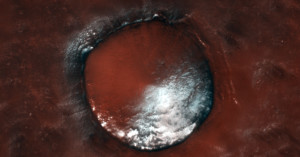
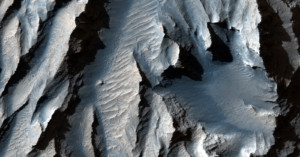
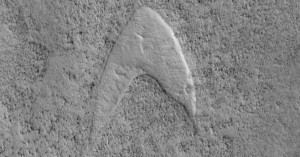
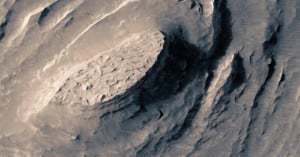
In January 2010, NASA and the University of Arizona launched HiWish, a way for the public to become involved in the effort to photograph the surface of Mars. The website allows anyone to suggest locations on Mars to photograph next, and the winning entries are photographed using the High Resolution Imaging Science Experiment (HiRISE) camera, also known as “the people’s camera”, aboard NASA’s Mars Reconnaissance Orbiter. Since the program began, over 1,000 suggestions have been received, and NASA has just released the first 8 images selected through the program.
Now eight ordinary people can tell their grandchildren, “I helped photograph Mars.”