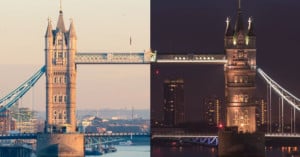
This Timelapse of London Shows Day and Night Side by Side
Here's a creative time-lapse of London by the filmmaker Matel. It combines day and night views of the city in each frame as a diptych.
Here's a creative time-lapse of London by the filmmaker Matel. It combines day and night views of the city in each frame as a diptych.
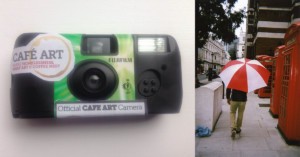
Cafe Art is a UK-based initiative that aims to connect the homeless with their wider community through art and photography. The project was founded in 2012, and since then they've hung up artwork in more than 20 cafes across London.
Back in July, Cafe Art handed out 100 Fujifilm disposable cameras to homeless people in London, connected them to photography training with the Royal Photographic Society, and asked them to shoot photos with the theme "My London."
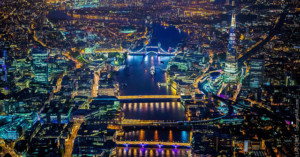
After photographing a number of US cities at night through the open door of a helicopter, photographer Vincent Laforet has taken his Air project across the pond to shoot aerial shots of European cities. His first stop: London.

Abigail Scarlett is a London-based photographer who believes that Bitcoin is the future. Her belief is so strong, in fact, that she's willing to put her digital currency where her mouth is. For the next half year, Scarlett will only be accepting photo work that is paid in Bitcoin.
Peter Fordham was a British photographer best-known for his music work in the 1970s. If you own a copy of John Lennon’s ‘Imagine’, his second solo album, you’ll be familiar with his work. Fordham was the photographer who took the picture of Lennon, sat at his white piano with a pair of headphones on, at Lennon’s Tittenhurst Park home where the 1971 album was recorded. It’s a classic of rock music photography, Lennon singing into a hard black mic set against a stark white room, and was included as a fold-out poster in the album.
This guy from Trollstation recently did an experiment to see what kind of …
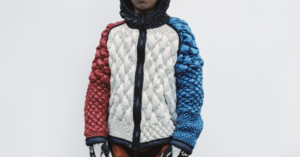
Photographer Tom Johnson recently partnered up with stylist Phoebe Haines for a project titled The Thirty Three. The team roamed the streets of London for five days, asking thirty three random strangers to put on haute couture (i.e. "high fashion") clothing and pose for portraits.
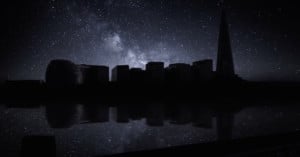
UK-based photographer Nicholas Buer wanted to see what the view over London would look like if the city skies were void of the light pollution that illuminates the streets long after the sun has set.
Camera gear ready and with a plan of attack, he got to it, cleverly piecing together Blackout City, an awe-inspiring time-lapse that shows what the skyline of London would look like if there were ever a complete blackout and you could see the milky way.
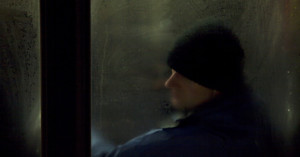
Photographer Nick Turpin's series Through a Glass Darkly takes a different approach to candid street photography than we typically see. Turpin captures London bus commuters on their way home after a long day, and his photographs are at once artistically compelling and potentially controversial.
Here's a neat video that combines the concept of the hyperlapse tour of a city with crowdsourced photography. Put together by filmmaker Lorenzo Antico, London in a day - INSTAGRAM was created by compiling a time-lapse of sorts using public Instagram photos taken by people in London.
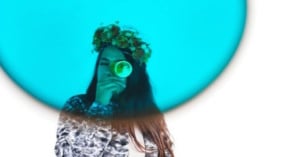
A rule of thumb in design is that form follows function; however, with these clever and colorful pendants, you don’t have to worry about a compromise in either department.
Created by Vienna-based design firm TaliaYStudio, these pendants serve as jewelry, but are also built to function as colored filters when placed in front of your camera.
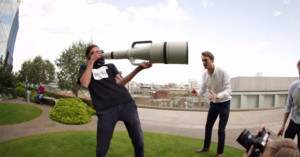
Want to see that ultra-rare Canon 1200mm f/5.6 L USM lens we told you about a couple of weeks ago in action? Well, you're in luck, because the folks over at MPB Photographic have delivered on their promise to create some content with it by putting this monster through its paces in London.
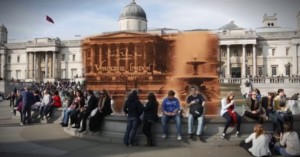
We’ve shared his work before here on PetaPixel, but this time filmmaker Simon Smith has stepped up his game.
Whereas his previous collaboration compared 1920s footage of London to footage he captured present day side-by-side, his newest then-and-now piece overlays the two, creating a throwback to the London of 1924 by placing the scenes inside of modern-day London.
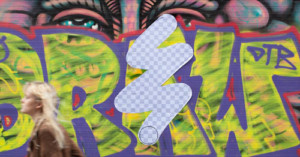
Street artists can be some of the cheekiest people around. Their approach to satire, be it politically motivated or otherwise, is often worth a laugh or two... if not a round of applause. The latest project in London by Guus Ter Beek and Tayfun Sarier is no exception. They've taken Photoshop's erase tool quite literally into the real world to great effect.
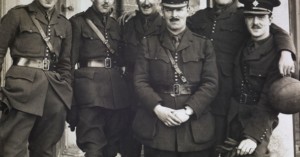
The Museum of London has something to celebrate this month. Namely, the acquisition of a set of historically significant photographs captured by the late great Christina Broom.
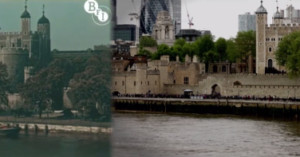
A couple of times last year, we had the chance to share with you amazing color film footage shot all the way back in the 1920s by filmmaker and cinematographer Claude Friese-Greene. His father had invented the bicolour technique of capturing color film, and using this technique Friese-Greene captured beautiful footage of 1920's Britain for his collection of films The Open Road.
The most famous of these films were shot in London, at the end of Friese-Greene's two-year roadtrip around Britain; and now, 86 years later, we can compare his footage with the same shots taken in present day thanks to filmmaker Simon Smith.
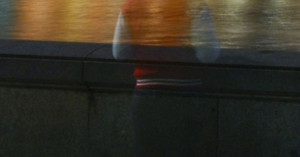
What happens when you try to take a nighttime shot without a tripod? Apparently, a ghost wanders into the frame and cocks up the whole thing. At least that's what British photographer Jules Annan is claiming happened to him.
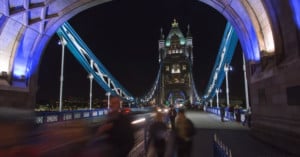
If you're in the US and you've decided to brave Black Friday to get the most recent must-have Elmo, here's an awesome London time-lapse that'll give you a chance to escape the Black Friday madness, if not the crowds, for a few minutes.
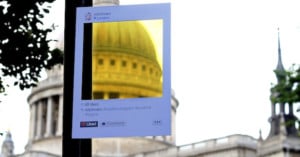
If you're already of the opinion that Instagram has infiltrated too much of your life, we suggest you stay away from London for a little bit, because Brazilian artist Bruno Ribeiro is bringing the familiar filtered frames into the real world with his project Real Life Instagram.
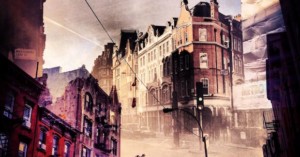
Late in 2012, photojournalist Daniella Zalcman moved from New York City to her new home in London. Zalcman adores both cities for, among other things, their photogenic nature. And so she decided to mix the two together into a creative series of double exposures dubbed New York + London, using her smartphone.
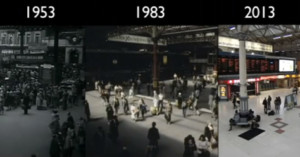
When the BBC first captured the non-stop train ride from London to Brighton in 1953, it was simply because they wanted to show how the magic of time-lapse photography could get a Londoner to the seaside in only four minutes.
When 1983 came along, they decided to re-capture the journey to see the differences. And now, in 2013, it only seemed appropriate to continue the every-30-years tradition and capture the trip once again.
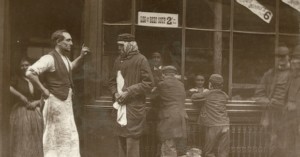
There's some debate over who the "father" of street photography was. Although Frenchman Eugene Atget is often granted this title, his work was mainly architectural, putting people second.
But there's another, lesser-known name that enters the picture (pardon the pun) as early as if not earlier than Atget: a Scotsman by the name of John Thomson.
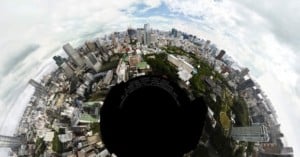
Do you remember the 320-gigapixel photo taken from atop the BT Tower in London? That 360° panorama, shot by Founder of 360-cities Jeffrey Martin, holds the title of world's largest photo. But just because you have the top spot, doesn't mean you have to stop.
Another of Martin's creations, this one shot from the lower observation deck of the Tokyo Tower, has earned him the number two spot as well.
There's something to be said about humans building gargantuan structures made of metal and steel. We see them in most major cities, yet rarely get the opportunity to marvel at how they're assembled.
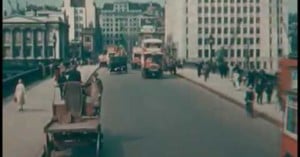
About a month ago, we shared some stunning footage that showed what London was like all the way back in 1926. The original filming was done by Claude Friese-Greene, whose father William invented the 'Biocolour' technique of capturing color film footage.
That particular video was a compilation of snippets that Friese-Greene had filmed in London when he returned form a 2-year journey. He called the final product The Open Road, and it was a 26-part series that took him all over Britain. Fortunately for us, much of it has now been digitized and uploaded bit-by-bit to YouTube by The BFI National Archive.
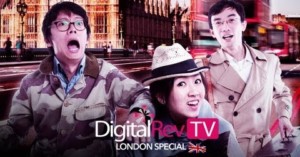
For their most recent international foray, the DigitalRev producers decided to send Kai, Lok and Alamby on a 36-hour trek across London to take photos. They were tasked with travelling to and photographing 10 of London's best known landmarks, using old film SLRs on day one, and digital cameras the next.
Want to see what London looked like back in the year 1926? Check out this beautiful color footage shot in various London locations by Claude Friese-Greene, an early British pioneer of film. Frisse-Greene created a series of travelogues nearly 90 years ago using a color process developed by his father William Friese-Greene.
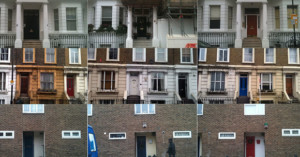
When photographer Callum Cooper moved from Melbourne, Australia to London, England, one of the things that caught his eye was the uniformity (or "conformity") seen in the city's residential areas. Along a street, multiple buildings would have exactly the same architecture, and if it weren't for the minor differences in the facades, some of them can hardly be distinguished from one another.
Cooper then came up with the idea of exploring this phenomenon using photographs -- photos that would become a "structuralist film."
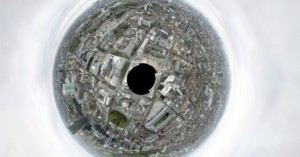
The BT Tower panorama, created by stitching together 48,640 images taken with 7 Canon EOS 7Ds, has officially broken the record for the world's largest panoramic photo. It was taken from atop the BT Tower in London, and you can see a tiny version of it at the top, but the real thing offers a massive, browsable 360-degree view of London in extreme detail.
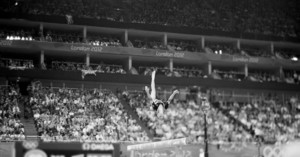
Last August, we wrote about how renowned photojournalist David Burnett was spotted using a large format camera at the London Olympics. If you've been wondering how the photographs turned out, today's your lucky day.
Here's an inside look at how Burnett's project came to be, and the beautiful images that resulted.
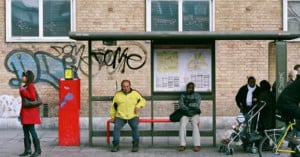
Between 2001 and 2005, photographer Richard Hooker visited various bus stops across London and shot film photographs of the people waiting for their rides to arrive. The 136 photographs he captured show the city's incredible cultural diversity, explore how people relate to one another in confined spaces, and offer small peeks into personal lives.
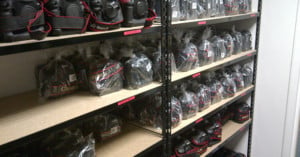
Welcome to camera gear heaven: here's a glimpse inside the Canon Professional Services office at the London 2012 Olympics. It's a room that's absolutely stuffed with cameras, lenses, and accessories from floor to ceiling. The Canon 1D X hasn't been released to the general public yet, but this room has hundreds of them!
Update: The video is no longer available. Apparently the Olympic Committee is cracking down …
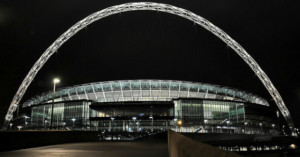
Photographically speaking, the London Olympics have caused quite a bit of confusion for ticket holders. Initially, the ticket holder agreement seemed to imply that you wouldn't be allowed to upload any of the photos taken at the games to social networks; then once the rules were clarified, a size limit was set in place, but only in certain venues, outdoor venues were promised to be "more lenient;" and now it seems that Wembley Stadium (pictured above), where all of the Olympic soccer matches will be held, will not be allowing any "professional-style cameras [any camera with interchangeable lenses] or recording/transmitting devices."
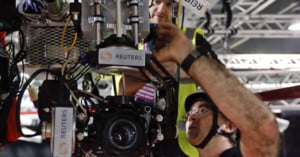
Sports photographers use a variety of techniques and gear to shoot from different angles that are less accessible to the photographers during action: wirelessly triggered cameras mounted behind backboards, perched on overhead catwalks, clamped on the ground. Reuters photographers Fabrizio Bensch and Pawel Kopczynski decided to take the technology of remote photography to another level for the upcoming 2012 Summer Olympics with robotic cameras.

Are you so bad at photography that all your photographs are completely overexposed to the point of pure white? …
This incredible London flyover footage, taken by aerial photographer Jason Hawkes, shows the …
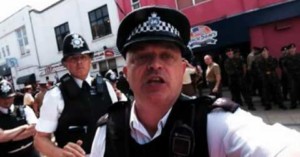
16-year-old photographer Jules Mattsson has won a settlement from the London Metropolitan Police after being stopped and …
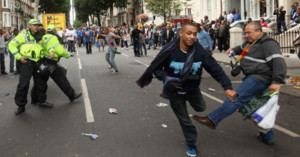
The London Evening Standard has published a fascinating article on a photograph captured …

If you want to do street photography, attacking people with cameras like …