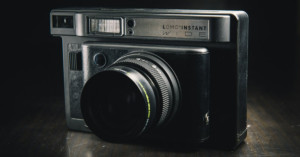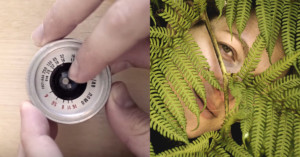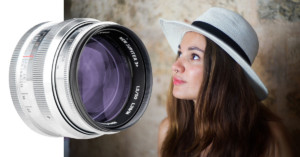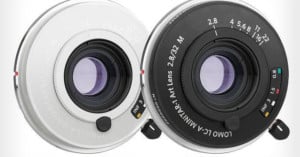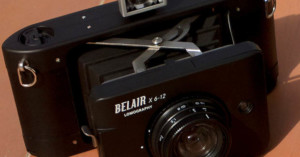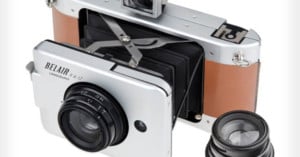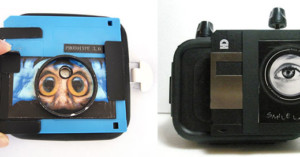
My first roll processed and scanned from my new Lomography BelAir X 6-12 puts me in the position to share some notes about the camera that you won’t find elsewhere.
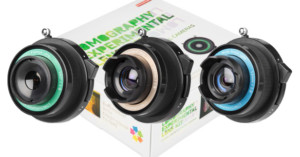
The Lomography BelAir X 6-12 is a new folding medium format camera. It can take pictures in three formats: 6×6, 6×9 and 6×12. Apart from the folding mechanism, the camera is made of plastic. Even the two included wide angle lenses (wide and really wide) are plastic. Each lens comes with its own viewfinder. They are 58mm and 90mm. Read more…
In 1991, a group of Austrian art students on a trip to nearby Prague found [...] a curious little camera [...] it produced pictures unlike anything they had seen before. The little camera was the Lomo LC-A – Lomo Kompact Automat, built in Soviet-era Leningrad by Leningrad Optics and Mechanics Association (Lomo) – and very soon a craze was born. It was an analogue Instagram in the days before digital photography.
This Lomo craze may have ended up helping save film photography from an untimely end. In 1992, the students set up Lomographic Society International, exhibiting shots taken on unwanted Lomos they had bought up from all over Eastern Europe. Then, in the mid-90s, having exhausted the supply of left-over Lomos gathering dust in Budapest, Bucharest or East Berlin, they went to the camera’s manufacturers [...] and persuaded them to restart production. The negotiations were helped along by the support of the city’s then deputy mayor, Vladimir Putin.
According to Dowling, there is speculation that Lomography is a potential suitor for Kodak’s film business that is currently for sale.
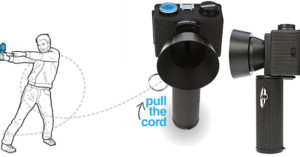
Just because a camera has bellows doesn’t mean it’s vintage. Just announced today, the new Lomography Belair X 6-12 has bellows as well. It’s a portable medium-format camera that shoots auto-exposed photographs on 6×12 film — the world’s first camera to do so. Read more…
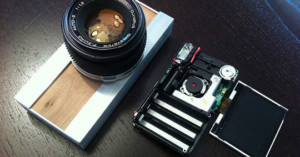
Faking toy camera effects with apps or software is a big fad these days, but Joel Pirela of Blue Ant Studio went a step further: he built his own homemade digital Lomography camera using some walnut wood, hand-polished aluminum frame, parts from a 5-megapixel Vivitar Vivicam, and an Olympus OM series lens. Read more…
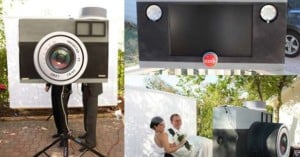
For his wedding, designer Matt Frank built this photo booth that looks like a giant Lomo camera. It comprises a Mac running Photo Booth, a monitor for reviewing photos, halogen lighting, and a hacked Easy Button that acts as a shutter release. Frank writes,
I decided to build my own photo booth after trying to rent one from local photography studios. The going rate for a rented photo booth is around $600 in addition to the hourly rate of the attendent to watch over the equipment. As this was not in my wedding budget, and I did not want to deal with an additional vendor, I decided to build my own for under $200. [#]
The total cost for the DIY photobooth came out to about $150. Frank has also written up a step-by-step tutorial on how it was built.
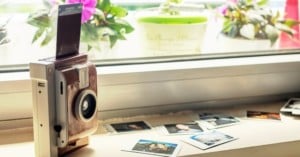
Lomo shooter wn7ant came up with a neat way of turning instant film photos into one-of-a-kind business cards. After printing out his business card design onto a transparency, he cuts it out and sticks it onto an Instax film cartridge. To create a new card, he simply takes a picture — the contact information on the transparency is printed onto every photograph!
The Negative Effect is a documentary film by Malaysian director Dick Chua about a group of youngsters obsessed with film and lo-fi photography. He followed the group of about 40 photo-enthusiasts back in 2008 as they traveled to Penang Island in Malaysia to shoot and put on a photography exhibition without any sponsorship or support. The film premiered in Malaysia in 2009 and Singapore in 2011. Hopefully it’ll start showing internationally soon, or at least become available as a DVD.
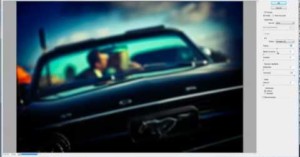
There’s plenty of tutorials out there teaching you how to fake the “Lomo effect” using Photoshop, but most of them don’t provide very realistic results. This “ultimate” tutorial by SLR Lounge attempts to mimic all the distinct characteristics of lomo photos (e.g. cross-processed colors, vignetting, blown highlights, and blurred edges) giving you a level of control over the results that an iPhone app could never do.
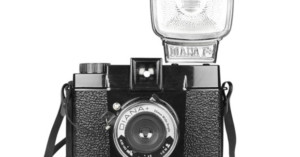
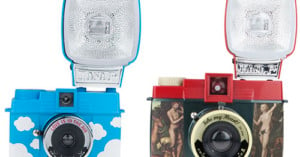
Valentine’s Day is just around the corner (February 14th, to be exact), and if the special person in your life is a photography-lover, you might want to think about ditching the cards, flowers, and chocolates, and going with something a little more… lomo. Lomography has released two special edition Diana cameras for this special occasion. The “Love is in the Air” Diana Mini costs $119 and the “Take My Heart” Diana F+ costs $99.