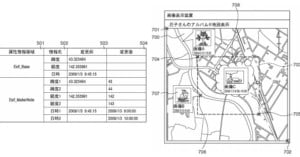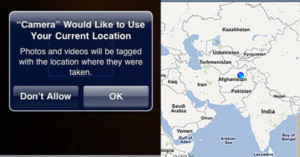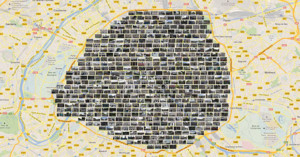
9 out of 10 adults in America believe that people are over-sharing sensitive personal information. One culprit is the GPS-enabled camera, which can reveal exactly where you were at a specific time by baking the information into photos. If you’re uncomfortable with how specific this EXIF data is, Canon has a solution: fuzzy precision. The company has patented a system that may one day allow its camera users to choose “low precision” EXIF data. This means cameras would record rough and non-specific details of when and where an image was made. Instead of 12:31pm, it might record it was 12-1pm, and instead of a particular location, it might provide a general area on a map.
(via Egami via Canon Watch)

Earlier this month the US Army published an article warning its soldiers that the ubiquitousness of geotagged photographs these days can present a serious security risk, citing a real-world example of something that happened back in 2007:
When a new fleet of helicopters arrived with an aviation unit at a base in Iraq, some Soldiers took pictures on the flightline, he said. From the photos that were uploaded to the Internet, the enemy was able to determine the exact location of the helicopters inside the compound and conduct a mortar attack, destroying four of the AH-64 Apaches.
Officer Kent Grosshans recommends disabling the geotagging feature on your phone (or camera) and double-checking your social media settings to see who you’re sharing location-based info with, regardless of whether you’re an enlisted soldier or a civilian.
Geotagging poses security risks (via John Nack)

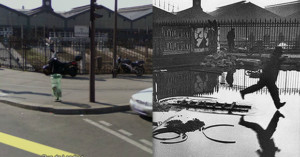
If you go to Google Street View and type in “rue de londres, paris“, you can visit the location where photographer Henri Cartier-Bresson captured his famous street photograph Behind the Gare St. Lazare in 1932. It’s an ordinary location that became an iconic photograph through Cartier-Bresson’s “decisive moment” style of photography. Cartier-Bresson notes,
There was a plank fence around some repairs behind the Gare Saint Lazare train station. I happened to be peeking through a gap in the fence with my camera at the moment the man jumped. The space between the planks was not entirely wide enough for my lens, which is the reason why the picture is cut off on the left.
If you know of any other iconic photo locations that can be revisited through Google Street View, leave a comment!
“rue de londres, paris” in Google Maps (via Erik Kim)

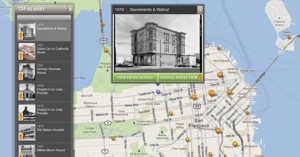
Google Street View is neat in that it allows you to step into far away places through street-level photographs, but it’s missing the fourth dimension: time. WhatWasThere is an awesome project that aims to combine the element of time with a photographic map of the world. The map includes both modern day and historical imagery, and users can contribute their photographs by tagging them with a date and a time. The site even lets you switch to Google’s Street View and overlay historical photos onto their present day images!
WhatWasThere (via Laughing Squid)

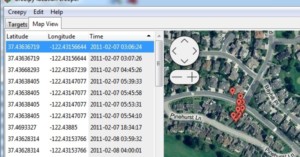
creepy is a desktop application written by Yiannis Kakavas that demonstrates how the geotagging features found in newer cameras and phones can violate your privacy. Simply provide it with a Flickr username and it will map the places and times photos were taken conveniently on a map.
If you don’t want to allow people to track you in this way, you can turn off your geotagging features — which saves power too — or look into “scrubbing” the location data from your photos.
creepy (via Download Squad)

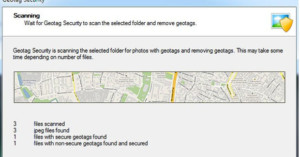
As photo-making devices become more and more location aware, many people unwittingly give up a lot of privacy by publishing location-tagged images online. If privacy is something you care about and you’d rather not broadcast location data along with your photography, a free Windows program called Geotag Security can help you scrub the geotag information from your pics. All you do is select a folder to scan, and the program will check the images within for location data and remove it.
Geotag Security (via Lifehacker)
Mopho is a new photo sharing service with a strange name — until you realize it’s a domain hack using Tonga’s ccTLD, making it mopho.to.
The idea is similar to more established location based services such as Foursquare or Gowalla, but rather than sharing your locations via check-ins and then adding photos, you share a geotagged photograph through the iPhone application. You can download the free application here.
Once you capture a photo, geotag its location, and publish it through the app, your friends will be notified through their apps, the Mopho website, or Facebook.
The photo and location service spaces are both extremely crowded with 800-pound gorillas in each. I don’t think Mopho offers enough to rise above its competition, but it might succeed in developing a small, enthusiastic community of users like all the other services in the long tail of these spaces.