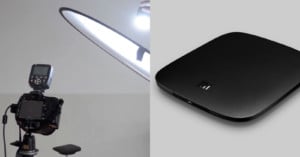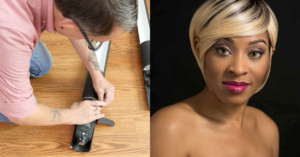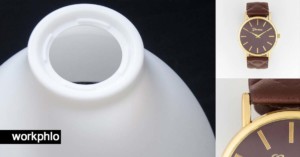
Flickr user Steve Kushnir came up with this neat idea of building a cheap DIY diffuser using a Pringles can, two layers of paper towels, and some rubber bands. He attached it to his Nikon D5000′s popup flash and uses it for macro photographs of creepy crawlies. Read more…
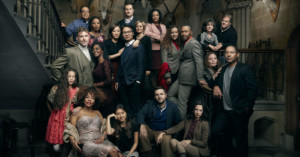
Photographer Joey Celis needed to shoot a photograph of eleven people in a dimly lit cigar lounge, but found it difficult to light the models without having lighting gear appear in the shot. In the end, he was able to make the image above with a single Speedlite. Read more…
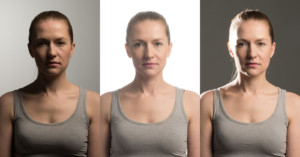
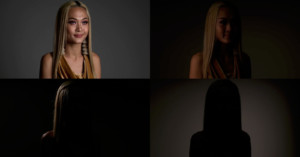
If you’re looking to get started in studio portraiture, here’s a great tutorial by prophotolife teaching three different lighting techniques (Rembrandt, butterfly, and edge) you can do using only one light.
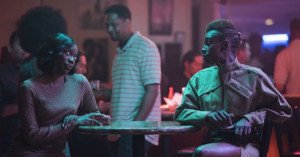
Who says you need uber-expensive lighting equipment to shoot nice-looking studio portraits? In this video, photographer Bert Stephani shows us what you can do with cheap halogen work lights (you can find them for about $30-$50) and a couple shower curtains.
Rather than using more expensive bags or cases for moving around your lighting gear, you can buy a bass guitar bag for $30 or $40 to get the job done. The length allows you to store light stands, the velcro straps inside help secure them, and the multiple handles and straps on the outside give you a number of options for carrying the bag.
No, this isn’t some advanced beam weapon from a sci-fi flick. It’s actually a do-it-yourself ring flash created using 150 optical fibers, with one end wrapped over the pop-up flash of the DSLR and the other end spitting out the photons in a ring-shape. If you want to learn how to make your own, here’s an in-depth writeup on how this was constructed.
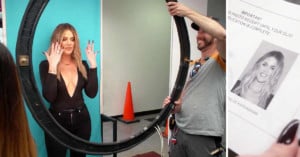
Photojojo has a new ring flash adapter that allows you to shoot soft, studio-style portraits without shelling out the big bucks for an actual ring flash. It’s a plastic add-on with a reflective circle that simply channels the light from your existing flash, so it doesn’t require any batteries. Read more…
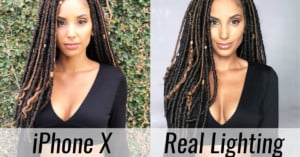
You’ve probably seen weird DIY light experiments before, but what about using only iPads as your main light sources? Photographer Jesse Rosten did just that, using 9 iPads (worth a cool $4,500) on maximum brightness on a recent photoshoot. On his blog, he writes,
Now before the haters start commenting let me first agree with you, yes, this is totally impractical (sidenote: most of my best ideas are often also my worst ideas). Nine iPads will set you back around $4,500. That amount of money can buy you a LOT of lumens in the form of a generic monobloc. This is not intended to be an exercise in excess, but rather a self-imposed limitation to help flex the creative muscles, and to make a point.
Think about it. One 60 watt bulb can put out more light that a truckload of iPads. And you don’t have to spend truckloads of cash to find a 60 watt. This whole making art thing is all about what you do with what you have. We just happened to have a bunch of iPads laying around so we went with that. Today’s dSLR sensors are sensitive enough that you could easily do this with some flashlights, headlights, headlamps, real lamps, or even – heaven forbid – real strobes! Now go forth and do!
Now we just sit back and wait for some copycat to try this idea with 81 iPod touches.
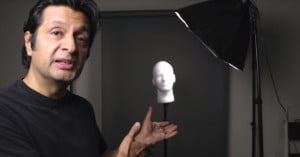
Light Studio is a new iPhone app designed to teach you the basics of studio lighting for portraiture. In addition to sections with examples of setups and tutorials, there’s a 3D modeling feature that allows you to position up to three hard light sources and watch how the lights affect the 3D face model. The app is available for $1.99 in the App Store.