Posts Tagged ‘light’

Turn Your Old Point-and-Shoot Camera Into a Creative Nightlight

Turn Your Old Point and Shoot Camera Into a Creative Nightlight kodaklight mini

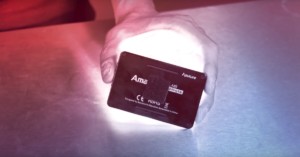
Perhaps inspired by the vintage camera nightlights we shared last year, photographer Laura Merz decided to upcycle her old Kodak digital camera by turning it into a nightlight for her house. She writes,
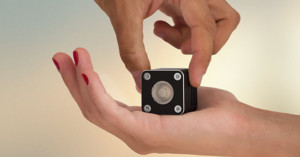
I took out all the tiny screws and gutted the camera very carefully as to not crack the exterior case. Be careful — some of the parts are pretty sharp. Removing the lens is the last step, and allows you to insert a small round night light through the opening. I had to crack off the exterior casing on the night light, but with a little force, it snapped right off.

It’s a creative way to breathe new life into an outdated or broken digital camera.

Long Exposure Light Streak Photo of the Eiffel Tower at Night

Long Exposure Light Streak Photo of the Eiffel Tower at Night eiffel mini

Flickr user Chris captured this remarkable photograph of the Eiffel Tower at night by panning his medium format film Hasselblad 500CM while snapping a long exposure photograph.

(via Photojojo)


Image credit: 10160008 by chrisdigsdesign and used with permission

A Glimpse at the MIT Camera That Shoots at the Speed of Light

Here’s an interesting look at the amazing camera being developed at MIT that shoots a staggering one trillion frames per second — fast enough to create footage of light traveling:

[...] the researchers were able to create slow-motion movies, showing what appears to be a bullet of light that moves from one end of the bottle to the other [...] Each horizontal line is exposed for just 1.71 picoseconds, or trillionths of a second, Dr. Raskar said — enough time for the laser beam to travel less than half a millimeter through the fluid inside the bottle.

To create a movie of the event, the researchers record about 500 frames in just under a nanosecond, or a billionth of a second. Because each individual movie has a very narrow field of view, they repeat the process a number of times, scanning it vertically to build a complete scene that shows the beam moving from one end of the bottle, bouncing off the cap and then scattering back through the fluid. If a bullet were tracked in the same fashion moving through the same fluid, the resulting movie would last three years. [#]

They believe that the technology may one day be useful for medicine, industry, science, or even consumer photography.

Speed of Light Lingers in Face of New Camera [NYTimes]

Light as the Subject of Photographs

Light as the Subject of Photographs vl1 mini

Photographer Alexander Harding has a beautiful project titled “Visible Light” in which he turns light itself into the subject of photographs.
Read more…

Make a DIY Diffuser Using a Paper Towel Roll and Some Aluminum Foil

Make a DIY Diffuser Using a Paper Towel Roll and Some Aluminum Foil diydiffuser mini

Flickr user Twin-Reverb made this nifty DIY flash diffuser using a cardboard paper towel tube, a paper towel, and some aluminum foil.
Read more…

Photo of Laser Pointer Through Rain Reveals Water Drop “Snowflakes”

Photo of Laser Pointer Through Rain Reveals Water Drop Snowflakes waterflakes mini

On a rainy day recently, light painting photographer Jeremy Jackson was playing around with a green laser pointer when he discovered something interesting: all the out of focus raindrops in the photograph had a lined pattern in them — and each one was unique! These “water drop snowflakes” were found in all of the photos he took that day.

Anyone know what causes this phenomenon?

(via DIYPhotography)


Image credit: Photograph by Jeremy Jackson and used with permission

Painting with Light: Lighting and Layering a B-25 Bomber

Here’s an illuminating (pun intended) video walkthrough by photographer Eric Curry, showing how he went about creating a photo of a B-25 bomber. His technique for lighting the plane is similar to the real estate photography walkthrough that we featured last weekend, and involves lighting the scene a bazillion times from different angles, and then combining the different parts of the photo in Photoshop.

As he says in the video, it’s a useful technique that can be done by “anyone with a digital camera and a tremendous amount of patience.”

(via fotografia)

Creative Stop-Motion Animation Brings Sunlight to Life

“What Light” is an incredible stop-motion video that features sunlight dancing around a bedroom. It might look like it was done with CGI, but the sunlight was actually manipulated using cut-outs and stencils placed in the window. Creator Sarah Wickens says,

I noticed how the sun came through the windows in my bedroom, creating patches of light that moved throughout the day, as the sun changed position in the sky. So I started experimenting with ways of using that light to make animation, sticking cut-outs and stencils on to my windows to carve the light into different shapes [#]

The result of her efforts is one of the most creative stop-motion videos we’ve seen.

(via zefrank)

Old Camera and Tripod Turned into an Awesome Desk Lamp

Old Camera and Tripod Turned into an Awesome Desk Lamp lamp mini

Kirsty over at kootoyoo transformed her old Cosina CT-2 into a neat desk lamp that emits light from inside the lens. The legs on the tripod can be adjusted, so it can be used as a floor lamp as well. It’d be awesome if she could make it so adjusting the aperture on the lens would change the brightness of the light. Kirsty is currently writing a tutorial that’ll teach you how to make your own — it’ll go on sale starting next week.

Camera – light – action… (via Craft via Make)

Footage Captured at One Trillion Frames per Second

According to the smart folks over at MIT, this video shows footage that was captured at an unbelievable one trillion frames per second. It appears to show some kind of light pulse traveling through some kind of object. Here’s a confusing explanation found on the project’s website:

We use a pico-second accurate detector (single pixel). Another option is a special camera called a streak camera that behaves like an oscilloscope with corresponding trigger and deflection of beams. A light pulse enters the instrument through a narrow slit along one direction. It is then deflected in the perpendicular direction so that photons that arrive first hit the detector at a different position compared to photons that arrive later. The resulting image forms a “streak” of light. Streak cameras are often used in chemistry or biology to observe milimeter sized objects but rarely for free space imaging.

In November 2010, we reported that MIT scientists were working on a camera that would be able to see around corners using echos of light. Well, this is that camera. Insane.

Femtosecond Transient Imaging (via Reddit)