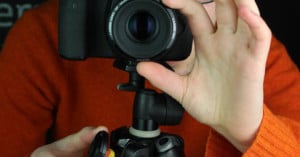
If you’re into photography, whether as a serious hobby or as a profession, you probably find yourself doing repetitive tasks on a routine basis. You’ve probably also heard various tips, tricks, and strategies on how you can do these tasks faster and more efficiently. Heed them.
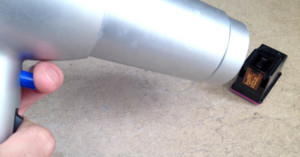
While saving a few seconds here or a few minutes there might not seem like much, optimizing your efficiency is definitely something worth doing, especially for tasks you’re doing all the time. The reason is simple: small efficiency gains might seem inconsequential, but they build up and can save you quite a bit of time over time. Read more…
Did you know that YouTube isn’t just for uploading videos? Google’s popular video hosting service also has a special feature designed just for photo slideshows. If you’ve never considered using YouTube for photos, you may have never noticed the option, but it’s right there on the Upload page. Read more…
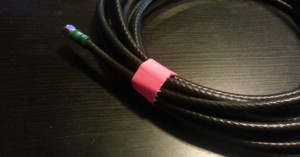
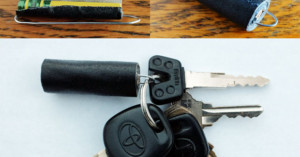
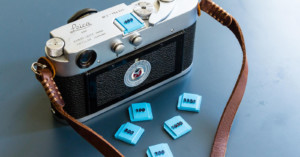
David Hobby over at Strobist shares a fantastic idea for photographers who would like to always have some gaffers tape handy at all times:
So we are gonna make a gaffer’s tape keychain fob [...] That right there is 40″ of gaff, effortlessly carried by default, at all times [...]
No, no, no. While duct tape may in fact be more manly, gaff is what duct tape wishes it could be. And it is what photographers use because of its holding power and ease of clean removal. Don’t ever mistake the two.
All you’ll need is a paperclip, a wooden pencil, and a larger roll of gaffer’s tape. Head on over to Strobist to read Hobby’s step-by-step tutorial.
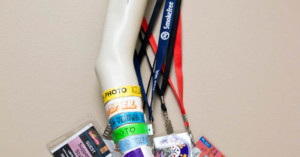
After shooting music events, Perth-based photographer Perry DeGennaro keeps the media passes and wrist bands as mementos. Recently, however, he started realizing that he wanted a better way to store and display them. He had an old mannequin arm lying around, which he decided to put to good use by mounting it to his wall. The arm makes for an eye-catching display — every time he returns from an event, he simply hangs the lanyard from the should or wraps the wristband around the wrist.
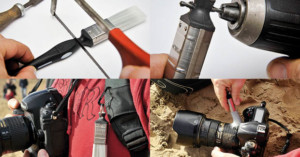
Image credit: Photograph by Perry DeGennaro and used with permission
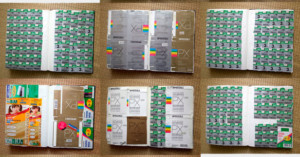
Want to know how much film you and your camera are chewing through? John Sypal over at tokyo camera style does this by collecting box tabs. Regarding the photos above, he writes,
This is compiled from the box tabs of every single roll/pack of film I shot in 2012.
Since 2001 I’ve kept a tab from every roll of film I’ve shot in the backs of collage-based photographic journals. In the mid-2000’s I was shooting some 500 rolls a year- I’ve cut back to about 300 or so the past two years. A complete visual collection of all the box-tabs from the past dozen years would result in a much larger image.
It’s like a stamp or sticker collection book for photographers. You can find a larger collage of the photos above here.
P.S. A giant poster-sized collage of box tabs might make for a pretty wild home decor item.
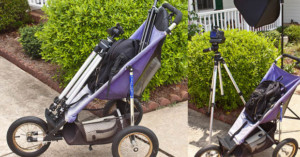
Want to learn how to be more productive with your photography? Instead of simply “trying harder” and relying on your willpower, a better way may be to take simple steps that have been shown to be effective by science. The above 3-minute video, created by artists/educators Mitchell Moffit and Gregory Brown, offers some tips that science has taught us about being more efficient at working and spending less time getting our work accomplished. Read more…
Here’s a clever trick for if you ever need to print out a photo but find your inkjet cartridges low (or dried out): bust out your hair dryer. Paul Boutin of The New York Times writes,
If your printer’s ink cartridge runs dry near the end of an important print job, remove the cartridge and run a hair dryer on it for two to three minutes. Then place the cartridge back into the printer and try again while it is still warm.
“The heat from the hair dryer heats the thick ink, and helps it to flow through the tiny nozzles in the cartridge,” says Alex Cox, a software engineer in Seattle. “When the cartridge is almost dead, those nozzles are often nearly clogged with dried ink, so helping the ink to flow will let more ink out of the nozzles.” The hair dryer trick can squeeze a few more pages out of a cartridge after the printer declares it is empty.

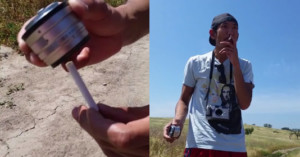
If you regularly shoot in dusty or sandy environments, here’s a handy tip for keeping your camera clean: create a simple cleaning brush that attaches to your camera bag. Digital Camera World writes,
You’ll never bag a great photo with dirty lenses and dusty gear, so keeping your camera and lenses clean and protected is crucial. The front line of defence against dirt and grime is constant cleaning. This isn’t easy if you have to carry around cans of compressed air, blower brushes, fluids and other bulky equipment. Professionals actually tend to use ordinary paintbrushes for camera and lens cleaning, so save yourself money and space [by] making a handy cleaning brush that clips onto your belt.
You’ll need a hacksaw and a drill to “hack” a 25mm paintbrush, and a split-ring and carabiner for attaching it to your camera bag or backpack.
P.S. The magazine also suggests attaching double-sided sticky pads (or tape) to the inside of your lens caps to trap dust that’s floating around in your camera bag.
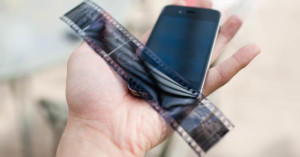
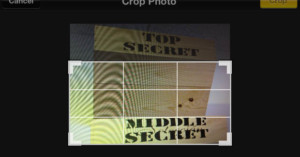
If you do any darkroom work, you probably regularly print contact sheets to peek at the positive versions of your B&W negative film strips. Did you know that your iPhone can be used as a quick an easy tool for this same purpose? Read more…