Wet plate photographer Ian Ruhter has received a good deal of attention over the past year for using a custom camera van to create giant collodion process metal photos. When he’s not turning large sheets of metal into photographs, he’s sometimes working on the opposite side of the spectrum.
One of his recent interests has been shooting pint-sized photos using a Holga toy camera that he converted into a wet plate camera. Read more…
Here’s a step-by-step tutorial on how to create a photograph of you holding yourself up. I hope it will give you a good idea of how I create this type of image so that you can create a similar image yourself! Obviously, this is not the only way to create this type of image, but it is the way I have found most believable, as the connection between the two subjects actually occurs in real life. Enjoy! Read more…
Here’s a humorous and lighthearted 5-minute video titled, “Fafa’s Photoshop Tutorial.” Created by the comedy series Glove and Boots, it’s a short and sweet introduction to using layers in Photoshop… taught by puppets. Think Sesame Street meets Scott Kelby. Read more…
When Space Shuttle Endeavour was making low level flyovers of famous landmarks across the United States a couple of months ago, Adobe Lightroom Quality Engineer Ben Warde was able to photograph it flying by the Golden Gate Bridge. The 10-minute video above shows how Warde post-processed one of his best shots from that day using basic Lightroom adjustments. While the information may be basic for many of you, it should be helpful for people who are just starting out with programs like Lightroom, Adobe Camera Raw, or Aperture. Read more…
In 1984, photographer Steve McCurry shot a portrait titled “Afghan Girl” that would become the defining image of his career and one of the most famous National Geographic covers ever published. In 2002, McCurry was able to locate the subject, Sharbat Gula, and learn her story. National Geographic then published a fascinating piece telling the story of the photo, the search, and the subject:
The reunion between the woman with green eyes and the photographer was quiet. On the subject of married women, cultural tradition is strict. She must not look—and certainly must not smile—at a man who is not her husband. She did not smile at McCurry. Her expression, he said, was flat. She cannot understand how her picture has touched so many. She does not know the power of those eyes.
Some interesting facts: McCurry shot the photo on Kodachrome using a Nikon FM2 and Nikkor 105mm f/2.5. Gula’s identity was confirmed by comparing her iris to the Afghan Girl’s. Although she had never seen her famous portrait, Gula distinctly remembers sitting for the photo — it was one of the only times in her life that she had a photo taken of her.
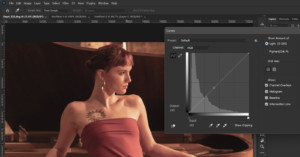
Here’s a great introductory retouching tutorial by photographer Sara Kiesling, who writes,
Basic skin retouching using frequency separation and dodging & burning. I use this process on every photo that I do, and I usually spend about 4-5 minutes on headshots like this (and less time on full body shots when there is obviously less detail in the face). This is not intended to be a high-end retouching tutorial, but techniques that can help people who want to do natural-looking retouching while maintaining most of the natural skin texture!
Frequency separation is a technique that allows you to give skin a smooth-yet-sharp look. Read more…
Mirrorless cameras feature sensors larger than compact cameras and bodies smaller than DSLRs, but how do their sensor sizes compare with one another? To give you a better idea of how formats such as Nikon CX and Olympus/Panasonic Four Thirds stack up against each other, Digital Camera Database created this helpful graphic showing the relative sizes of each format. Read more…
Every year, I go to my alma mater and give a lecture for 3rd-year advertising-photography students on the business of photography. At this two-hour lectures, I cover all sorts of points about the ups and downs of being a busy commercial photographer in NYC, and also try to tell them straight facts of what the “real world” is like. Here is a summary of some of the most important words of wisdom I try to pass on to young photographers. Read more…
Unless you only shoot in monochrome, color likely plays a huge part in the experience of viewing your photographs. You may be aware of how you use them, but do you know how the colors in your images affect the people that look at them? PBS Off Book put out this fascinating video today that explores just how powerful colors are. Read more…