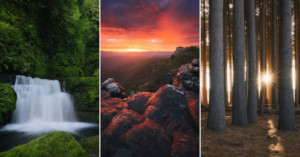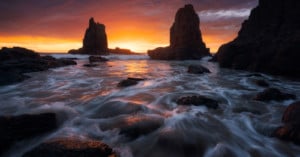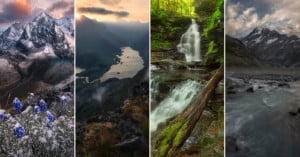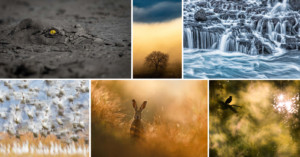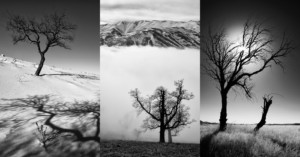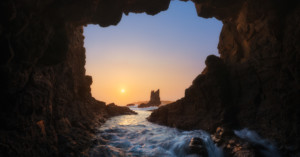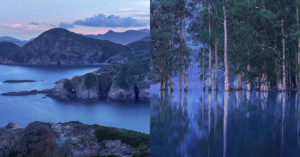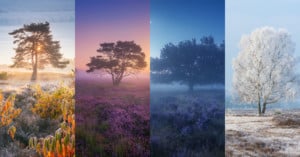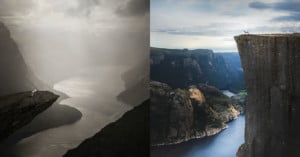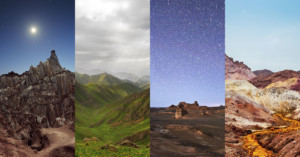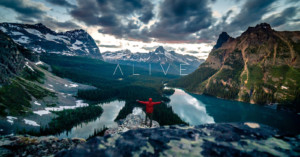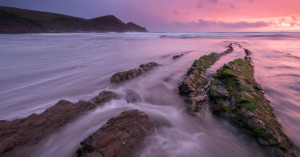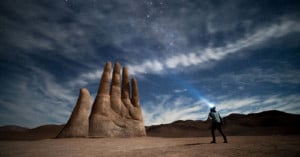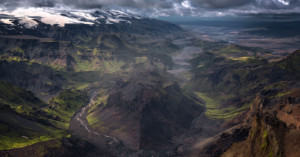
Self-taught photographer Alexander Deschaumes only started making photos back in 2003, but his dedication to the craft and his thirst for jaw-dropping landscapes have brought him a long way since then. Deschaumes braves extreme weather and hazardous landforms, going to locations that many landscape photographers would never dare venture, all for the sake of his images. The 2-minute video above offers a look into his world of extreme landscape photography.
Read more…

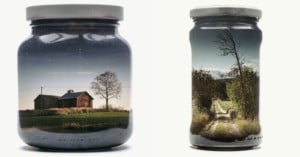
“Cerealism” is a project by Phoenix, Arizona-based photographer Ernie Button that features clever photographs of common cereals. He comes up with various scenes inspired by the shape and textures of the cereals, and then uses the cereal pieces as props. Some turn into bales of hay in a landscape, while others become fish in a simple fish bowl.
Read more…
Photographer John Eklund spent the past year visiting various locations in the Pacific Northwest of the United States, using his camera to document the stunning beauty of places ranging from Crater Lake in Oregon to Mount St. Helens in Washington. He writes,
I am a photographer from Portland, Oregon. I want to share the beautiful NW region through my eyes with time-lapse photography. I choose to shoot locations that appeal to the way I would like to interpret the story of time. Here in the Pacific Northwest, there are endless opportunities to document the magnificence of the world around us. I have discovered that when time is the storyteller, a special kind of truth emerges.
Eklund ended up shooting approximately 260,000 photographs that weighed a whopping 6.3 terabytes. His gear list included a Canon 5D Mark II, two 5D Mark IIIs, a 24mm f/1.4 II, a 16-35mm f/2.8 II, a 24-70mm f/2.8, and a couple tripods and dollies. He says that his secret to creating time-lapse videos is trial and error, having spent “hours upon hours” trying to figure out what works and what doesn’t. We’d say he’s gotten it figured out. Wouldn’t you?

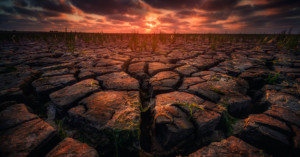
Fractal-like patterns are found widely in nature, “in phenomena including clouds, river networks, geologic fault lines, mountains, coastlines, animal coloration, snow flakes, crystals blood vessel branching, ocean waves and many others.” The fact that it appears on a large scale in geographical formations means that many of these beautiful patterns can be captured as photographs from space.
Paul Bourke, a professor at the University of Western Australia, has a webpage dedicated to Google Earth satellite photos that contain these patterns.
Read more…

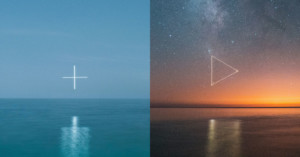
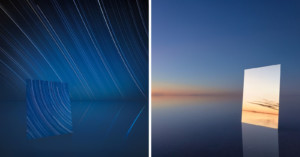
Montreal-based photographer Benoit PaillĂ©‘s Alternative Landscapes project features photos of various outdoor locations lit with a glowing square. The images aren’t Photoshopped: PaillĂ© actually suspends a 1×1 meter cube for the beautiful illumination seen in his images.
Read more…

Vancouver-based photographer Eszter Burghardt creates miniature landscapes using food (e.g. seeds, powders, milk) and wool, and then photographs them using a shallow depth of field. Her images show everything from volcanos to icebergs. The projects are titled “Edible Vistas” and “Wooly Sagas“.
Read more…

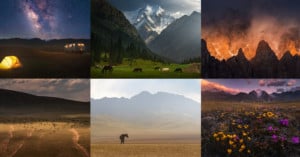
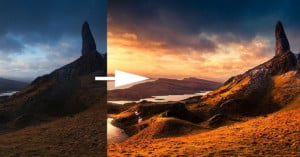
Landscape photographer Apo Japo captures beautiful landscape photographs of mountains and hills in Scotland, Norway, the Alps, and the Dolomites.
Read more…

Artist Rodrigo Torres creates amazing 3D topographic sculptures of landscapes using a stack of 2D prints. This idea would be amazing for cityscape sculptures.
(via Craftzine)
Some might think that taking photos in exotic locations like Hawaii is “too easy.” But anybody who has tried and failed to capture that perfect sunset or gorgeous beach photo knows that seeing beauty, or even being surrounded by it, doesn’t mean you’ll be able to snap great pictures of it. In this video we follow award-winning photographer Aaron Feinberg as he hikes to several of his favorite locations and composes some beautiful shots. Read more…

For his project titled Perspe, Italian photographer Gustav Willeit created imaginary locations by mirroring landscape photographs and then adding in non-symmetrical elements into the images.
Read more…