I didn’t want to break the law. I was prepared to make people a little uncomfortable, but I didn’t want to do anything illegal. That ruled out using private computers. I tried to think of a busy public space full of computers, and the Apple Store seemed so obvious. I read “The Photographer’s Right” to make sure it was ok to take the photos.
[It] sounded simple. There was definitely no expectation of privacy: the 14th Street Apple Store has glass walls. And I saw people taking pictures inside all the time, so I just had to double check with an employee. It seemed clear that I was legally within my rights, but I wanted to be sensitive to the people being photographed. I decided in advance that I would make sure it was easy to contact me if someone saw their photo and wanted it removed. I would try to keep Apple out of the discussion by always referring to it as a “computer store”, but Apple’s strong aesthetic makes it hard to hide.
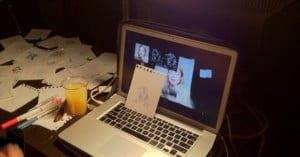
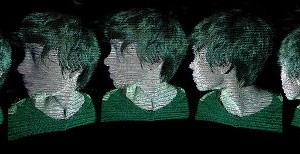
“Blind Self-Portrait” is a project by artists Kyle McDonald and Matt Mets that’s based around a machine that can help you turn photographs into sketches. The machine constantly track’s the subject’s face using a camera and translates the image into a line-drawing and x- and y-coordinates. The user then rests their hand on the machine’s “hand” and presses a pen into a piece of paper. The robot hand does the rest of the work, guiding the hand into drawing the photograph as the person sits back and watches the magic happen. Read more…
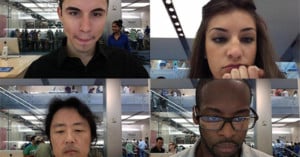
Yesterday we shared a disconcerting art project by Kyle McDonald in which he installed apps in Apple Stores throughout NYC to secretly photograph customers staring into the computers. We predicted that Apple wouldn’t be too happy about it and, lo and behold, it’s pissed. The company has reportedly enlisted the help of the US Secret Service to investigate McDonald’s actions. Mashable writes,
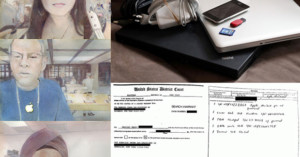
[...] four Secret Service men in suits woke him up on Thursday morning with a search warrant for computer fraud. They confiscated two computers, an iPod and two flash drives, and told McDonald that Apple would contact him separately.
McDonald, who has a master’s degree in electronic arts, admits the project might make some people uncomfortable. Before he began, he got permission from Apple’s security guards to take photos in the store, then asked customers if he could take their photos (with a camera). Had they all said no, he says, he wouldn’t have proceeded.
It’ll be interesting to see how this case turns out, but it appears to be another example of a common sense fail when it comes to photography.
Kyle McDonald wrote a stealthy app that captures a single photo every minute and sends it to his server if it contains a face. He then went around to different Apple stores around New York City and installed it on the computers, collecting more than a thousand photos.
Before sharing the photos online, I decided to exhibit them in the same places they were originally captured. So I wrote another app that could be remotely triggered after being installed on all the computers in one location. When the app starts up, it takes a picture and slowly fades in that photo. A moment later, it starts cycling through older photos.
Most people instinctively quit the app less than 10 seconds after recognizing their own face, so the exhibition was relegated to the unused machines. [#]
Photos from the project are also automatically published to this Tumblr site. Something tells me Apple won’t be too happy about this when they find out.