
Camera Companies Among Top 100 Most Reputable, Nikon Misses the Cut
Forbes released its list of 100 most reputable companies in the world earlier this month, and a number of …
Forbes released its list of 100 most reputable companies in the world earlier this month, and a number of …
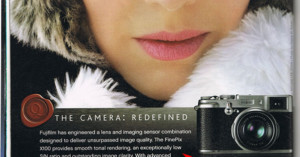
One of our keen-eyed readers named Daniel recently opened up his July issue …

The USPS has unveiled a new set of stamps called "Pioneers of American Industrial Design" that honors 12 of the most influential American industrial designers of the 20th century, and one of them is Walter Dorwin Teague.
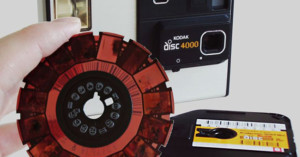
Here’s a fun bit of photo history: did you know that back in 1982, Kodak attempted to introduce a …
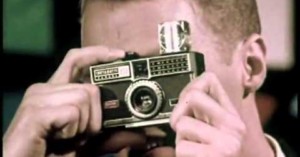
Here’s a neat blast from the past — a Kodak Instamatic commercial from the 1960s, when the latest technology …
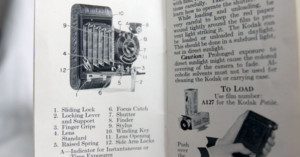
This is the instruction manual for the Kodak Petite camera, which was made …

Here’s an interesting portrait of Steven Sasson by David Friedman, shot …
Editor's note: This is our first press release published in accordance with the terms of our acquisition by Eastman Kodak, which was announced earlier today.
Rochester, NY, March 28 -- Kodak’s Russell Hunt has earned recognition as a 2011 Channel Chief by Everything Channel’s CRN for the second consecutive year. Notably, Hunt has led the successful channel integration of two existing channel communities within Kodak. Through Hunt’s leadership efforts, Kodak expands its channel capabilities to provide customer-focused applications across a broad range of vertical industries.
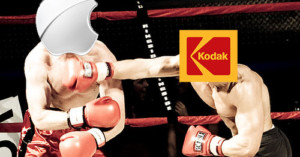
With its photography-related businesses struggling and no end in sight to its stock’s free fall, Kodak is turning to …

Did you know that some of Kodak’s early DSLR cameras had built-in games? Before Canon and Nikon started making …
MarketWatch has an interesting article titled “Kodak Is Apple In Reverse” that compares …
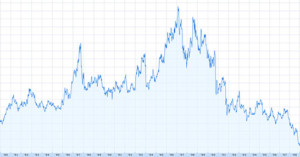
What you see here is the history of Kodak stock starting from 1978. In the mid-1990s the stock peaked …

A couple days ago we featured a video showing how memory cards are made, and now here's an older video about an older medium. It's a short documentary created back in 1958 showing how Kodak creates its film. The narration is in Dutch, but there's English subtitles.
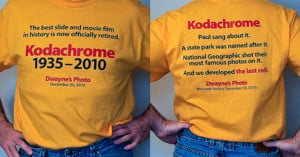
Yesterday the last certified Kodachrome processing facility — Dwayne’s Photo in Parsons, Kansas …

After Kodak announced the end of Kodachrome’s production in June of 2009, the number of photo labs that developed …

This is a Kodak advertisement that ran in the The Saturday Evening Post …
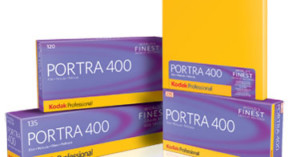
Earlier this month Kodak announced their new Portra 400 color negative film, replacing …
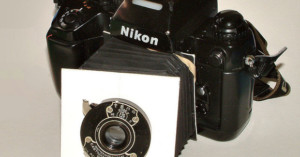
Remember the 102-year-old lens experiment we shared a week ago? Daire Quinlan did something similar -- he combined his grandfather's 6x9 Pocket Kodak lens from 1920 (90 years ago) with homemade bellows to create his own tilt-shift lens to play with. Unlike Timur Civan, who used his 102-year-old lens on a 5D Mark II, Quinlan used his frankenlens with a Nikon film camera.
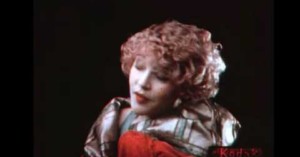
Here's an interesting clip of a color film test done by Kodak in 1922, years before color movies started appearing. This is 13 years before the first full-length color film appeared, and 7 years before the first Oscar was awarded. You can read more about this clip on the Kodak blog.
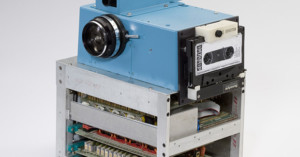
If you're a digital photography buff, here's some required trivia knowledge: what you see above is a photograph of the first digital camera ever built. It was created in December 1975 by an engineer at Eastman Kodak named Steve Sasson, now regarded as the inventor of the digital camera.
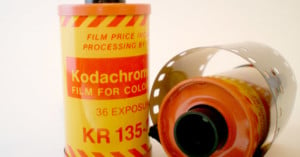
It’s the end of an era. Photojournalist Steve McCurry has developed the last …

Kodak made the surprising announcement today that their Chief Marketing Officer Jeffrey Hayzlett is resigning on May 28th to …
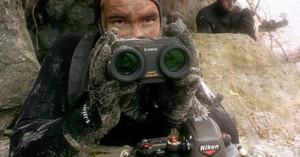
In 1998, this US Navy photo was published, showing a Nikonos camera no one recognized from the IPTC caption: …
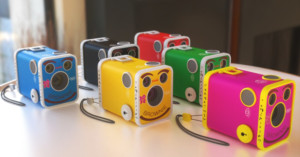
Here’s a fun concept design imagining the classic Kodak Brownie reintroduced to for …

Kodak has just announced a breakthrough technology called Aromatography, which combines the sense of smell with the visual experience of photography. Recent breakthroughs in Neuro-Optic-Nasal-Sense Imaging (often referred to as NONSense) have enabled the technology, which is also being researched by other camera corporations.
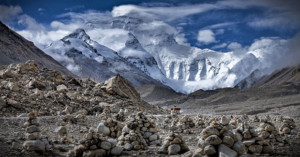
On June 8, 1924, mountaineers George Mallory and Andrew Irvine set out on an expedition to become the first …
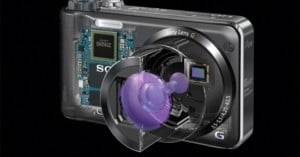
The Consumer Electronics Show hasn’t even officially begun, but product announcements and press releases are already flying around. There are …