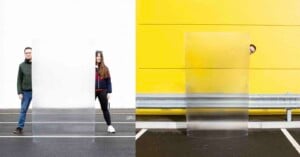
This $800 Real-Life ‘Invisibility Shield’ Makes Multiple People Disappear in Plain Sight
A start-up is selling a real-life "invisibility shield" for $878 that can make multiple people disappear in broad daylight.
A start-up is selling a real-life "invisibility shield" for $878 that can make multiple people disappear in broad daylight.
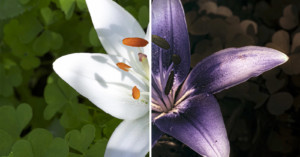
Photographer and "mad scientist" Don Komarechka is back for a DPReview TV episode on ultraviolet light. Specifically, he explains how a modified camera-and-filter combination can reveal hidden ultraviolet patterns that are invisible to the human eye, but crucial for pollinators like bees.
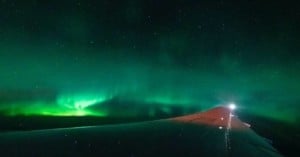
Photographer Pierre T. Lambert got very lucky on a flight from Chicago to Seoul, South Korea recently. While flying near the arctic circle, he decided to just... try taking a photo out of his airplane window. To his surprise, his camera captured the glowing Aurora Borealis that was invisible to the naked eye.
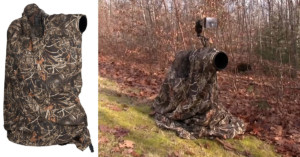
The LensCoat LensHide is a new portable blind for wildlife photographers that helps you become invisible to the wild animals you're taking pictures of. LensCoat calls the product "the best-engineered portable blind in the market."
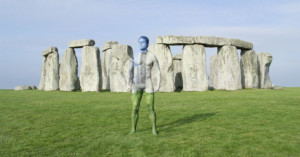
"Lost in Wonder" is a new project by New York-based artist Trina Merry, who's known for blending body art and photography to depict the human body in creative ways. Merry visited major "modern wonder" landmarks around the world and blended her model into each of the scenes.
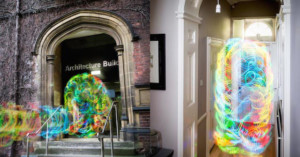
So much of the world today is invisible to cameras. Technology operates in a light-less world of zeroes and ones, electromagnetic waves that fly over our heads in ever-increasing abundance.
For his fascinating project Digital Ethereal, designer Luis Hernan set out to capture one of these invisible signals, WiFi, using a creative combination of long exposure photography and an Android app.
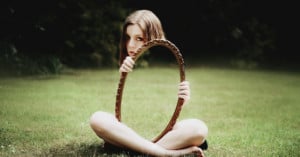
Surreal self-portraits from young photographers are nothing new. In fact, one could say there are almost too many of them out there. But that makes it that much more impressive when a young photog breaks out of the pack and catches the attention of the masses.
That's exactly what 18-year-old photographer and college student Laura Williams did with her viral self-portrait series 'Invisible.'
Back in March, we shared a time-lapse that showed photographer Liu Bolin -- also known as the "invisible man" -- disappearing into the stage at TED 2013. The time-lapse showed what he goes through for every project: days of preparation followed by hours of standing still while artists paint him "into" the background.
His talk during that conference, however, went into much more detail. He talks about the process of creating some of his best shots, about his start, and about the motivation behind his most impressive work. Fair warning: the talk is given with an interpreter but you'll find you need to activate and lean mostly on the closed captions as the interpreter only gets the occasional word in.
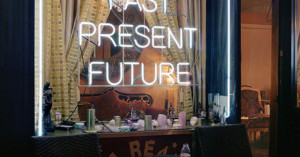
What defines a portrait? Is it still a portrait if the subject is present in the frame but hidden from the eye? If the answer is yes, then photographer Chris Buck has captured a series of unique celebrity portraits through his project titled Presence. If not, then each of the photographs simply shows a random scene.
The photograph above? That's a portrait of famous American photographer Cindy Sherman.
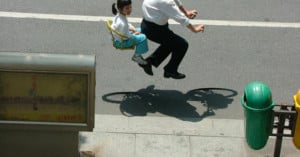
Floating is a series of manipulated photographs by Chinese photographer Zhao Huasen showing people in China riding around on invisible bicycles.

Are you so bad at photography that all your photographs are completely overexposed to the point of pure white? …
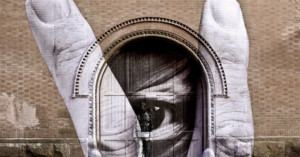
JR (the TED-winning photographer who uses giant photos as street art) and Liu Bolin (the Chinese artist who photographs himself blending into scenes) recently got together to collaborate on a photograph taken by Liu Bolin in which JR blends into one of his large scale installations. The giant photograph that Liu Bolin helped blend JR into is a photo of Liu Bolin's eye, created by JR. Can you say "photo inception"?
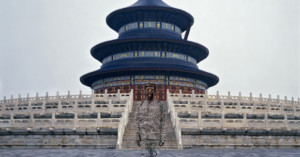
After his Beijing studio was destroyed in 2005, artist Liu Bolin (AKA "The Invisible Man") began a project titled "Hiding in the City" that show him blending into various locations around Beijing. The photographs aren't Photoshopped -- Bolin carefully has his body painted to blend in with each landscape.
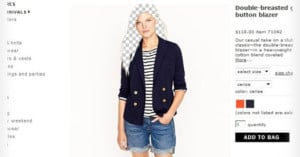
Here’s a Photoshop protip: before saving a final version of a photo for publishing on the web, make sure …
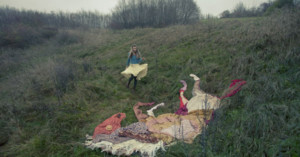
The Girl With 7 Horses is a creative project by photographer Ulrika Kestere that shows a girl traveling to various landscapes in search of her "invisible horses".
Japanese company Nippon Electric Glass has developed a new type of ‘invisible glass’ that drastically reduces reflections, rendering the …
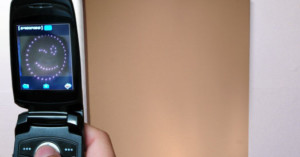
Toronto-based artists Brad Blucher and Kyle Clements have an exhibition titled "Take a Picture" which features paintings that are invisible to the human eye but visible to cameras. To do this, they use a frequency of light that is outside the visible spectrum but visible to the CCD and CMOS sensors found in digital cameras.