Posts Tagged ‘invention’

Image Fulgurator Adds Graffiti to Other People’s Photographs

Image Fulgurator Adds Graffiti to Other Peoples Photographs fulgurator mini

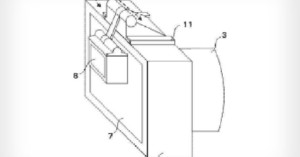
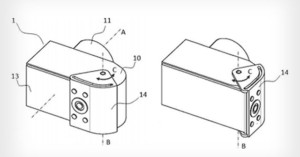
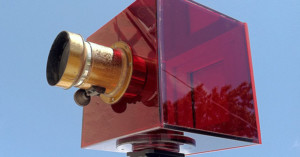
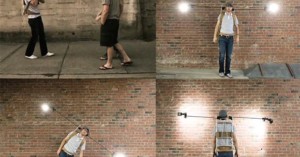
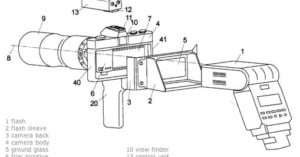
The Image Fulgurator is a brilliant device created — and patented — by Berlin-based artist Julius von Bismarck. It’s an optically triggered slave flash that fires through the back of a camera, projecting a message or image on the film through the lens — basically, it’s an optically triggered projector. What this allows von Bismarck to do is prank unsuspecting photographers by adding random pictures or words into their photographs whenever they use their camera’s flash.
Read more…

Success Stories of People Who Turned Ideas into Photo Products

Success Stories of People Who Turned Ideas into Photo Products lightsphere mini

Have an idea for a photo product and an entrepreneurial itch? PDN published an article this past week with three stories of people who successfully turned their ideas into products (and businesses). One of them is the story of Gary Fong and his Lightsphere:

Gary Fong, the former wedding photographer-turned-entrepreneur whose name has become synonymous with lighting accessories, says he got the idea to make his first photographic product, the Lightsphere, while flipping through an in-flight magazine. “There was an ad that said something like, ‘We make plastic parts for your ideas.’” It started him thinking about what he would like to make. What he wanted, he thought, was a large light diffuser, modeled on a lampshade. “Until then, diffusers were tiny. They sat on top of your flash and they didn’t do anything to the shape of the light. All they did was block the light coming through your flash.” He noticed that when he photographed indoors, light filtered through lampshades—which create a hot spot on the ceiling while diffusing the light on faces—produced pretty skin tones. “I thought, okay, I’ll make a big lampshade for electronic flash.”

Fong’s advice to fellow inventors? “All you need is the customers. It’s got to be a product that customers will buy. If they buy some, you know grandma will be packing boxes for you. If they buy waves of them, you’ll have grandma supervising some temps who pack the boxes until you find a distribution company.”

How Inventors Turn Their Ideas Into Photo Products [PDN]


Image credit: April Seattle Flickr meetup by Paul David Gibson

The First “Camera Phone” Photograph Was Sent in 1997

The First Camera Phone Photograph Was Sent in 1997 firstcameraphone

Cell phone photography is a huge trend these days with Instagram skyrocketing past 10 million users this past weekend, but have you ever wondered how it all started? An entrepreneur named Philippe Kahn is credited with creating the camera phone back in 1997. On June 11th of that year, Kahn took the first “camera phone” photo of his newborn daughter in a maternity ward, and then wirelessly transmitted the photo to more than 2,000 people around the world. Since “camera phones” didn’t exist at that time, Kahn actually hacked together a primitive one by combining a digital camera and a cell phone to send the photos in real time.

Kahn then went on to start LightSurf, a company that was hugely influential in picture messaging. LightSurf technology is still used by Sprint, Verizon, and other major carriers around the world.

“Dentapod” Invention from 1954 Uses Your Mouth for Image Stabilization

Dentapod Invention from 1954 Uses Your Mouth for Image Stabilization invention mini

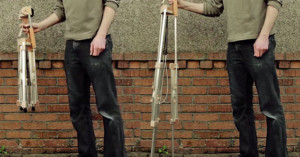
Back in March of 1954, Popular Science magazine featured an invention called the “dentapod” — a metal bracket attached to the tripod mount that you bite with your teeth to stabilize your camera. For some reason, this didn’t seem to catch on back then, but if any of you aspiring entrepreneurs decided to revive this thing for DSLRs, I’m sure it would be the next big thing.
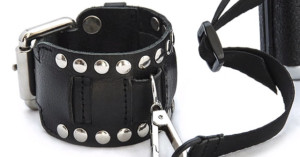
(via Reddit)

Upcoming Sony Lens Adapter Does More than Adapt Lenses, Helps Focus Too

Upcoming Sony Lens Adapter Does More than Adapt Lenses, Helps Focus Too smartadapter

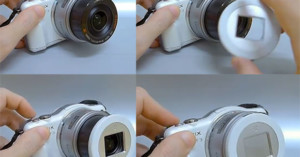
Here’s some interesting innovation on the tech-side of photography: on August 24, Sony will be unveiling a new lens adapter called the LA-EA2 that will let customers use large Sony Alpha DSLR lenses on their small NEX mirrorless cameras. Unlike most lens adapters, this one actually does a lot more than adapt lenses — it has its own translucent mirror and phase-detection autofocus sensor to aid the camera in providing snappy autofocus. It’s almost like an accessory that helps turn small NEX bodies into a DSLR-style camera (except there’s still no optical viewfinder).

(via Photo Rumors via Wired)

Hackers Create a DIY Flare Gun Camera

Hackers Create a DIY Flare Gun Camera flaregun

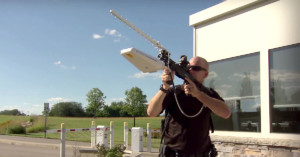
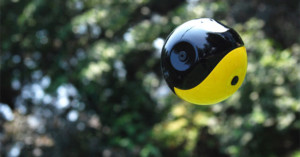
The Israeli army has a tactical intelligence device called the “Firefly” — a wireless camera that’s launched out of a grenade launcher, capturing eight seconds worth of imagery as it floats on a parachute from 500 feet in the air. It’s military grade technology that isn’t available to private citizens, but two hackers are trying to create a DIY version of the device for $500. Vlad Gostom and Joshua Marpet built their version of out of a 37mm flare gun, and showed it off this week at DefCon. They hope that, if perfected, the device could one day be useful for people ranging from law enforcement officers to search-and-rescue teams.

Build your own camera, launch it like a grenade (via PopSci)


Image credit: Photograph by Robert McMillan/TechWorld

Scientists Develop a Camera 10 Microns Thick that Creates Images with Math

Scientists Develop a Camera 10 Microns Thick that Creates Images with Math pixelperfect

Thought the grain-of-salt-sized camera announced in Germany earlier this year was small? Well, researchers at Cornell have created a camera just 1/100th of a millimeter thick and 1mm on each size that has no lens or moving parts. The Planar Fourier Capture Array (PFCA) is simply a flat piece of doped silicon that cost just a few cents each. After light information is gathered, some fancy mathematical magic (i.e. the Fourier transform) turns the information into a 20×20 pixel “photo”. The fuzzy photo of the Mona Lisa above was shot using this camera.
Obviously, the camera won’t be very useful for ordinary photography, but it could potentially be extremely useful in science, medicine, and gadgets.
(via Cornell Chronicle via Engadget)

Camera Lens Cap Holder Lets You Snap Lens Caps onto Straps

Camera Lens Cap Holder Lets You Snap Lens Caps onto Straps lenscaptostrap

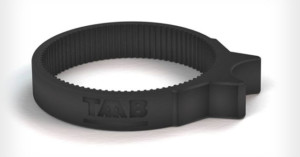
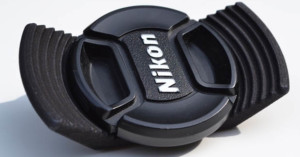
We’ve seen quite a few solutions for storing lens caps when they’re not in use, ranging from velcro attachments to small lens cap pouches. The Camera Lens Cap Holder is a new patent-pending holder by mechanical engineer Mark Stevenson that lets you attach your lens caps to your strap in the way they’re designed to be attached — they simply snap onto it in the same way they snap onto lenses. Stevenson is currently funding the project through Kickstarter, and a $15 contribution will pre-order you one of these holders.

Camera Lens Cap Holder [Kickstarter]

A Digital Camera That Magically Prints onto Any Flat Surface

Swedish Alex Breton spent 11 years and and $10 million developing the PrintBrush, a printer that lets you print onto paper by simply rubbing the handheld device across the surface. While traditional printers must move paper through a machine in order to accurately track the position of the page, the PrintBrush works more like an optical mouse, tracking the paper underneath with lasers. A camera-equipped PaintBrush is set to hit the market in early 2012, letting people everywhere print photos instantly on any flat surface!

Color Photography Turns 150 Years Old

Color Photography Turns 150 Years Old firstcolorphoto

Color photography was born on this day 150 years ago in 1861 when Scottish physicist and mathematician James Clerk Maxwell and photographer Thomas Sutton — inventor of the SLR camera — shot the above photograph of a colored ribbon.

[...] Maxwell proposed that if three black-and-white photographs of a scene were taken through red, green and violet filters, and transparent prints of the images were projected onto a screen using three projectors equipped with similar filters, when superimposed on the screen the result would be perceived by the human eye as a complete reproduction of all the colours in the scene.

During an 1861 Royal Institution lecture on colour theory, Maxwell presented the world’s first demonstration of colour photography by this principle of three-colour analysis and synthesis, the basis of nearly all subsequent photochemical and electronic methods of colour photography. Thomas Sutton, inventor of the single-lens reflex camera, did the actual picture-taking. He photographed a tartan ribbon three times, through red, green and blue filters. [...] Because Sutton’s photographic plates were in fact insensitive to red and barely sensitive to green, the results of this pioneering experiment were far from perfect. [#]

Thus began modern color theory and the fundamentals behind how your DSLR captures color.

(via Popular Photography)