A Simple Introduction to Light Painting and Camera Sensors
Destin of Smarter Every Day made this helpful video in which he and his daughter explain the basics of light painting and digital camera sensors using “super simple speak”.
![]()
Back in the spring of 1980, Magnum photographer Bruce Davidson began to photograph the subway system in NYC for his project titled Subway. NYRBlog has published an interesting essay — an excerpt from the introduction of Davidson’s book — in which the photographer talks about his experience:
To prepare myself for the subway, I started a crash diet, a military fitness exercise program, and early every morning I jogged in the park. I knew I would need to train like an athlete to be physically able to carry my heavy camera equipment around in the subway for hours every day. Also, I thought that if anything was going to happen to me down there I wanted to be in good shape, or at least to believe that I was. Each morning I carefully packed my cameras, lenses, strobe light, filters, and accessories in a small, canvas camera bag. In my green safari jacket with its large pockets, I placed my police and subway passes, a few rolls of film, a subway map, a notebook, and a small, white, gold-trimmed wedding album containing pictures of people I’d already photographed in the subway. In my pants pocket I carried quarters for the people in the subway asking for money, change for the phone, and several tokens. I also carried a key case with additional identification and a few dollars tucked inside, a whistle, and a small Swiss Army knife that gave me a little added confidence. I had a clean handkerchief and a few Band-Aids in case I found myself bleeding.
It’s an interesting glimpse into the mind of a photographer who takes his work very seriously.
Train of Thought: On the ‘Subway’ Photographs (via kottke.org)
Want to learn the basics of studio lighting? Here’s a two-hour-long lecture with photographer Joey Quintero in which he gives an overview of the basic principles, techniques, and tools.
Here’s a helpful video that attempts to demystify the concept of DSLR sensor sizes. If you’ve never been able to understand how sensor size (and its crop factor) affects resulting photographs, this video will help.
(via planet5D)
Here’s CNET’s introduction to the new Lytro camera. The square LCD screen on the back of the camera might be small, but it’s a touchscreen display that lets you play around with the focus directly in-camera rather than having to connect the device to a computer.
AllThingsD also has a video showing the camera being demoed at their conference last Thursday.
(via Doobybrain)
Google+ is becoming pretty popular among photographers as a way to share work and connect with others. If you’ve been thinking about jumping in but don’t know where to begin, Scott Kelby and Co. made this helpful (and free) hour-long primer with tips on how to use the service effectively.
Read more…
Here’s a helpful 22-page guide by National Geographic that explains many of the basic concepts of photography, from lens types to composition. It’s a free excerpt taken from the 400-page book “National Geographic Ultimate Field Guide to Photography“, and is a great read for anyone just starting out.
National Geographic Photography Basics [National Geographic]
![]()
Here’s a beautifully designed cheat sheet by Miguel Yatco that you can use to introduce people to the fundamental concepts in photography. You can also order it as a poster for your wall over on Zazzle.
![]()
Reddit user geft created a useful primer to get newbies started in digital photography. It’s a single image measuring 1045×5480 pixels that covers sensors, aperture, shutter speed, ISO, and camera controls. This would be a great thing to print out, laminate, and give as a gift to someone who’s looking to learn.
Simple Guide to Photography (via Reddit)
Image credit: Graphic created by geft and used with permission
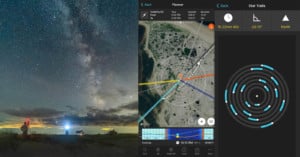
This short video gives a beautiful and inspiring introduction to night photography. Don’t watch it if you already have plans tonight — it might make you want to grab your camera and shoot once the sun goes down.