Posts Tagged ‘introduction’

An Introduction to Playing with Ultraviolet Fluorescence in Photographs

An Introduction to Playing with Ultraviolet Fluorescence in Photographs flouropp w860 h572 copy

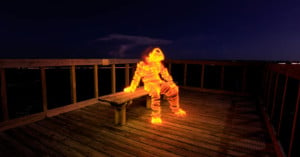
Ultraviolet fluorescence is a mechanism in which UV radiation excites chemicals in an object and causes them to release visible light. There are many household objects which fluoresce, such as some washing detergents (anything that ‘makes your whites whiter), soda water (it contains a chemical called quinine which makes it taste bitter, and also causes the fluorescence), the dyes found in highlighters, the bacteria found on the face (which cause spots and acne), bodily fluids (including urine) and much more.
Read more…

Canon Introduces a Virtual DSLR Website to Help Beginners Learn the Basics

Canon Introduces a Virtual DSLR Website to Help Beginners Learn the Basics outsideofauto

If you’re just starting out in photography, there are a lot of resources out there to help you understand the basics before you just jump in. And while books and videos are certainly helpful, one of the more fun ways to learn your way around a camera is by using an online DSLR simulator. We’ve shared one with you before, and now Canon Canada has released a simulator website of its own dubbed Outside of Auto. Read more…

An Introduction to Aspect Ratios and Compositional Theory

An Introduction to Aspect Ratios and Compositional Theory compositionaltheory 7

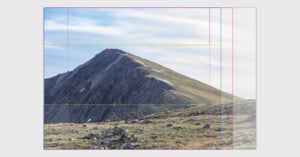
Here’s a primer for beginning photographers on the concepts of aspect ratios and compositional theories.
Read more…

The Simplified Guide to Getting Started in Photoshop

The Simplified Guide to Getting Started in Photoshop photoshopguide

When photographer Devon Mikale was in high school, he created this lengthy manual for his newspaper class to help others learn how to get started in Photoshop. The high school’s faculty loved it so much that they ended up purchasing it for re-distribution in future classes. Mikale has graciously allowed us to publish the guide here for free.

It’s a lot of images and information, but if you’re just starting out and have been overwhelmed by all the different things you need to learn, this guide will walk you through the fundamentals.
Read more…

A Beginner’s Tutorial on Using Photoshop Layers, Sesame Street-style

Here’s a humorous and lighthearted 5-minute video titled, “Fafa’s Photoshop Tutorial.” Created by the comedy series Glove and Boots, it’s a short and sweet introduction to using layers in Photoshop… taught by puppets. Think Sesame Street meets Scott Kelby.

Read more…

A Great Graphic for Understanding How ISO, Aperture, and Shutter Speed Work

A Great Graphic for Understanding How ISO, Aperture, and Shutter Speed Work graphic

Check out this awesome exposure triangle graphic found in this Exposure Guide tutorial on the fundamentals of exposure:

When these three elements are combined, they represent a given exposure value (EV) for a given setting. Any change in any one of the three elements will have a measurable and specific impact on how the remaining two elements react to expose the film frame or image sensor and how the image ultimately looks. For example, if you increase the f-stop, you decrease the size of the lens’ diaphragm thus reducing the amount of light hitting the image sensor, but also increasing the DOF (depth of field) in the final image. Reducing the shutter speed affects how motion is captured, in that this can cause the background or subject to become blurry. However, reducing shutter speed (keeping the shutter open longer) also increases the amount of light hitting the image sensor, so everything is brighter. Increasing the ISO, allows for shooting in lower light situations, but you increase the amount of digital noise inherent in the photo. It is impossible to make an independent change in one of the elements and not obtain an opposite effect in how the other elements affect the image, and ultimately change the EV.
If you’re just starting out in photography, do yourself a favor and work through the Photography Basics page over on Exposure Guide. It’s a fantastic resource.

Exposure – ISO, Aperture and Shutter Speed Explained [Exposure Guide via Reddit]

Sony NEX-5R Announced, Features Wi-Fi and Downloadable Apps

Sony NEX 5R Announced, Features Wi Fi and Downloadable Apps nex5r1 mini1

After weeks of leakage on the Internet, the Sony NEX-5R mirrorless camera was finally announced today. As the rumors said, the camera features both Wi-Fi and downloadable apps — two things that look to be huge trends in the camera world this year.

The basic specs for the camera are as follows: it features a 16.1 megapixel APS-C CMOS sensor, a hybrid autofocus that combines phase and contrast detection (a first for the NEX lineup), a max ISO of 25,600, 10 frame per second continuous shooting, 1080/60p HD video recording, and a 3-inch tilting LCD touchscreen.
Read more…

Common Photography Mistakes Made by Beginners Back in 1902

Common Photography Mistakes Made by Beginners Back in 1902 why1

Why My Photographs Are Bad is a photography book for beginners first published in 1902 by a man named Charles Maus Taylor. The book contains many of the same basic tips that can be found in introductory books these days, but also many that are very specific to the way photography was done at the time. Here’s a selection of common mistakes that newbie photographers were making over 100 years ago.
Read more…

Photography 101: Using Available Light

Vimeo has partnered up with Nikon for a new educational video series titled Do More With Your DSLR. The first video is about “working with available light”, and is geared towards beginners who are just starting to figure out how to use their DSLR camera. You can find a more in-depth discussion of the concepts in the video (e.g. exposure, white balance, ISO) in this article.

A Glimpse Into How the Art World Works

Here’s an interesting 12-minute video that offers one explanation into how the world of art works. Even if you don’t agree with the philosophy and worldview described in the video, it’s still an eye-opening tour of the different things that influence and power the mysterious world of art.