Posts Tagged ‘interview’

Insights into Photojournalism with Newsweek’s Senior Photo Editor

Quite a bit longer than most of the videos we put up, nevertheless, this insightful interview with Newsweek’s long-time Senior International Photo Editor, Jamie Wellford, is worth watching/listening to for any and all photojournalism enthusiasts. The topics of conversation cover everything from Wellford’s beginnings at Newsweek to why tragic events tend to yield the best photojournalism.

If you have the time, and you’re even remotely interested in the inner workings of photojournalism, then you won’t regret spending that time here.

(via PhotoShelter via The Click)

Stolen Moments: Matt Stuart on His Fascination with Street Photography

Here’s an interesting video in which street photographer Matt Stuart shares some of his work and talks about his love for street photography. In an interview with More Intelligent Life, Stuart states,

I’d like to be a mirror. And show people who live where I live what they’re like or what we’re doing or how we act. How we live. I think Garry Winogrand said he looks at people as animals and aren’t we bizarre? It is that standing back and trying to show us how we behave, and isn’t it funny or isn’t it sad or isn’t it ironic? I love how people act in public places.
One interesting statement he makes in the video: “the lovely thing about street photography is [...] that the best stuff there’s absolutely no way you can stage, or even think of. It just like… happened, and isn’t that weird? Then it’s gone.”

(via ISO 1200)

How to Shoot Powerful Portraits of Powerful People

Here’s an hour-long live video interview that Photoshelter recently did with Michele Hadlow, senior photo editor over at Forbes Magazine.

Hadlow speaks on how the magazine has managed to continue commissioning high-profile shoots despite cutbacks common across most publications. Michele tells us about the top characteristics all killer portraits must have to get featured, and what photographers need to succeed with both their subjects and clients.

Michele also discusses how Forbes hires photographers, and what up-and-coming photographers can do to get noticed. Having been at the magazine for over 14 years, Michele speaks to over a decade of work in the industry

(via Photoshelter)

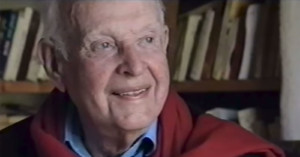
A Portrait of Street Photographer Joel Meyerowitz

Leica recently put out this short portrait of renowned street photographer Joel Meyerowitz, who talks about his beginnings as a photographer and also his role in creating an archive of the destruction and recovery at Ground Zero. Starting from a few days after the 9/11 attacks, Meyerowitz shot over 8,000 in and around the site with the help of a special workers pass that gave him privileged access.

(via Leica Rumors)

Nadav Kander Discusses His Approach to Portraiture

Here’s a video in which renowned portrait photographer Nadav Kander discusses his approach to photography and portraiture. One thing that’s interesting about Kander’s method is that he tries not to connect with his subjects prior to photographing them:

I really like the connection that human beings have when there isn’t a great knowledge, like when you first meet people. I would find it very, very hard to photograph a friend well, or to photograph somebody that I knew well. I think that that tension when you first meet people allows you to communicate without speaking

He does, however, make it a point to get to know their appearance… for the purpose of knowing who they are when they walk into the studio.

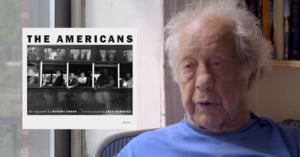
An Interview with Henri Cartier-Bresson, the Father of Photojournalism

A wonderful hour-long interview with Henri Cartier-Bresson.

(via Erik Kim)

Mary Ellen Mark Shares Thoughts on Capturing Iconic Images

Here’s a short video in which renowned American photographer Mary Ellen Mark shares some thoughts on photography and iconic photographs. Her advice for aspiring documentary photographers:

If you love it and you really want to do it, then you must do it because you’ll never forgive yourself for not doing something you cared about or you believed in, if you don’t do it now.

(via Profoto)

Cell Phone Market Also On Lytro’s Radar

Cell Phone Market Also On Lytros Radar lytro mini

Yesterday we wrote that Steve Jobs had been interested in Lytro‘s novel camera technology during the final years of his life. PC World did an interview with Lytro executive chairman Charles Chi, who seems to indicate that Lytro is very open to the idea of partnering with cell phone makers and licensing light field technology to them:

If we were to apply the technology in smartphones, that ecosystem is, of course, very complex, with some very large players there. It’s an industry that’s very different and driven based on operational excellence. For us to compete in there, we’d have to be a very different kind of company. So if we were to enter that space, it would definitely be through a partnership and a codevelopment of the technology, and ultimately some kind of licensing with the appropriate partner.
He also states that Lytro has “the capital to do that, the capability in the company to do that, and… the vision to execute.” If Apple were to form an exclusive partnership with Lytro for its iPhone cameras, light field photography would instantly be adopted by the millions of people who purchase the phones every year. That’d definitely be a huge shift in the way people take pictures.
Q&A: Lytro Exec Charles Chi Talks Light Field, Battery Life, and Licensing (via Engadget)

The Biggest Fight of War Photographer Joao Silva’s Life

Here’s an inspiring video in which we hear war photographer Joao Silva discuss the biggest fight of his life: losing his legs to a land mine in Afghanistian and fighting to return to his career. We’ve reported on Silva’s story a number of times before.

(via ISO 1200)

How Instagram’s Filters Came About

How Instagrams Filters Came About kevin mini

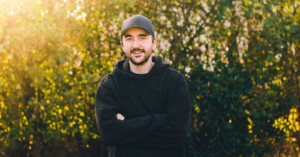
The Fader has published an interview with Instagram founder Kevin Systrom that reveals how Systrom first got into photography, and how the service’s now-ubiquitous filters came about:

[...] my teacher handed me this plastic Holga camera and said, “You’re going to use this and learn to deal with imperfection.” I remember developing the first roll and the feeling I got from the vignetting and the light leaks that came from the blurry plastic lens. That transformed the way I looked at photography—from trying to replicate reality into taking a scene and creating some kind of interpretation of its mood.

Instagram started as a mobile check-in app, but after creating his first filter (XProII), Systrom realized they could do more with the concept. He then began creating new looks and spending a couple hours at a time trying to mimic the look of different photos.

Oversaturated: Is Instagram’s Popularity Changing Photography? (via A Photo Editor)


Image credit: 2011.02.10 Instagram CEO Kevin Systrom by Gerard’s World