Leica recently put out this short portrait of renowned street photographer Joel Meyerowitz, who talks about his beginnings as a photographer and also his role in creating an archive of the destruction and recovery at Ground Zero. Starting from a few days after the 9/11 attacks, Meyerowitz shot over 8,000 in and around the site with the help of a special workers pass that gave him privileged access.
Editor’s note: This is a piece by photographers Bryan Formhals and Blake Andrews on how famous photographers’ styles are copied over and over again. Please do not read or comment if you take things too seriously.
The other day while reading the Internet I came across “The 10 Most Harmful Novels for Aspiring Writers.” I wondered whether there could be a list for photographers as well. I thought about it and then sent my list to Blake Andrews to see if he wanted to contribute and have some fun with it. Here’s what we came up with. Read more…
DEVELOP Tube is a video channel on YouTube and Vimeo that’s geared towards photographers and curated by NYC-based photographer Erica McDonald. Each channel features interviews, profiles, lectures, and films about photography that are carefully selected from each website.
One of the most important things I’ve learned during my ongoing adventure as a small-town, self-employed photographer is that nothing is more important than the relationships I’m building. So when I decided sometime last year that I was going to do a 2012 promo I wanted to create something that looked elegant, something that the recipients could be a part of and most importantly, something that could start building long-lasting relationships. Read more…
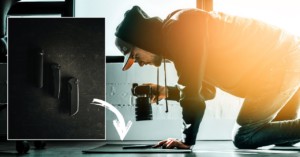
Haristobald recently captured a series of Superman photographs without the use of Photoshop or body painting. Instead, he used an old fashioned overhead projector — with the lamp replaced with a strobe — and transparencies to project the Superman symbol across his model’s chest. The behind-the-scenes video above shows how he accomplished it. Here’s the projector he used.
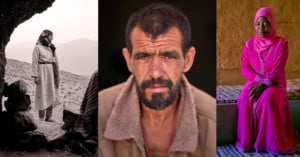
Rusidah Badawi lost her forearms in a tragic accident 32 years ago at the age of 12. After the amputation, the 44-year-old Indonesian woman was introduced to photography through a vocational rehabilitation centre for the handicapped. She immediately fell in love with it, and began a career working as a wedding and party photographer. Working primarily with film photography up until 2010, she switched over to digital when Canon sponsored her endeavors by gifting her with a digital Canon 550D DSLR and a Speedlite flash. Read more…
Here’s a short video in which renowned American photographer Mary Ellen Mark shares some thoughts on photography and iconic photographs. Her advice for aspiring documentary photographers:
If you love it and you really want to do it, then you must do it because you’ll never forgive yourself for not doing something you cared about or you believed in, if you don’t do it now.
Here’s a photo essay that documents Magnum photographer Alex Webb‘s exploration of the streets of Chicago. In an interview with Leica, Webb states,
[...] I am not trying to convey messages. I take photographs to affirm reality, not explain reality and that reality often has a high level of ambiguity to it, which is subject to interpretation. So what one viewer discovers in a given image may be very different from what another viewer discovers. This particular photograph seems to suggest to you something about corporate culture, but another viewer might simply be amused by the similarity of be-suited figures and another viewer might find something else. I believe in photographs that have a level of ambiguity, images that work on suggestion, that ask questions rather than provide answers.
The Photo Society has published an interesting article in which Kent Kobersteen, the Director of Photography at National Geographic magazine from 1987 to 2005, shares thoughts on what he looks for in photographers:
[The required] attributes are intellect, passion, maturity and drive.
Reading this, you may say “What about the photography?” Of course any person under consideration must be a great photographer. The National Geographic needs photography that is strong aesthetically and has a sophisticated use of color, photography that is poetic, journalistic, memorable, and comes from unique and intuitive seeing. But, that’s obvious, that’s a given.
All four of these attributes – intellect, passion, maturity, drive — ARE about the photography.
Kobersteen also states that he would choose “a photographer whose eye was not the best, but who worked very hard, rather than the person with the best eye in the world, and who was lazy.”
Buzzfeed has published a gallery showing every winning photo from the World Press Photo contest from 1955 to the present. It’s a powerful set of photos that paints a pretty grim picture of humanity.