Obama Situation Room Photo with Lego
![]()
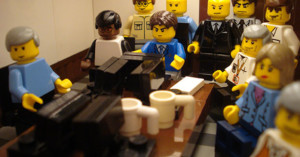
Flickr user Alex Eylar created this humorous recreation of Pete Souza’s now-iconic photo of Obama in the Situation Room during the Osama bin Laden raid.
Read more…
![]()
Flickr user Alex Eylar created this humorous recreation of Pete Souza’s now-iconic photo of Obama in the Situation Room during the Osama bin Laden raid.
Read more…
![]()
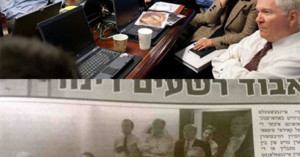
Pete Souza’s iconic photo of Obama and his national security team in the Situation Room has become extremely well known in the span of a week, so it’s unlikely that any reputable media outlet would dare alter the photo in any way — but that’s exactly what one newspaper did. Orthodox Hasidic newspaper Der Tzitung has a policy of never publishing photographs of women, and decided to publish Obama’s situation room photograph with Hillary Clinton and counterterrorism director Audrey Tomason Photoshopped out of the frame.
Read more…
![]()
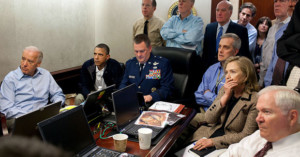
The big story around the world this week was the death of Osama bin Laden after a raid of his compound by US Navy SEALs. As a terrific example of how the Internet is transforming the way we view these world events, behind the scenes photos taken at the White House as these events transpired were almost immediately shared on the White House Flickr photostream. One particular photograph (shown above) showing President Obama and his national security team in the Situation Room has been widely published, and may go on to become one of the iconic photographs of Obama’s presidency. It has amassed over two million views in just a couple days, and is reportedly the fastest viewed photo ever on Flickr.
P050111PS-0210 (via TechCrunch)
![]()
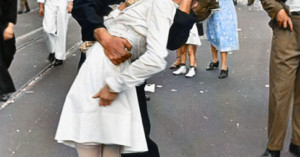
Redditor and DeviantArt user mygrapefruit took Alfred Eisenstaedt’s famous photograph V-J Day in Times Square and colorized it, giving us a glimpse into what the photo might have looked like had Eisenstaedt used color film. She writes,
How I did it: Photoshop CS 5, wacom tablet. Brush tool with Mode set to “Color”. Sometimes I made finer selections in quick mask (press Q) to easily colour an area. I personally find this easy to do, it is only time consuming, especially if you feel the need to research the actual real colours (I found some vintage postcards of times square to figure out the colour of the buildings and some signs). The rest of the colours I guessed by using common sense. [#]
Feel free to link us to other famous photographs that have been colorized by leaving a comment!
![]()
Fifty years ago, Cuban photographer Alberto Díaz “Korda” Gutiérrez took a picture of Ernesto “Che” Guevara at a funeral with a 90mm lens on a Leica camera.
Korda was on assignment as a photographer for the publication, Revolucion. He snapped the photo on a whim, capturing Guevara’s intense, upward gaze in a brief moment. Korda later told interviewers, “It was not planned, it was intuitive.”
A fashion photographer by trade, Korda returned to the darkroom and cropped the originally horizontal photo in order to draw attention to the now iconic steely visage of the leader.
However, at first, Korda’s photo fell to the wayside, and was not published for another five months until it was run as a largely unnoticed file photo.
Seven years later, following Guevara’s death, Fidel Castro requested a photo of the leader on a poster, which was printed on a poster in Italy. Demand for the image rose in the commercial market as well, and the Italian businessman who produced the first print went on to sell over a million copies without artist attribution.
Since then, the image has become one of the most widely reproduced images in history, establishing a cultural memory and a posthumous brand.
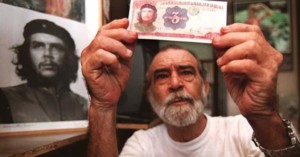
According to the Observer, Korda’s work, at the time was not legally protected since Cuba did not recognize copyright. This meant that anyone and everyone could use the image, which contributed to the photo’s worldwide proliferation and iconic quality: the image itself has become a brand, reprinted on clothing, banners, and even on Cuban currency.
Korda received no compensation or royalties from his image.
The photographer eventually sued Smirnoff in 2000 for what he believed was a fundamental violation of Guevara’s political beliefs and an insult to his memory when the vodka company used the image in a magazine ad. Korda won, and the case also awarded him rights to his image.
In recent years after Korda’s death in 2001, Korda’s daughter, Diana Díaz, has launched copyright battles against companies she feels also abuse the image for use in advertisement. A notably ironic twist: Díaz agreed to sell licenses to “Che” branded products (the clothing, berets, etc.) in order to finance her legal pursuits.
Nevertheless, during his suit against Smirnoff Korda stated,
As a supporter of the ideals for which Che Guevara died, I am not averse to its reproduction by those who wish to propagate his memory and the cause of social justice throughout the world…
Díaz’s copyright suits are similar to the AP’s case against artist Shepard Fairey, which addresses the use and reproduction of a photographic image to use as a marketing brand without the photographers’ consent.
What are your thoughts on the use and copyright status of this iconic photograph?
(via The Observer)
Image credit: Photo of Korda by Redthoreau, Guerrillero Heroico by Alberto Diaz Gutierrez, and Chinatown Night Market #2 by SqueakyMarmot